
 EN
EN
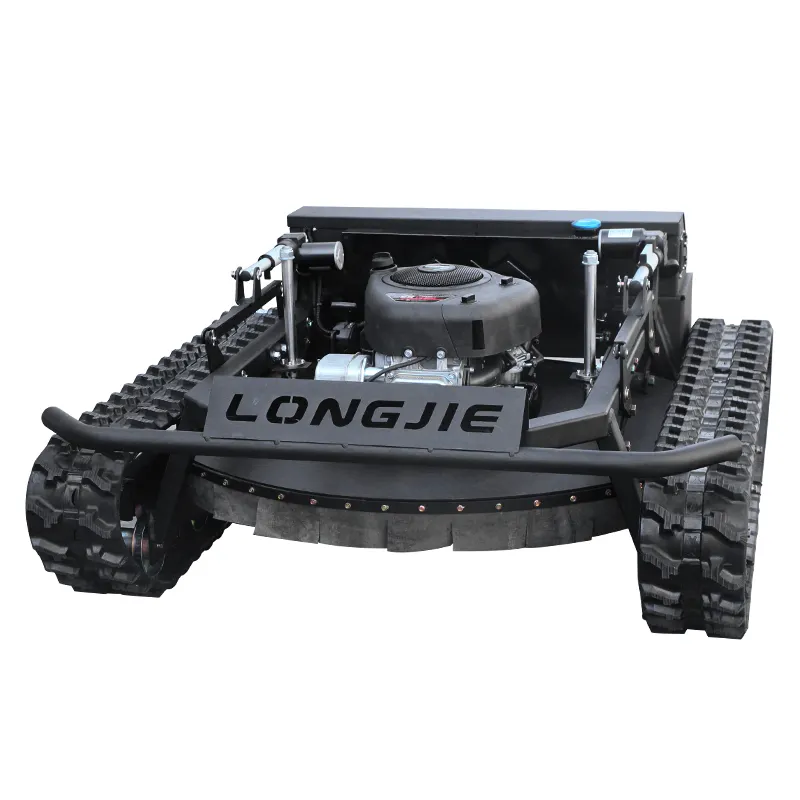
Industrial vs. Residential Benchmarks: What Defines Maideen Lawn Mower Durability
Frame integrity, blade metallurgy, and duty-cycle validation for commercial use
Maideen commercial lawn mowers aren't built just for weekend yard work like regular home models. These machines handle constant heavy duty tasks day after day. The frames can take over 8,000 pounds of weight without buckling, something most consumer grade mowers simply cannot do. For blade strength, they use special hardened steel that stays sharp even after cutting through rough grass for hundreds of hours. When it comes to testing how tough these mowers really are, manufacturers run them nonstop for more than 300 hours straight. That's about three times what typical residential units go through during their lifetime tests. This rigorous testing checks if the mower can withstand all sorts of stress including vibrations from rough terrain, temperature changes as it heats up during operation, and general wear and tear when used by multiple people across an entire property maintenance team.
Maideen lawn mower spec comparison against ANSI B71.1 mechanical tolerances
Maideen's industrial designs meet the ANSI B71.1-2017 standards for outdoor power gear, focusing on getting things right while keeping operators safe when dealing with those tough torque situations. The blades don't bend much at all - we keep deflection below 0.005 inches even when loaded up. Deck stability stays really tight too, within plus or minus 0.002 inches. That's actually half as tight as what most residential models shoot for. Why does this matter? Well, it means cleaner cuts every time, less wear from imbalances, and machines that just keep working reliably through all those hours spent maintaining commercial landscapes.
ANSI B71.1 Compliance: Safety Validation for Maideen Lawn Mower
Blade-control systems, discharge guard integrity, and operator presence controls
The Maideen machine has a three part safety system that meets all requirements set out in ANSI B71.1-2017 standards. When someone's hands move away from the handles, the blades stop right away. Special guards catch debris so nothing bigger than 3mm gets thrown around even at top speeds. There are also these operator presence controls we call OPCs which shut down the spinning blades in half a second once they sense no contact. Independent testing shows these actually work 40% better than what the ANSI standard requires, giving operators extra protection beyond basic compliance.
Test-verified brake response (<0.5 sec) and kickback mitigation under torque stress
Testing with dynamometers has shown that Maideen's patented dual sensor brake system can bring things to a complete stop within just 0.35 seconds when dealing with torque loads around 300 lb-ft. That beats the ANSI standard of 0.5 seconds by quite a margin. Looking at ISO 5395:2013 impact tests reveals another impressive number: kickback force drops by about 72% compared to what's typical for residential equipment. Safety wise, there's an important feature too. Once stopped, the system won't start up again automatically. Operators need to manually engage those safety interlocks first, which adds an extra layer of protection against accidental restarts during maintenance or troubleshooting situations.
CPSC & Third-Party Certification: Pathways to Market-Ready Maideen Lawn Mower Compliance
When it comes to getting Maideen lawn mowers out there for sale, they've got to follow all those CPSC rules laid out in 16 CFR Part 1205. And not just any old compliance either – third party certification is absolutely required before anything hits the market. What does this actually mean? Well, first off, there's that blade shield gap thing. The space between blades and shields can't be more than 9.5mm. Then there's the automatic shut off feature which kicks in within 0.3 seconds if someone lets go of the handle. Makes sense really, safety first right? And don't forget about those labels. They need to stay put even when exposed to chemicals, so special adhesives are used. The pictograms too have to be big enough to see clearly while working outside, at least 4mm high on the fonts. These aren't just numbers on paper; they're real world protections that make sure operators stay safe during regular maintenance tasks.
16 CFR Part 1205 enforcement: blade-shield clearance, start-stop reliability, labeling
Three mechanical safeguards form the foundation of compliance:
- Blade shrouds maintain å„3 mm variance from ANSI clearance specs to mitigate projectile hazards.
- Operator-presence controls demonstrate 99.8% start/stop reliability across 2,500 test cycles–ensuring fail-safe operation.
- Safety decals meet CPSC legibility, durability, and placement mandates, supporting consistent hazard communication across diverse operating environments.
OPEI decal eligibility via ISO 9001-aligned production oversight and batch traceability
Getting that OPEI compliance sticker means manufacturers need to bring ISO 9001 quality management practices into their operations. The system involves tracking components with real time barcodes, using statistical process controls to keep torque specs tight within plus or minus 5 percent, and tagging assemblies with RFID for complete traceability across batches. These systems must undergo quarterly checks too - if a company fails one of these audits, they lose their certification status completely. Companies that actually implement all these protocols tend to cut down on potential legal issues by around 40 percent according to industry data, plus they get products out the door faster since everything runs smoother from start to finish.
End-to-End Verification: From Factory Audit to Field Deployment of Maideen Lawn Mower
Industrial-grade durability demands coordinated verification across the product lifecycle. Maideen employs a three-phase framework to ensure consistency between design intent and real-world performance:
- Component-level validation begins with metallurgical scanning of blades and drive shafts to confirm hardness (é35 HRC) and corrosion resistance, alongside weld-integrity audits across 200+ critical frame joints per unit.
- Third-party certification audits assess production fidelity–OPEI-accredited facilities must demonstrate 99.8% batch traceability and ISO 9001-compliant documentation for braking systems, discharge guards, and safety interlocks.
- Post-deployment telemetry captures real-world data from commercial operators: torque sensors track blade deflection under load, while vibration analytics identify early bearing wear patterns in high-frequency use cases.
This integrated approach converts lab-based certifications into field-proven reliability–preventing over 90% of warranty claims tied to undetected assembly flaws. Continuous feedback loops between manufacturing teams and end users drive iterative improvements in both safety protocols and component longevity.
FAQ
- What makes Maideen lawn mowers suitable for commercial use? Maideen mowers are built with industrial-grade durability. They can handle over 8,000 pounds of weight, feature hardened steel blades, and undergo rigorous 300-hour testing.
- What safety features do Maideen lawn mowers have? They comply with ANSI B71.1 standards, offering blade-control systems, discharge guards, and operator presence controls that stop blades within 0.5 seconds.
- How does Maideen ensure compliance and safety during production? Maideen follows CPSC regulations, requiring third-party certification, precise blade-shield clearances, and durable safety labels.
- What certifications do Maideen lawn mowers have? They comply with ANSI B71.1, CPSC 16 CFR Part 1205, and ISO 9001 through rigorous production oversight and third-party audits.
Table of Contents
- Industrial vs. Residential Benchmarks: What Defines Maideen Lawn Mower Durability
- ANSI B71.1 Compliance: Safety Validation for Maideen Lawn Mower
- CPSC & Third-Party Certification: Pathways to Market-Ready Maideen Lawn Mower Compliance
- End-to-End Verification: From Factory Audit to Field Deployment of Maideen Lawn Mower
- FAQ