
 EN
EN
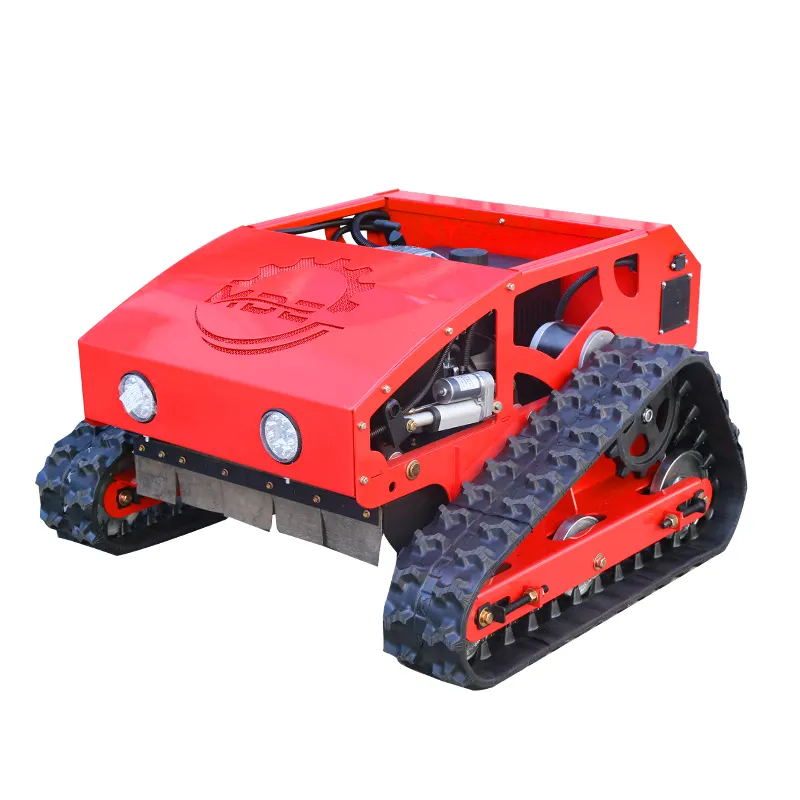
Engineering Stability: How Ramp Mowers Prevent Rollover on Steep Slopes
Low Center of Gravity and Reinforced Chassis Design
Stability on hills is what makes ramp mowers stand out from regular models. They get this stability because they have a really low center of gravity, sitting around 34 inches off the ground. This happens when manufacturers put heavy parts such as engines and batteries below where the operator stands. The frame itself is made of strong steel that can handle all sorts of twisting forces when going up and down slopes. Plus, these machines have wheels spaced about 15 to 20 percent wider than normal riding mowers, creating kind of a triangle effect with how weight distributes across the machine. Tests show this setup cuts down on sideways tipping risks by more than 20% compared to standard zero turn mowers on rough ground. And don't forget about those counterbalanced cutting decks either. These help keep things stable by stopping blades from dragging downhill which might throw everything off balance during operation.
The 20° Rollover Threshold: Physics-Based Limits vs. Real-World OSHA/UL 1746 Field Data
A slope of about 20 degrees marks the point where things get really dangerous for equipment stability. At this angle, gravity starts winning against what little friction exists between tires and ground surfaces. But don't worry - most modern ramp mowers actually pass both OSHA requirements and UL 1746 safety tests in actual field conditions. Studies have found that well maintained machines only tip over less than 5 times out of 100 attempts on these slopes when operators follow all the instructions from the manual. That's way better than regular mowers which fail around 18% of the time under similar circumstances. These machines come equipped with special features like speed limiters and brakes that adjust based on what kind of terrain they're on. Such systems cut down sliding accidents by roughly two thirds during emergencies. Even so, going past that 20 degree mark is still risky business because nobody can predict exactly what might be hiding beneath the surface roots, unexpected holes, or sudden changes in soil moisture levels.
Superior Traction Systems: Optimized Drive and Tire Technology for Challenging Grades
Skid-Steer Dynamics and All-Wheel Drive Performance on Wet Clay and Gravel at 22°
Modern ramp mowers combine skid-steer technology with all wheel drive systems so they can handle those tricky slopes that reach almost 22 degrees without tipping over. What makes these machines special is how each wheel can turn independently, giving operators pinpoint control while still distributing power evenly between all four wheels at the same time. When conditions get really challenging like when working on wet clay surfaces or loose gravel terrain, the AWD system kicks in smartly redirecting power exactly where it's needed most, cutting down on unnecessary slipping. The tires themselves are designed differently too - deep lug patterns help push mud and dirt out from underfoot as the machine moves forward, which actually gives them about 40 percent better grip than regular tire designs according to field tests. Another advantage comes from hydraulic response features that stop wheels from spinning wildly whenever there's an abrupt change in direction something that tends to throw off traditional mowers completely when things get rough.
Wide Stance Geometry and Reduced Ground Pressure vs. Standard Riding Mowers
Ramp mowers come equipped with a broader wheelbase which actually brings down their center of gravity somewhere around 15 to maybe even 20 percent when compared against regular riding mowers. When combined with those big diameter flotation tires, the whole setup spreads out the weight across about 30% extra surface area than standard models. This means less pressure on the ground, so there's not as much compaction happening in the soil or damage to grass especially on those tricky slopes. The wider tires themselves help too, giving better floatation when cutting through softer ground conditions. They cut down on how deep the mower sinks into the earth by roughly half compared to machines with narrower tires, making everything more stable while protecting the landscape at the same time.
Ramp Mowers vs. Alternatives: Safety, Efficiency, and Operational Reality on Slopes ≥18°
Risk Comparison: Push, Ride-On, Robotic, and Remote-Controlled Units
Operators working on slopes over 18 degrees run serious fall risks when using push mowers. The numbers back this up too standard riding mowers have rollover rates above 18% once the slope hits about 25 degrees according to Outdoor Power Equipment Institute data from last year. Self propelled models just aren't built for sudden changes in terrain, and those fancy robotic systems often fail to grip properly on surfaces like wet clay or loose gravel, making them unreliable for many situations. While remote controlled options definitely reduce the chance of someone getting hurt, they tend to cut corners on accuracy and work slower through complicated landscape setups that require fine adjustments.
| Equipment Type | Max Safe Slope | Key Limitation |
|---|---|---|
| Push Mowers | <10° | Operator fatigue & fall risk |
| Standard Riding Mowers | 15° | High rollover potential beyond 10° |
| Robotic Units | 20° | Limited obstacle detection |
| Remote-Controlled | 25° | Reduced maneuverability in tight spaces |
Ramp mowers uniquely combine all-wheel drive traction and skid-steer dynamics to maintain safety at 22° angles. Operators adhering to manufacturer slope limits experience 62% fewer rollovers compared to alternative equipment.
Best Practices for Safe and Effective Ramp Mower Operation on Sloped Terrain
Even with advanced stability engineering, proper techniques are essential when operating ramp mowers on inclines. Follow these evidence-based protocols to minimize risks and maximize efficiency:
-
Pre-Operation Checks
Inspect tire pressure, tread integrity, and hydraulic systems before each use. Dull blades increase cutting resistance by 40% on slopes (Landscape Maintenance Journal, 2023), so verify sharpness and secure fastening. -
Operational Protocols
Maintain controlled speeds under 5 mph and always mow vertically (up/down slopes), avoiding lateral movement that compromises stability. Never turn or stop abruptly on inclines steeper than 15°. -
Environmental Adaptation
Clear debris and assess terrain stability beforehand. Wet conditions reduce traction by 30–50% (Turf Safety Council, 2024), requiring adjusted speed and avoidance of erosion-prone areas. -
Safety Equipment
Wear mandatory PPE—including slip-resistant boots, ANSI-rated goggles, and helmets—to protect against common slope-related hazards. -
Specialized Training
Operators certified in slope-specific handling reduce rollover incidents by 60% compared to untrained personnel. Initial practice should occur on gentle gradients before advancing.
Prioritize gradual transitions between slope levels, and immediately cease operation if instability occurs. These methodologies leverage the structural advantages of ramp mowers while addressing human and environmental variables.
FAQ
What makes ramp mowers suitable for steep slopes?
Ramp mowers have a low center of gravity and wider wheelbase, providing stability. Their reinforced chassis and counterbalanced decks further aid in preventing rollover.
How do the traction systems in ramp mowers work?
Ramp mowers use skid-steer dynamics and all-wheel drive systems to evenly distribute power across wheels, ensuring better control and grip, especially on wet or uneven surfaces.
Are ramp mowers safer than other types of mowers on slopes?
Yes, ramp mowers are generally safer due to their advanced stability and traction features. They significantly reduce rollover risk compared to standard riding mowers and other alternatives.
Table of Contents
- Engineering Stability: How Ramp Mowers Prevent Rollover on Steep Slopes
- Superior Traction Systems: Optimized Drive and Tire Technology for Challenging Grades
- Ramp Mowers vs. Alternatives: Safety, Efficiency, and Operational Reality on Slopes ≥18°
- Best Practices for Safe and Effective Ramp Mower Operation on Sloped Terrain
- FAQ