
 EN
EN
The Challenges of Manual Weeding in Orchards
Understanding the labor-intensive nature of manual weed control
Farmers who rely on hand weeding find themselves stuck in a cycle where workers must walk through crop rows again and again, roughly once every week or two when plants are growing fast. That adds up to somewhere between 40 and 60 man hours needed just for weeding each month on a single acre of land. The problem gets worse as farms grow bigger. Most commercial orchards these days cover more than 10 acres, which means finding enough people willing to do this backbreaking work becomes increasingly difficult. Research into farm productivity shows why this matters so much financially. As wages keep climbing and fewer workers show up during harvest time, small scale operations simply can't afford to maintain such intensive labor requirements anymore.
Common difficulties in managing weeds between crop rows and trees
Farm workers have to work their way through irrigation lines and around delicate root systems, which can accidentally damage tree roots somewhere around 12 to maybe even 18 percent of the time based on what orchard managers observe. There's just not much room between fully grown trees, so people end up twisting themselves into uncomfortable positions while working, and this makes things go about 35% slower than when they're weeding out in the open fields where there's space to move freely. Plus, when weeds are pulled by hand, little pieces usually get left behind, and these bits tend to sprout back up again in about 10 days give or take, meaning farmers constantly need to come back and deal with them all over again.
Time, physical strain, and scalability issues with hand weeding
A single worker typically manages just 0.5—0.75 acres daily through manual methods—creating bottlenecks during critical pre-harvest phases. Ergonomic analyses reveal 63% of manual weeders develop chronic musculoskeletal disorders within three seasons, while labor shortages reduce effective weed management windows by 22—30% annually.
How Orchard Weeders Improve Efficiency and Reduce Labor
Mechanical Weed Control Methods: How Orchard Weeders Work
Weed control in orchards has gotten much more efficient with machines that cut or till away unwanted plants between the trees. Most modern equipment keeps the cutting depth around 2 to 6 inches deep, which helps protect those shallow tree roots but still gets rid of about 85 to maybe even 95 percent of all the weeds in just one go through the field according to some research from Maideen Group back in 2021. Another approach gaining popularity is flame weeding where short bursts of intense heat basically burn up young weeds before they get established. This method doesn't require any chemical sprays so it's great for keeping the good bacteria alive in the soil and meets all the requirements for certified organic farms as well.
Time-Saving Benefits of Power-Driven Orchard Weeder Functionality
When farms switch away from relying on manual workers for weeding tasks, they typically cut down on this chore by around 65 to 80 percent. Mechanical equipment can handle anywhere between 15 and 20 acres each day compared to just 2 or 3 acres when done by hand. Looking at some figures from research back in 2021 shows pretty significant savings too. The costs per acre dropped dramatically from about $18 up to $26 down to roughly $5 to $8 instead. For mid sized operations, this means somewhere in the neighborhood of 450 to 600 fewer labor hours spent on weeding every year. These kinds of machines really shine in situations like stone fruit groves and nut orchards where weeds need constant attention throughout growing seasons.
Reduction in Physical Strain and Dependency on Manual Labor
Farmers who switch to orchard weeders find themselves doing a lot less bending over and swinging hoes around all day long. According to the Agricultural Safety Bureau from last year, about 38 out of every 100 farm workers suffer from back problems caused by these repetitive motions. Another bonus? These machines cut down on how much people actually touch the weeds, which means less chance of coming into contact with those harsh chemicals we all know are bad for health. What's interesting is that farms adopting this technology tend to need roughly half as many temporary workers during peak seasons. And despite having fewer hands on deck, their harvests still end up being about 12 percent bigger because the roots stay healthier throughout the growing season when maintained properly.
Cost Savings and Return on Investment with Orchard Weeders
Comparing operational costs: manual labor vs. orchard weeder use
Weeding by hand runs anywhere from $18 to around $26 for each acre every day, whereas using machinery brings that down to about $5 or $8. During busy periods, farmers need roughly 8 to 10 people working on each hectare manually, but modern mechanical weeders can slash this workforce requirement by nearly three quarters thanks to their automatic blades and rows that adjust themselves according to plant spacing. The upfront cost might seem steep at between $3,200 and $7,500 for decent sized machines, but these savings really add up over time since daily running expenses drop by somewhere between 60% and 70%. Fuel plus regular upkeep typically only comes out to around 40 cents to 60 cents per acre, making it much more economical in the long run despite the initial investment.
Calculating ROI: Payback period and long-term labor cost reduction
Twelve-acre fruit farms typically recover weeder costs in 1.3 years through labor savings and 8—12% yield gains from reduced root competition. Over seven years, farms save $9,100 annually post-payback, while retaining 70% resale value for used equipment. Larger orchards (20+ acres) report 20-year operational costs 56% lower than manual-only operations due to minimized seasonal hiring.
Overcoming the upfront cost paradox through sustained savings
When farmers look at the upfront cost of new equipment, they often forget about rising labor expenses which have been climbing around 6.3% each year in farming operations. Take a closer look though, and those initial investment concerns start to fade away. Real world results show that orchards equipped with proper weeding tools typically see their profit margins jump between 14 to 18 cents per square foot after just three growing seasons according to field tests conducted over five years across several Midwestern states. Investing wisely in quality tools actually cuts down on replanting expenses too, saving growers roughly two hundred bucks per acre thanks to better soil conditions and stronger root systems developing over time.
Supporting Tree Health and Crop Yields Through Effective Weeding
Reducing Root Competition to Improve Nutrient and Water Access
Weeds grab around 30 percent of the nitrogen and phosphorus that should go to those fruit trees, leaving their roots hungry for what they really need. That's where mechanical orchard weeders come in handy. These tools cut out the competition by going after the weeds specifically, sending about 70% more nutrients straight to where the tree roots hang out. Farmers who've tried this report seeing some pretty good results. The extra nutrients help roots grow deeper down into the soil, which makes trees much better at handling dry spells. This matters a lot in places like California's Central Valley or parts of Arizona where water just isn't as plentiful as it used to be. While no solution is perfect, many growers find these weeders worth the investment despite the initial costs.
Positive Impact of Consistent Mechanical Weeding on Soil Structure
Repeated passes with orchard weeders reduce soil compaction by 22% (measured in apple orchards), creating air pockets that enhance water infiltration. These systems retain 40% more topsoil than manual hoeing during monsoon seasons while mimicking natural tillage without erosion. Healthier soil ecosystems accelerate organic matter decomposition, boosting micronutrient availability.
Link Between Weed Control and Measurable Yield Improvements
Farmers who switch to power driven orchard weeders tend to see their fruit yields go up somewhere around 15 to 28 percent over traditional hand weeding methods according to recent 2023 productivity reports from orchards across the country. When weeds are kept under control mechanically, tree roots experience less stress and can grab nutrients much better, which leads to bigger fruits overall and fewer odd shaped ones too. Take citrus groves for instance where growers reported not only getting fruit that weighed about 19 percent more on average but also saw a pretty impressive 31 percent reduction in those annoying early drops before harvest time.
Choosing the Right Orchard Weeder for Your Farm Size
Tow-Behind vs. Self-Propelled Orchard Weeders: Matching Equipment to Scale
When picking between tow behind and self propelled orchard weeders, farmers need to look at how complicated the land is and just how big their operation runs. For flat orchards that arent too large maybe around 50 acres or less tow behind models tend to be the go to choice. They save money right off the bat costing about 40 percent less than self propelled ones according to Maideen Group research from 2023. Plus they still get the job done for folks who want something budget friendly attached to their tractors. On the flip side self propelled weeders really shine in those tricky situations like hillsides or areas prone to flooding. Their ability to move independently helps protect delicate tree roots down to within half an inch accuracy. Growers running mid sized farms often find these machines pay for themselves within two years because they burn less fuel and dont compact the soil as much either.
Ideal Mechanical Orchard Weeder Options for Commercial Operations
Scaled commercial farms require specialized equipment to maintain efficiency:
| Farm Size | Recommended Weeder Type | Power Requirement | Coverage Capacity |
|---|---|---|---|
| <50 acres | Compact tow-behind units | 3-5 HP | 2 acres/hour |
| 50-200 acres | Mid-range diesel models | 5-9 HP | 4 acres/hour |
| 200+ acres | Heavy-duty self-propelled | 9+ HP | 6-8 acres/hour |
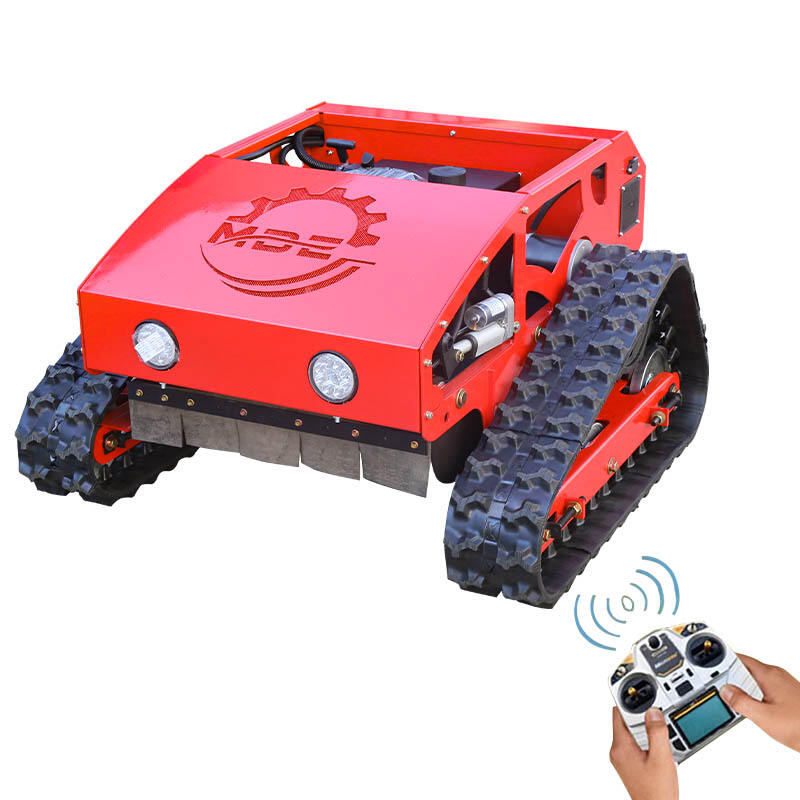
Operations exceeding 200 acres benefit most from track-based systems with adjustable tillage depths, which reduce manual follow-up labor by 72% compared to basic models (AgriTech Benchmarks 2023). Properly sized orchard weeders enable farms to maintain 98% weed-free crop rows throughout growing seasons without overspending on unnecessary capabilities.
Frequently Asked Questions
What are the main disadvantages of manual weeding?
Manual weeding is labor-intensive, leading to high costs and physical strain on workers. It is less efficient and scalable compared to mechanical methods.
How effective are mechanical orchard weeders compared to manual weeding?
Mechanical orchard weeders are significantly more efficient, capable of handling 15-20 acres a day, compared to 2-3 acres with manual methods. They reduce labor hours and increase productivity.
What are the upfront costs of investing in orchard weeders?
The upfront cost for orchard weeders ranges from $3,200 to $7,500. However, long-term savings from reduced labor costs and increased yields make them a worthwhile investment.
How do orchard weeders support tree health?
Orchard weeders reduce root competition, allowing trees better access to nutrients and water, resulting in improved growth and resilience in dry environments.
What should farms consider when choosing between tow-behind and self-propelled weeders?
Farms should consider the complexity and size of their land. Tow-behind models are budget-friendly for smaller areas, while self-propelled weeders are more suitable for complicated terrains and larger operations.
Table of Contents
- The Challenges of Manual Weeding in Orchards
- How Orchard Weeders Improve Efficiency and Reduce Labor
- Cost Savings and Return on Investment with Orchard Weeders
- Supporting Tree Health and Crop Yields Through Effective Weeding
- Choosing the Right Orchard Weeder for Your Farm Size
-
Frequently Asked Questions
- What are the main disadvantages of manual weeding?
- How effective are mechanical orchard weeders compared to manual weeding?
- What are the upfront costs of investing in orchard weeders?
- How do orchard weeders support tree health?
- What should farms consider when choosing between tow-behind and self-propelled weeders?