EN
How Do Tracked Lawn Mowers Prevent Ground Sinking?
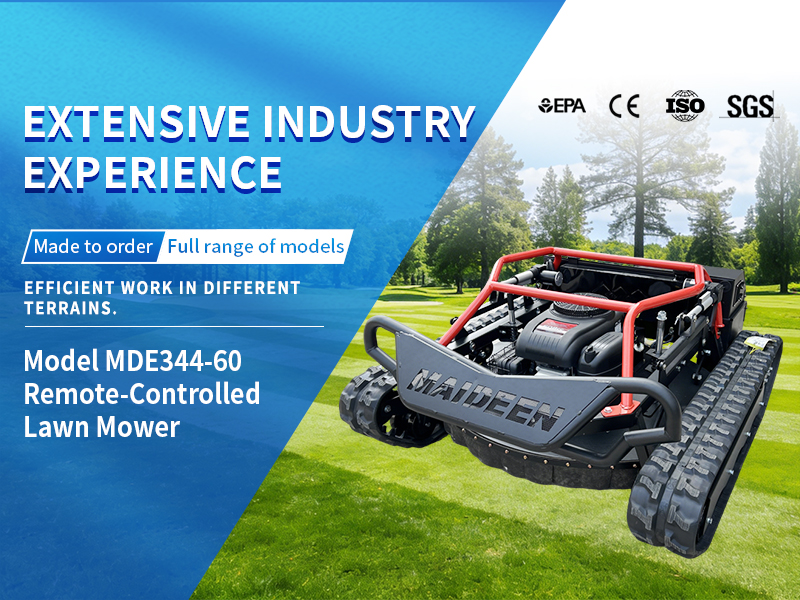
On wet turf, loose soil, or an uneven bank, the question is not simply whether a mower has enough power. It is whether the machine can stay supported without pressing so hard into the surface that it sinks, ruts, or loses a predictable path. A tracked lawn mower can help because its tracks spread the machine's load across a longer, wider contact patch than a compact wheel footprint. That principle is useful, but it is not a promise that every machine will float over every site.
From a remote-mower technical perspective, the practical answer has three parts: lower average ground pressure, more continuous traction, and operating choices that protect the turf. Understanding all three helps buyers evaluate tracked lawn mowers on real ground instead of treating tracks as a universal fix.
The basic reason a tracked lawn mower sinks less
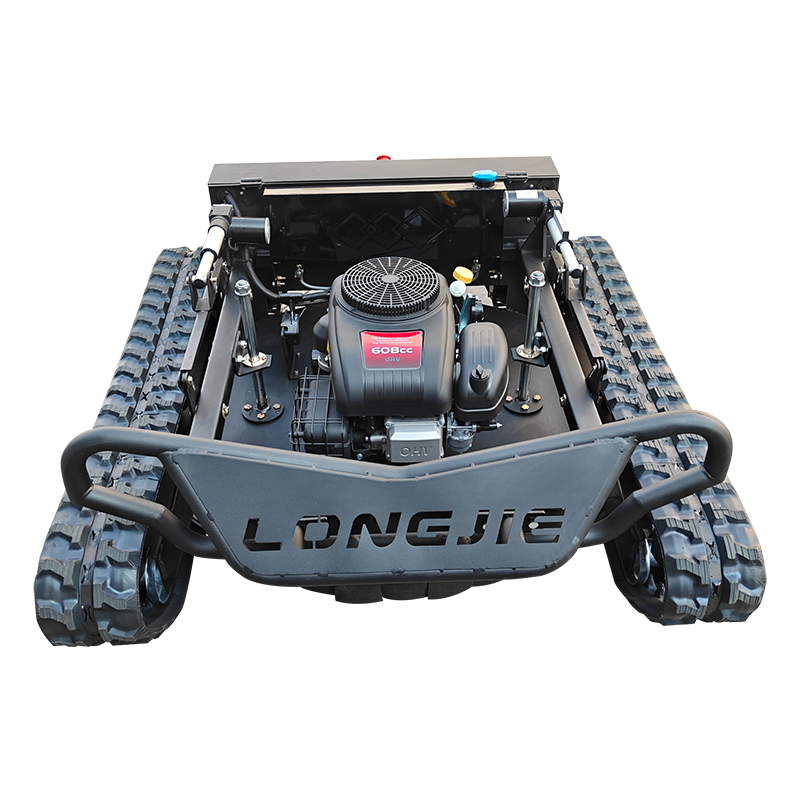
Ground pressure is a simple relationship: the machine's supported weight is divided by the area touching the ground. If the weight stays broadly similar but the contact area becomes larger, the average pressure at the surface becomes lower. A tracked lawn mower typically puts a longer section of rubber track on the ground than the total contact patches of its tires. The load is distributed along that track rather than concentrated at several smaller points.
That wider footprint can be valuable when the upper soil layer is soft after rain, when a lawn has a loose fill area, or when grass covers ground that looks firm but is not. Instead of one wheel breaking through first and digging a hole, a track can support the machine over more surface. It is a flotation advantage, not an excuse to operate on ground that is already saturated or unstable.
A common first impression is that weight alone decides the outcome. More accurately, weight, contact area, soil moisture, vegetation cover, and the way the machine turns all change the result. A heavier tracked unit may still leave marks if the soil has little bearing strength.
Tracks add traction, but traction and flotation are different
It helps to separate two ideas that are often blended together. Flotation is about how deeply the machine presses into the surface. Traction is about how well it can transmit drive force without slipping. A tracked lawn mower can improve both, yet they come from different effects.
- Flotation: a larger contact patch can reduce average surface pressure.
- Traction: track lugs and a longer ground engagement area can help the machine maintain forward control on grass, loose soil, and uneven terrain.
- Stability: a broad stance and low-mounted mass may support steadier movement on a slope, depending on the model and site conditions.
Search results for this equipment commonly focus on steep banks, rough fields, and wet areas. Those conditions explain the interest in tracks, but they also make safe operation more demanding. Check the manufacturer-approved slope limit, local site rules, visibility, and emergency-stop procedure before relying on a machine in any of those environments.
How a larger contact patch protects soft ground
Picture a mower crossing a damp lawn. A tire transfers much of its load through a relatively small, curved patch. When the soil cannot support that local pressure, the tire may sink and then spin, deepening the rut. On a tracked lawn mower, the load is carried along a longer strip. The pressure is distributed over more grass and soil, so the surface is less likely to fail at one small point.
This does not mean the pressure is perfectly even. The undercarriage design, track tension, suspended rollers, ground contour, and carried load all influence how force is applied. For this reason, supplier specifications and a controlled site demonstration are more useful than assuming that every track design behaves alike.
In practical terms, tracked lawn mowers are often considered where a wheeled unit would repeatedly lose footing, create ruts, or need excessive recovery effort. A meaningful test is an assessment of the actual grass cover, moisture, grade, hidden holes, and travel route.
Why turning technique still matters
Tracks reduce the chance of straight-line sinking, but they can create turf shear during sharp pivot turns. When one track slows or reverses while the other continues, the track can scrub across grass instead of rolling through it. On a dry, firm surface this may be minor. On soft turf, a tight turn can tear roots or leave a visible scuff even when the machine did not sink.
To reduce that risk, plan broad arcs where the site allows, avoid repeated pivots in the same wet area, and do not make an aggressive turn while one side is already in a rut. If a route repeatedly needs zero-radius turns, consider changing the mowing pattern or postponing work until the ground firms up. Remote operation does not remove the need for route planning and site management.
Ground conditions that can overwhelm a tracked lawn mower
A tracked lawn mower should be evaluated as a tool for improving ground contact, not as a guarantee against bogging. The following conditions deserve a pause-and-check decision:
- Saturated soil: water-filled ground can lose bearing strength quickly, especially near drains, pond edges, or recently disturbed areas.
- Hidden voids or loose fill: tracks cannot bridge every weak pocket safely.
- Very steep or side-sloping ground: traction, stability, visibility, and the manufacturer's approved operating limit all need review.
- Thick mud: material can build around the undercarriage and change steering or track performance.
- Repeated passes: even moderate pressure can damage turf if the same lane is used repeatedly while wet.
Efficiency matters, but it should not replace a pre-operation inspection. Walk the route where possible, identify soft edges and obstacles, establish a safe stand-off area, and stop if the track begins to trench rather than travel cleanly.
A site checklist before using tracked lawn mowers
- Check whether the surface is merely damp or truly saturated; postpone work if footprints or tires already leave deep impressions.
- Map slopes, drainage channels, tree roots, ditches, fences, and narrow turning zones.
- Confirm the mower's actual weight, track dimensions, operating limits, and safety instructions from the current product documentation.
- Use a short test pass in a low-risk area and inspect both the track marks and steering response.
- Choose a pattern with gentle turns and vary travel lines if repeated maintenance is required.
- Inspect the undercarriage after work for packed debris, unusual track wear, or damage that could affect the next pass.
For buyers comparing options, ask for configuration information that relates to the site: machine mass, track contact dimensions, ground-clearance needs, permitted slope range, steering behavior, and maintenance requirements. A supplier can then discuss fit for the intended conditions rather than making an unsupported claim about performance.
Choosing the right expectation
The value of a tracked lawn mower is not that it makes soft ground irrelevant. Its value is that the track system can distribute load more broadly and maintain useful contact where small tire footprints may concentrate pressure or lose grip. In the right conditions, that can reduce rutting risk and make movement more controlled.
For a reliable decision, describe the terrain, grass height, soil moisture, route, operating frequency, and required turning areas before selecting equipment. Then verify the proposed machine against its current technical documents and safety guidance. That condition-based approach helps tracked lawn mowers protect the ground while completing the mowing task responsibly.