EN
The Hidden Hazards of Traditional Orchard Weeding on Root Systems
In modern commercial fruit production, maintaining optimal soil health and supporting subsurface root networks are fundamental factors that dictate long-term orchard productivity, crop yield, and overall tree longevity. Managing competitive unwanted vegetation beneath the canopy has historically presented a major operational challenge for fruit growers worldwide. Traditional weeding methods, such as deep mechanical rotary tilling or aggressive manual hand-hoeing, often cause severe disruption to fragile upper soil layers. Modern agricultural field experience shows that standard tractor-mounted tillage implements frequently dig too deep into the subterranean soil profile. This aggressive tilling action cuts, tears, and severs vital lateral root hairs responsible for primary water and nutrient uptake, causing acute physiological stress to growing fruit trees. Furthermore, repeated heavy machinery passes over the orchard floor lead to severe subterranean soil density issues and structural degradation. Achieving effective fruit tree root protection requires a necessary transition toward specialized equipment such as a dedicated orchard weeder that removes weed competition without disturbing vital subsurface root structures. In addition, integrated orchard weed management promotes healthy biological activity within upper soil horizons. By maintaining stable microbial communities near the surface, fruit trees establish stronger immune resilience against seasonal environmental stresses and destructive root pathogens. Commercial growers who adopt modern specialized machinery ensure that every cultivation cycle enhances long-term tree vigor without sacrificing operational efficiency or seasonal crop yields. Protecting delicate underground root systems remains the absolute cornerstone of sustainable orchard management, consistent annual production, and long-term business profitability across commercial agricultural operations.
How Precision Weeding Technology Minimizes Mechanical Root Damage
Modern intelligent agricultural equipment addresses root safety by optimizing cutting depth and blade positioning through advanced engineering controls and sensitive mechanical responses. Unlike rigid, heavy cultivators that blindly plunge deep into the earth, advanced equipment offers highly targeted mechanical control over weed removal operations. When deploying an automated weed management unit, the primary cutting mechanism operates precisely within upper weed canopy layers while completely avoiding underlying root networks. Implementing precision weeding technology ensures that the cutting assembly dynamically adapts to subtle variations in ground elevation, preventing accidental deep soil penetration and root destruction. This precise mechanical control allows an operator to clear aggressive weed species directly adjacent to tree trunks without scarring delicate root collars or cutting vital surface feeder roots. By integrating precision weeding technology, commercial growers achieve reliable fruit tree root protection while maintaining clean row strips. Furthermore, maintaining exact cutting height prevents unnecessary soil turnover, which helps retain precious organic matter and vital moisture within topsoil layers. Protecting feeder roots through precision weeding technology directly results in improved fertilizer uptake efficiency and uniform canopy growth across entire commercial orchards. Intelligent depth regulation ensures that weeding blades float smoothly over micro-terrains without digging into subterranean root zones or causing unintended soil movement.
Combating Soil Compaction to Enhance Subsurface Oxygen Flow
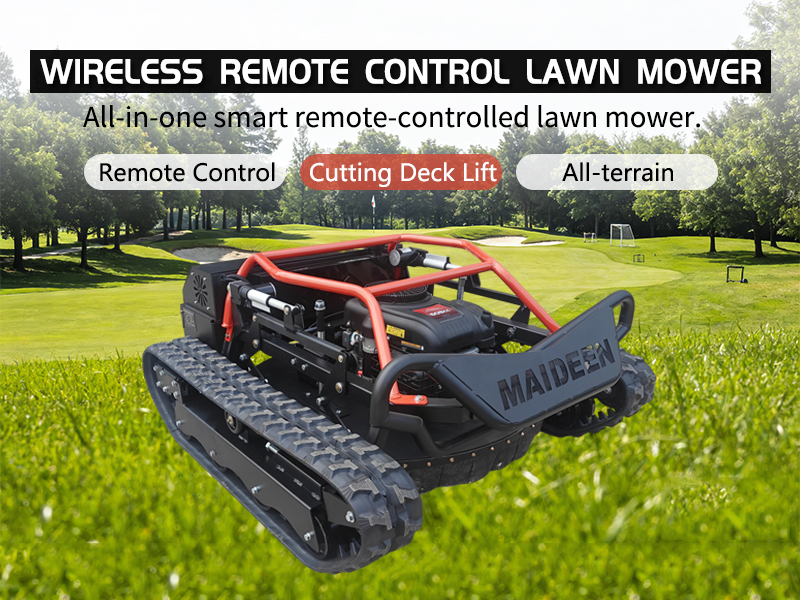
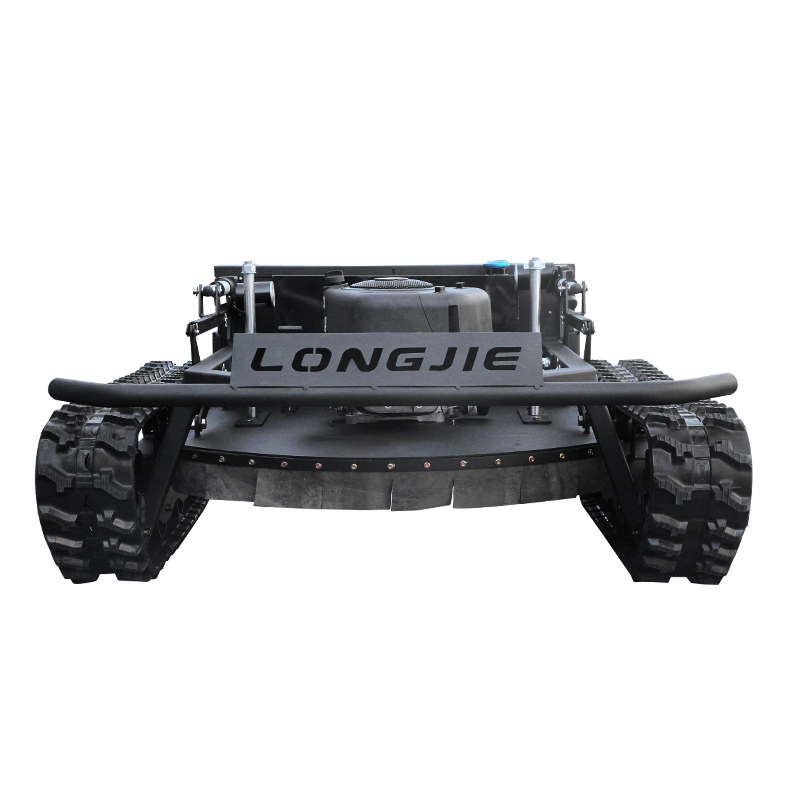
Subsurface soil compaction is an invisible threat that severely undermines fruit tree health and underground root expansion over extended growing seasons. Heavy agricultural tractors routinely compress orchard soil, collapsing delicate natural pore spaces and suffocating vital root zones. Reduced soil porosity restricts rainfall infiltration, increases surface runoff, and deprives active root hairs of necessary soil oxygen. This lack of aeration impairs active nutrient absorption and weakens natural defense mechanisms against soil-borne diseases. Utilizing specialized machinery plays a key role in achieving meaningful soil compaction reduction across commercial fruit plantations. Utilizing lightweight, crawler-tracked machinery equipped with engineering rubber tracks embedded with internal steel wire and reinforcement plates allows total ground pressure to be distributed evenly over a significantly wider surface area. A well-designed orchard weeder built on a low-ground-pressure tracked platform exerts minimal downward force compared to heavy wheeled tractors, achieving lasting soil compaction reduction. Adopting low-ground-pressure machinery maintains optimal soil aeration, preserves natural soil structure, and encourages expansive root development beneath the orchard floor. Uncompacted soil allows root systems to penetrate deeper into lower subterranean layers, unlocking previously inaccessible mineral nutrients, improving drought tolerance, and stabilizing trees against severe wind conditions during seasonal storm events.
The Role of Remote-Controlled Machinery in Precise Canopy Navigation
Navigating tight orchard rows without damaging low-hanging fruit-bearing branches or colliding with delicate tree trunks requires exceptional maneuverability and precise equipment control. Integrating remote-controlled orchard machinery into daily orchard maintenance routines fundamentally transforms how commercial operations execute weed control strategies. Utilizing wireless remote-controlled orchard machinery enables operators to manage weeding tasks from a comfortable, safe distance with an unobstructed view of the ground interface. This direct line of sight allows the operator of an orchard weeder to navigate around delicate tree trunks and sensitive drip irrigation lines with extreme accuracy, enhancing fruit tree root protection during every pass. By deploying remote-controlled orchard machinery, growers eliminate abrupt steering corrections and wheel-spin turf damage common with traditional driver-seated tractors. Furthermore, compact profiles of remote-controlled orchard machinery allow equipment to pass smoothly underneath dense, low-canopy foliage, delivering thorough weed suppression directly above root zones without risking physical mechanical impacts to tree structures. Operating advanced remote-controlled orchard machinery also enhances operator safety by eliminating close contact with hazardous terrain, steep slopes, and low-hanging branches.
Field-Proven Reliability and Practical Maintenance Standards
Achieving consistent, long-term weed control without risking root health requires robust equipment manufactured to rigorous engineering standards. Commercial fruit growers require durable machinery that offers low operational downtime and high mechanical reliability during peak management seasons. At Shandong Maide En Intelligent Technology Co., Ltd, our product solutions integrate high-performance engines, reinforced chassis frames, and high-torque internal iron gears inside electric push rods to guarantee exceptionally low failure rates under demanding field conditions. Utilizing an orchard weeder equipped with precision weeding technology reduces physical labor costs while establishing a stable, reproducible weed management schedule. When growers deploy specialized equipment built with heavy-duty components, they ensure long-term equipment reliability across varied topographies while safeguarding root structures and achieving soil compaction reduction. Integrating modern precision weeding technology with specialized machinery provides commercial growers with a sustainable, root-safe approach to weed suppression that optimizes tree health and maximizes orchard profitability year after year. Strict adherence to quality manufacturing standards at Shandong Maide En Intelligent Technology Co., Ltd guarantees that every unit resists wear and maintains peak operational precision throughout demanding growing seasons in diverse global markets.
Economic Advantages and Long-Term Value of Root-Safe Weeding Practices
Adopting root-safe weed management procedures delivers measurable economic advantages by optimizing resource efficiency and protecting tree capital over extended production cycles. When fruit tree root systems remain undamaged by aggressive tilling, trees absorb organic fertilizers and groundwater far more efficiently, directly reducing input expenditures. Deploying a specialized orchard weeder eliminates reliance on expensive chemical herbicides that risk long-term soil toxicity and runoff contamination. Utilizing modern weed control approaches reduces overall labor costs by replacing large manual crews with automated efficiency. Commercial operators who switch to modern equipment lower operational machinery overhead while simultaneously increasing seasonal fruit yields. Comprehensive soil compaction reduction and robust fruit tree root protection ensure stable fruit quality, extend commercial orchard lifespans, and maximize return on investment for modern agricultural enterprises. Sustainable root zone management establishes a solid foundation for high-yield fruit farming across future generations, transforming traditional orchard care into a streamlined, high-efficiency business operation.