EN
EN
How To Adjust Cutting Height Of Control Lawn Mower Easily
Adjusting cutting height on a remote control lawn mower is simple only after one important detail is clear: the safe control method depends on the specific machine. Some units use a mechanical deck lever, some use a pin-and-hole system, and some professional machines provide an electric or remote height control. The right goal is not to memorize a button sequence from another model. It is to set a sensible starting height, make the adjustment with the machine secured, and check the result before beginning a full pass.
For operators responsible for changing grass conditions, this equipment should be treated as working equipment, not as a hands-off gadget. The adjustment affects cut quality, deck clearance, blade loading, and how easily the machine follows uneven ground. This guide uses a practical control lawn mower workflow: inspect the site, choose a conservative setting, adjust with power isolated where the manual requires it, and review the first short section of work.
Start With the Job, Not the Lowest Setting
A low cut can look neat, but it is not automatically the preferred starting point for a remote control lawn mower. Long grass, hidden debris, ruts, damp ground, and sloping edges can all change the sensible height. On an unfamiliar area, begin higher than the finished appearance you want. A higher first pass lets the mower move with more clearance and shows where the ground changes. You can lower the deck for a second pass if the machine and site conditions allow it.
Look at three things before you choose the height:
- Grass condition: tall, wet, dense, or tangled growth may call for a higher initial cut and a slower working pace.
- Ground profile: bumps, drainage channels, stones, roots, and low spots make an aggressive low setting less forgiving.
- Desired finish: a rough clearing pass and a maintained lawn do not need the same cutting height.
This is especially relevant for a control lawn mower used around orchards, field margins, or landscaped areas where grass density changes from one section to the next. Rather than forcing one number across the entire property, divide the area into zones and adjust only when a clear difference in grass or terrain justifies it.
Make the Machine Safe Before You Touch the Deck
Read the operating manual for your remote control lawn mower before changing the deck setting. Manufacturers use different lockout procedures, and the manual is the authority for your machine. In general, park the unit on firm, level ground, stop blade rotation, set the parking or travel brake if fitted, and follow the prescribed power-isolation procedure. Keep bystanders away and do not reach beneath a deck unless it has been secured according to the manufacturer’s instructions.
Do not adjust a remote control lawn mower while it is travelling or while the blades are running unless its instructions specifically provide a controlled remote-adjustment function and the operating conditions allow it. Remote capability does not remove the need for clear visibility, safe stand-off distance, and an obstacle-free work area. If the deck or linkage is packed with grass, use the approved cleaning method after the machine is safely shut down; do not use hands near blades or moving parts.
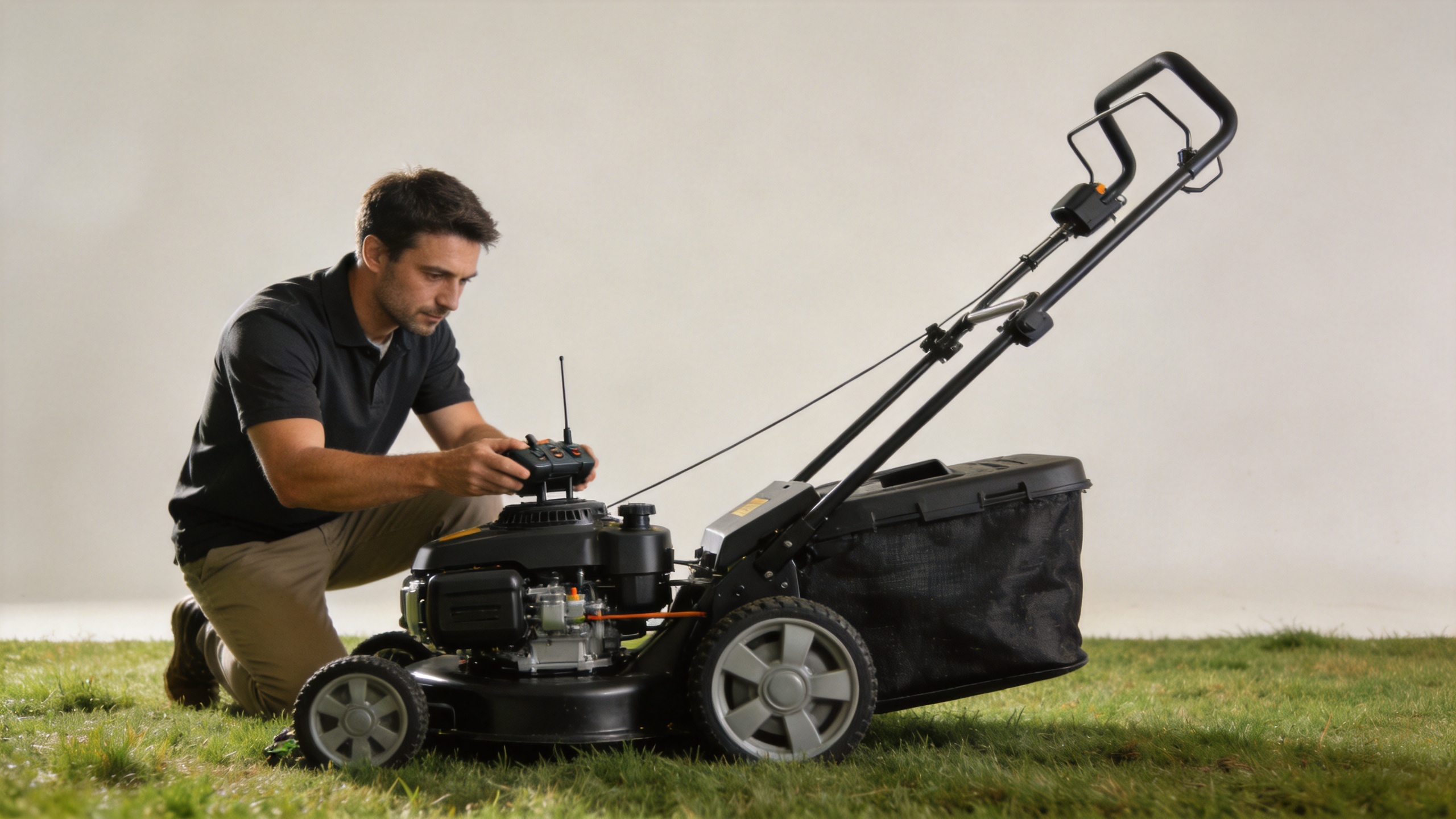
Identify Which Adjustment System Your Mower Uses
Before changing height, locate the system described in the manual. The machine may have one of these common arrangements:
- Manual lever or ratchet: move the lever into the indicated height position while the machine is stationary and secured.
- Pin, spacer, or wheel-position system: reposition the hardware symmetrically on both sides so the deck remains level.
- Electric or hydraulic adjustment: use the designated control only after confirming the display, interlock, and permitted operating state.
- Fixed deck with skids or caster settings: adjust only by the procedure stated for that deck; these systems may need tools and a level-ground check.
Do not assume a control layout is shared by every model. Professional products can advertise remote height adjustment, while other machines require a stop-and-adjust process. Published cutting ranges also vary by model. Those differences are why the machine manual matters more than a generic video or a photo of another deck.
A Simple Step-by-Step Height Adjustment Routine
- Walk the planned route. Remove visible wire, branches, stones, irrigation parts, and other debris. Mark holes, drop-offs, and no-go edges.
- Choose a conservative initial height. For tall or uneven growth, select a higher position instead of trying to achieve the final finish in one pass.
- Park and secure the control lawn mower. Use stable, level ground and complete the machine-specific stop and isolation steps.
- Adjust evenly. If the design uses left and right wheel or deck positions, confirm both sides match. An uneven deck can scalp one side and leave the other side uncut.
- Inspect clearance and hardware. Check that pins, locks, levers, or covers are fully seated and that no loose material is caught around the deck.
- Restart only under the approved procedure. Establish your safe operating position, verify the radio link and emergency-stop function, then make a short test pass.
- Review the cut. Look for scalping, missed strips, clumping, or signs that the deck is contacting uneven ground. Raise the setting or slow the route if needed.
The short test pass is useful because a remote-operated mower can react differently once grass load and terrain are real rather than estimated. If the machine struggles, do not immediately lower the height or increase speed. Reassess grass density, moisture, blade condition, and route safety first.
Match Cutting Height to Conditions
For tall or dense grass
Set a remote control lawn mower higher for the first pass. The aim is to reduce the amount of material the deck processes at once. When the first pass is clean and the ground is visible, a second pass at a lower setting may be appropriate if the manual and site conditions permit it.
For uneven ground or slopes
Maintain enough clearance to reduce deck contact with humps and depressions. A remote control lawn mower should be operated only within its stated slope and terrain limits. Cutting height does not make an unsuitable slope safe. Confirm traction, ground firmness, route direction, and exclusion zones before work starts.
For routine lawn maintenance
Use a repeatable setting that fits the grass species, season, and desired finish, then change it gradually rather than making an extreme cut after a long interval. A control lawn mower is easier to monitor when the route, speed, and height are consistent.
Before each zone, the remote control lawn mower operator should compare the selected height with visible grass load and clearance. If conditions change, stop the remote control lawn mower at a safe point before making a new setting. A remote control lawn mower is easier to assess when the first pass is short, slow, and clearly visible. This approach helps the operator identify whether the remote control lawn mower is leaving a consistent finish without turning a height adjustment into a rushed correction. For repeated maintenance, note the setting used by the remote control lawn mower and revisit it only after inspecting the next area.
Common Problems After an Adjustment
If a remote control lawn mower leaves stripes, check for unequal left and right settings, a deck that is not locked into position, worn blades, or a route overlap that is too narrow. If it scalps turf or scrapes the ground, raise the deck and inspect the area for dips or obstacles. If grass clumps behind the machine, consider a higher setting, a slower pass, and a cleaning check performed under the approved shutdown procedure.
A changing cut quality can also be a signal to pause. Before continuing, inspect the blade condition, deck cleanliness, drive response, and remote-control link according to the maintenance schedule. Cutting height is only one part of the system; it works alongside routine inspection and cautious route planning.
Final Check Before the Full Job
The easiest way to adjust a remote control lawn mower is to make the choice deliberately: select height from the grass and terrain, follow the manufacturer’s stop-and-adjust procedure, confirm the deck is even, and test a short section. Keep the machine manual available because the exact controls, height scale, and safety interlocks are model-specific. For recurring work, record the setting that gave a clean result for each zone, along with notes about grass height, ground moisture, and obstacles. That simple record makes the next adjustment faster without replacing the operator’s safety check.