EN
How To Choose A Remote Grass Cutter For Agricultural Use
Choosing a remote grass cutter for agricultural work is less about finding the largest machine and more about matching the machine to the job. Fields, orchard rows, drainage banks, solar sites, access tracks, and rough margins all create different demands. A capable machine in the wrong setting can be inefficient; a modest machine with the right operating envelope can be a safer, more dependable choice.
In practice, an agricultural equipment planner starts with the work area rather than a brochure. Before comparing a remote grass cutter, describe the vegetation, ground profile, access route, operator position, work frequency, and maintenance support available on site. That short brief turns a vague purchase request into something you can actually test.
Start With the Work, Not the Spec Sheet
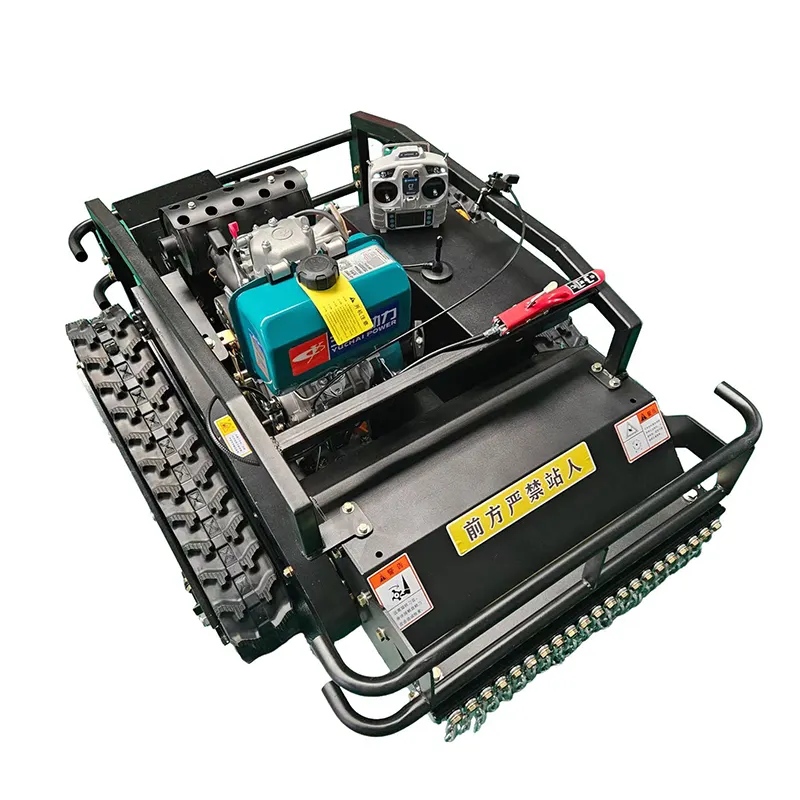
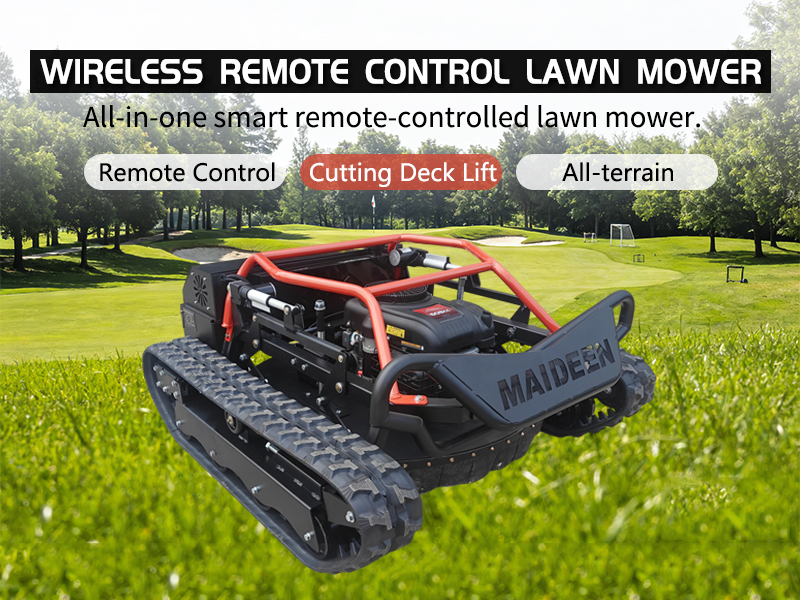
A remote grass cutter is typically operator-controlled from a distance, while a robotic mower may follow a programmed or bounded route with less continuous input. The distinction matters. If your site needs frequent steering around irregular obstacles, changing vegetation, and confined approaches, evaluate the remote-control workflow first. Do not assume that a machine marketed for remote or robotic mowing will handle the same tasks.
Map the area in practical zones: open grass, weeds around trees, uneven field edges, slopes, wet patches, culverts, fences, and loading points. For each zone, note whether the machine needs to travel there, cut there, turn there, or be recovered from there. This step often reveals that the critical limitation is access or recovery—not cutting width.
Measure terrain before discussing slope capability
Use a clinometer or another reliable method to measure representative slopes, including transitions at the top and bottom. OSHA guidance for riding mowers emphasizes following the manufacturer’s stated slope limits; where those limits are absent, it advises a conservative terrain assessment and avoiding slopes above 15 degrees without other information. That is not a universal limit for a remote grass cutter. It is a reminder that published limits, surface condition, vegetation, and operator procedure must all be considered together.
Ask the supplier to explain the stated limit in operating terms: forward or side slope, dry or wet surface, short grass or dense growth, empty or loaded machine, and what control position is expected. A remote grass cutter should be selected against the least forgiving recurring condition, not the most favorable-looking section of the farm.
Match Traction and Stability to Ground Conditions
Traction is a system, not a single feature. Track or wheel design, weight distribution, center of gravity, tire or track condition, ground moisture, and cutting load can all affect how a remote grass cutter behaves. Crawler-style running gear may suit certain loose or uneven conditions, but it does not remove the need to verify side-slope stability and recovery procedures.
- Firm, open ground: prioritize efficient travel, turning space, and cutting productivity.
- Uneven or rutted ground: assess clearance, articulation, stability, and the chance of contacting hidden obstacles.
- Slopes and banks: verify the manufacturer’s operating limit, intended travel direction, line-of-sight requirements, and emergency-stop behavior.
- Wet or soft areas: determine whether work should be postponed, rerouted, or handled with a different method.
During a demonstration, do not watch only the machine climbing. Observe how the remote grass cutter starts, stops, turns, reverses, and descends under conditions similar to your site. A controlled stop and predictable response can matter more than a headline climbing figure.
Choose Cutting Capacity for the Vegetation You Actually Have
Cutting width affects output, but a wider deck is not automatically better. A remote grass cutter that cannot pass through gates, between crop rows, or along contour changes loses time before it begins cutting. List the narrowest normal passage, tightest turn, and expected daily area alongside the vegetation type and typical growth height.
Ask how the cutting system is intended to handle maintained grass, fibrous weeds, light brush, or mixed growth. The right answer may vary by machine and attachment. Avoid treating a remote grass cutter as a substitute for every clearing tool. Instead, define the material it must cut consistently and identify material that should be removed manually or with another implement.
Height adjustment deserves the same attention. An adjustable cut can help protect terrain, reduce scalping, and manage seasonal growth. Confirm how adjustment is made, whether it can be repeated accurately, and whether the selected setting is appropriate for uneven surfaces.
Evaluate the Mower Remote System as a Safety System
The mower remote is not just a convenience feature. It is part of the operating safety system. Before choosing a remote grass cutter, confirm the usable control range for your site, expected line of sight, signal-loss behavior, emergency-stop location, stop response, and startup authorization process. Test these functions during a supervised demonstration rather than accepting a general description.
A useful pre-operation routine checks the work zone, machine condition, remote link, emergency controls, weather, and exclusion area. Keep people, livestock, vehicles, and loose material out of the working path. The operator needs a safe viewing position throughout the task and should stop work whenever visibility or footing is compromised.
Also ask who can use the mower remote, how operators are trained, and how batteries, controls, and emergency components are inspected. A remote grass cutter only creates a distance advantage when the crew can operate it consistently and knows when not to use it.
Compare Power, Service, and Total Operating Fit
Power source decisions affect more than runtime. Fuel availability, refueling or charging process, operating noise, storage, daily checks, and local service all influence whether a remote grass cutter fits the operation. Request a routine-maintenance schedule and ask which wear parts are expected to be inspected or replaced most often.
For an agricultural buyer, serviceability can be more valuable than an extra feature. Clarify lead times for blades, belts, tracks or tires, filters, batteries, control components, and technical support. If your work is seasonal, ask how the machine should be stored and recommissioned. These questions help avoid selecting a remote grass cutter that is productive only when every condition is ideal.
Use a Demonstration Checklist Before You Buy
- Bring your site map, measured slopes, vegetation notes, and access dimensions.
- Confirm that the proposed remote grass cutter can reach, cut, turn, and leave each priority zone.
- Test normal steering, stop, reverse, emergency stop, and signal-loss response in a controlled area.
- Verify cutting quality on representative material at a realistic travel speed.
- Check operator visibility, safe stand-off distance, and exclusion-zone management.
- Review maintenance intervals, spare-parts availability, warranty terms, and training support.
- Record any condition where the supplier requires a different configuration, attachment, or operating method.
Keep the evaluation evidence-based. If a claimed capability cannot be demonstrated or documented for your expected conditions, treat it as unverified. That approach protects the operator, the site, and the investment.
Make the Final Selection
A suitable remote grass cutter is one that fits your recurring terrain, vegetation, access, safety process, and support plan—not simply the one with the most impressive specification. Compare candidates using the same written checklist, then make a decision based on the task conditions your team will meet every week.
When you define the job first, test the mower remote and safety functions in context, and verify service arrangements before purchase, you can choose a remote grass cutter with a more realistic path to safe agricultural use.