EN
How To Compare Lawn Mowers For Cost Effectiveness
A low sticker price is not necessarily a low-cost choice. When comparing lawn mowers, the useful question is not “Which machine costs least today?” but “Which option can complete this lawn’s work with the fewest avoidable costs over its useful life?” That distinction matters for homeowners, grounds teams, and buyers who need to balance initial spending, operating time, maintenance, and replacement planning.
For a practical comparison, start with the job rather than a brand name. Measure the mowable area, note slopes, narrow gates, trees, wet patches, and grass growth rate, then estimate how often the work must be done in peak season. Durable lawn mowers are usually the result of a fit between machine, workload, and maintenance habits—not simply the highest-priced or most feature-heavy option.
Set the comparison boundary before looking at prices
When you compare lawn mowers, write the same site facts beside every candidate.
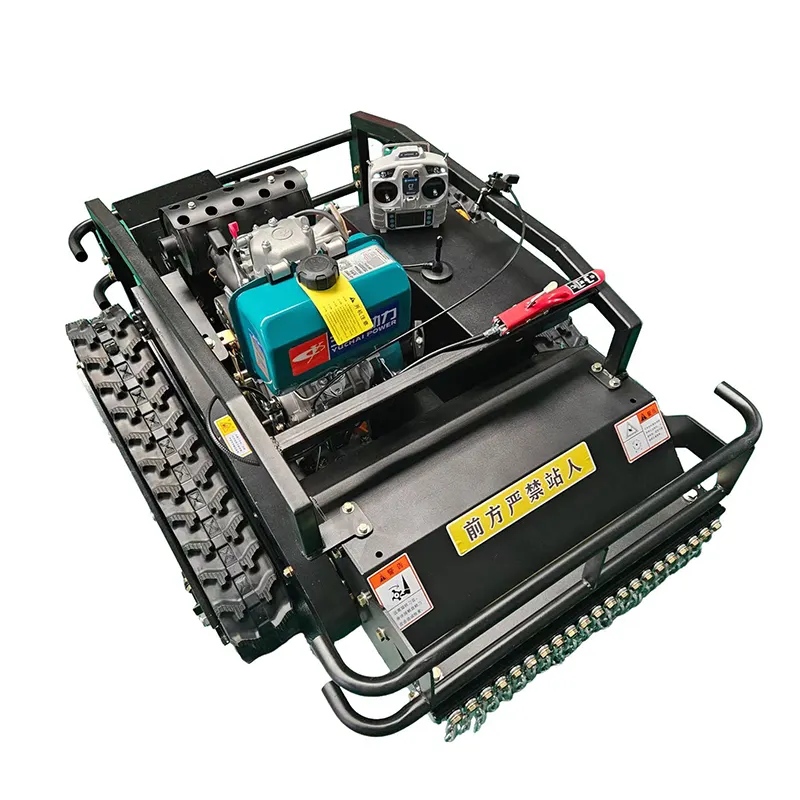
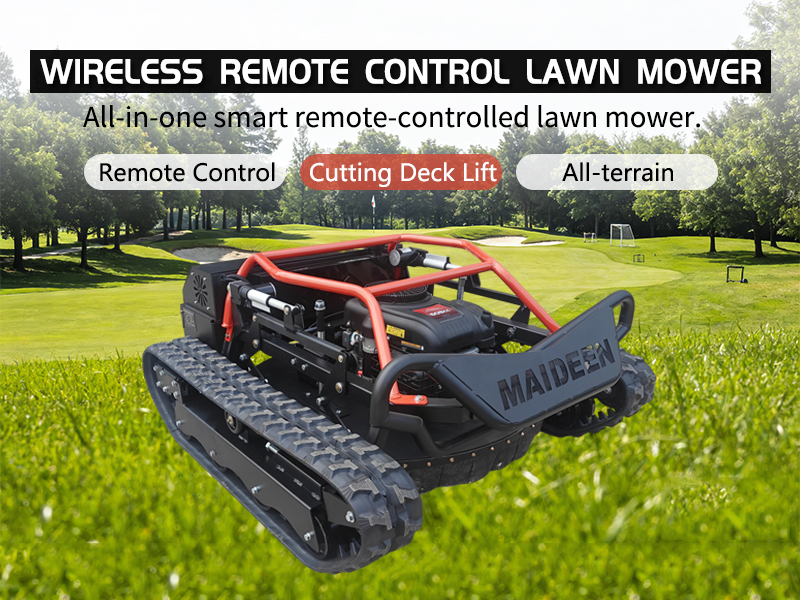
Put every candidate lawn mower into the same comparison frame. A compact push mower, a self-propelled mower, a riding mower, and a remote-controlled slope mower may serve very different jobs. Comparing only their purchase prices can produce a misleading “bargain.” Instead, write down the work requirement first:
- Area and frequency: How much grass is actually cut per session, and how often does growth require mowing?
- Terrain: Is the ground level, uneven, sloped, wet at times, or filled with obstacles?
- Cutting conditions: Are you maintaining short turf, heavier seasonal growth, or mixed grass and weeds?
- Access and storage: Can the mower pass through gates, be transported safely, and be stored dry?
- Labor: Who will operate it, for how long, and what training or physical effort does the job require?
Two yards with similar square footage can need different lawn mowers. A flat, open lawn may favor a simple walk-behind unit, while a site with long runs, slopes, or repeated commercial use may justify a more capable configuration. Bigger is not automatically better; an oversized machine that is hard to maneuver, store, or service can add cost without improving the result.
Calculate total ownership cost, not just purchase price
For lawn mowers, the quote is only the opening number. Compare lawn mowers on a complete ownership basis so each option receives the same treatment for power, upkeep, and operator time.
Build a cost sheet for each option and use the same time horizon—such as one season, three years, or the expected useful life. Enter actual supplier quotes where possible. The table below is a decision template, not a claim about any specific model.
| Cost category | What to compare | Why it changes the decision |
|---|---|---|
| Initial purchase | Base unit, battery or charger, delivery, required accessories | A low base price may exclude the equipment needed to do the job. |
| Energy or fuel | Fuel use, charging needs, electricity cost, runtime planning | Recurring operating cost grows with mowing frequency. |
| Routine maintenance | Blade care, oil and filter service, spark plugs, cleaning, lubrication | Service tasks affect both budget and downtime. |
| Wear parts and repairs | Blades, belts, wheels, batteries, cables, shipping, labor | Parts availability can matter more than a small upfront discount. |
| Labor and downtime | Walking time, setup, refueling or charging, repair delays | For repeated work, operator time may outweigh small price differences. |
| End-of-life or resale | Expected replacement timing, disposal, trade-in potential | It prevents treating a short-lived option as the cheaper long-term choice. |
Battery-powered lawn mowers may avoid several routine gas-engine tasks, including oil changes, fuel stabilizer, air-filter service, and spark-plug replacement. That can simplify maintenance. However, runtime, charger compatibility, and eventual battery replacement still belong in the comparison. Gas-powered equipment may suit certain workloads, but fuel handling, engine service, and seasonal preparation should be priced into the plan. The correct answer depends on the work cycle and locally available service, not on a universal rule.
Use cost per completed mowing session
This approach makes lawn mowers easier to compare when their purchase prices differ widely.
Once the cost categories are listed, divide the projected ownership cost by the number of successful mowing sessions you expect during the comparison period. This creates a more useful measure than price alone:
Cost per completed session = (purchase + operating + maintenance + repair + labor/downtime costs) ÷ expected completed sessions.
Keep the assumptions visible. If a battery setup needs an additional pack to finish the property without interruption, include it. If a walk-behind mower requires substantial operator time, assign a realistic labor value. If a machine needs dealer transport for service, add that likely inconvenience and cost. The point is not false precision; it is to expose costs that a quote does not show.
Test durability against the actual workload
Durable lawn mowers are not defined by paint, size, or a sales label. They are lawn mowers whose construction, service plan, and operating limits suit the specific mowing cycle.
Durable lawn mowers should be judged by the parts and support most likely to affect the job. Ask suppliers for written confirmation of the recommended operating conditions, service intervals, warranty scope, common wear parts, and local repair process. Then check whether the design matches the demands you listed.
- For uneven ground, inspect deck clearance, wheel or traction arrangement, and the manufacturer’s operating limits.
- For dense grass or frequent use, ask how the cutting system, cooling, and drive components are intended to be maintained.
- For battery equipment, confirm compatible battery families, charging time, storage guidance, and replacement availability.
- For gas equipment, check access to routine service parts and whether you can safely manage fuel and off-season storage.
- For any mower, ask how quickly blades, belts, wheels, and safety-related parts can be obtained.
This is where a cheaper unit can become expensive. An attractive price does not offset repeated downtime, difficult parts sourcing, or a configuration that is working beyond its intended conditions. Conversely, paying for features that the site is unlikely to use does not make a machine more cost effective.
Compare mower types by task, not by marketing labels
Comparing lawn mowers by task prevents a feature list from taking over the decision. Use this same test for both entry-level lawn mowers and more specialized equipment.
A basic push mower can make sense for compact, open areas where the operator time is acceptable. A self-propelled model may reduce effort on longer or mildly sloped runs, but it adds a drive system that should be included in maintenance planning. Riding and zero-turn formats can reduce cutting time on suitable larger sites, while their purchase, storage, transport, and service needs are generally more substantial. Corded and battery options can simplify some routine care, yet cord reach, charging workflow, and battery lifecycle need to fit the property.
Where terrain, vegetation, or safety boundaries are unusual, avoid assuming that a familiar category will fit. Ask for documentation and, when available, evaluate the equipment under conditions that resemble the site. A smooth demonstration on level turf is not proof that the same configuration suits wet ground, steep slopes, or areas with tight turning space.
Protect the investment with a maintenance plan
Even durable lawn mowers need consistent care.
Cost effectiveness continues after purchase. Create a simple checklist: inspect the mowing area for debris, follow the manufacturer’s safety and maintenance instructions, clean the cutting area after use as appropriate, inspect blades and fasteners, and record servicing or unusual vibration. Before each season, review fuel, battery, blade, tire or wheel, and safety-control condition according to the applicable manual.
Maintenance is also a buying criterion. If the supplier cannot explain parts access, service responsibility, or the recommended maintenance schedule, treat that uncertainty as a cost risk. For durable lawn mowers, a clear support path is often more valuable than an unverified performance promise.
A short decision checklist
Before selecting among lawn mowers, use this checklist with the final quote and documentation in hand. It helps translate the search for durable lawn mowers into verifiable buying questions.
- Describe the lawn and workload before comparing models.
- Collect like-for-like quotes, including all required power and accessories.
- Estimate operating, maintenance, wear-part, labor, and downtime costs over the same period.
- Calculate cost per completed mowing session using stated assumptions.
- Verify workload limits, service intervals, replacement-part availability, and warranty terms in writing.
- Choose the simplest lawn mower configuration that safely and reliably meets the real job.
Cost-effective lawn mowers may not be the least expensive purchase. They are the machines whose capability, maintenance demands, and support arrangement match the lawn well enough to deliver reliable mowing without unnecessary spend. Begin with the task, verify the lifecycle costs, and use supplier documentation to confirm the final configuration before buying.