EN
How To Judge Whether A Cost effective lawn mower Worth Buying
A lawn mower can look inexpensive on a quote and still become a poor purchase once the work begins. The better question is not “Which lawn mower costs the least today?” but “Which machine fits the grass, terrain, work rhythm, and support plan well enough to earn its cost?” That is the practical test for a cost effective lawn mower.
For buyers comparing equipment for landscaping, agricultural edges, orchards, or larger grounds, value comes from matching the machine to the task. A lawn mower that is oversized, difficult to service, or unsuitable for the site can add idle time and avoidable risk. Conversely, the highest-priced option is not automatically a stronger value fit if its extra capability will rarely be used.
Start With the Job, Not the Sticker Price
Before comparing lawn mower prices, write down what the machine must actually do. Measure the working area, but do not stop there. Note grass height and density, slopes, ditches, trees, curbs, gates, wet patches, stones, and the distance from storage to the work area. These details affect the appropriate cutting method, machine size, traction, power source, and operator controls.
A small, open, regularly maintained lawn may favor a straightforward lawn mower with modest capacity. Irregular ground, taller growth, or a longer route can change the calculation. In those cases, reduced operator effort, stability, transport arrangements, and service access may matter more than the first purchase figure. A cost effective lawn mower is therefore one whose usable capability aligns with the most common conditions—not one chosen from a feature list alone.
- How often will the lawn mower work during the growing season?
- What is the usual grass condition, and what happens after rain or delayed cutting?
- Are there slopes, tight turns, obstacles, or soft ground that limit machine choice?
- Who will operate, inspect, transport, and maintain the equipment?
Calculate Total Ownership Cost
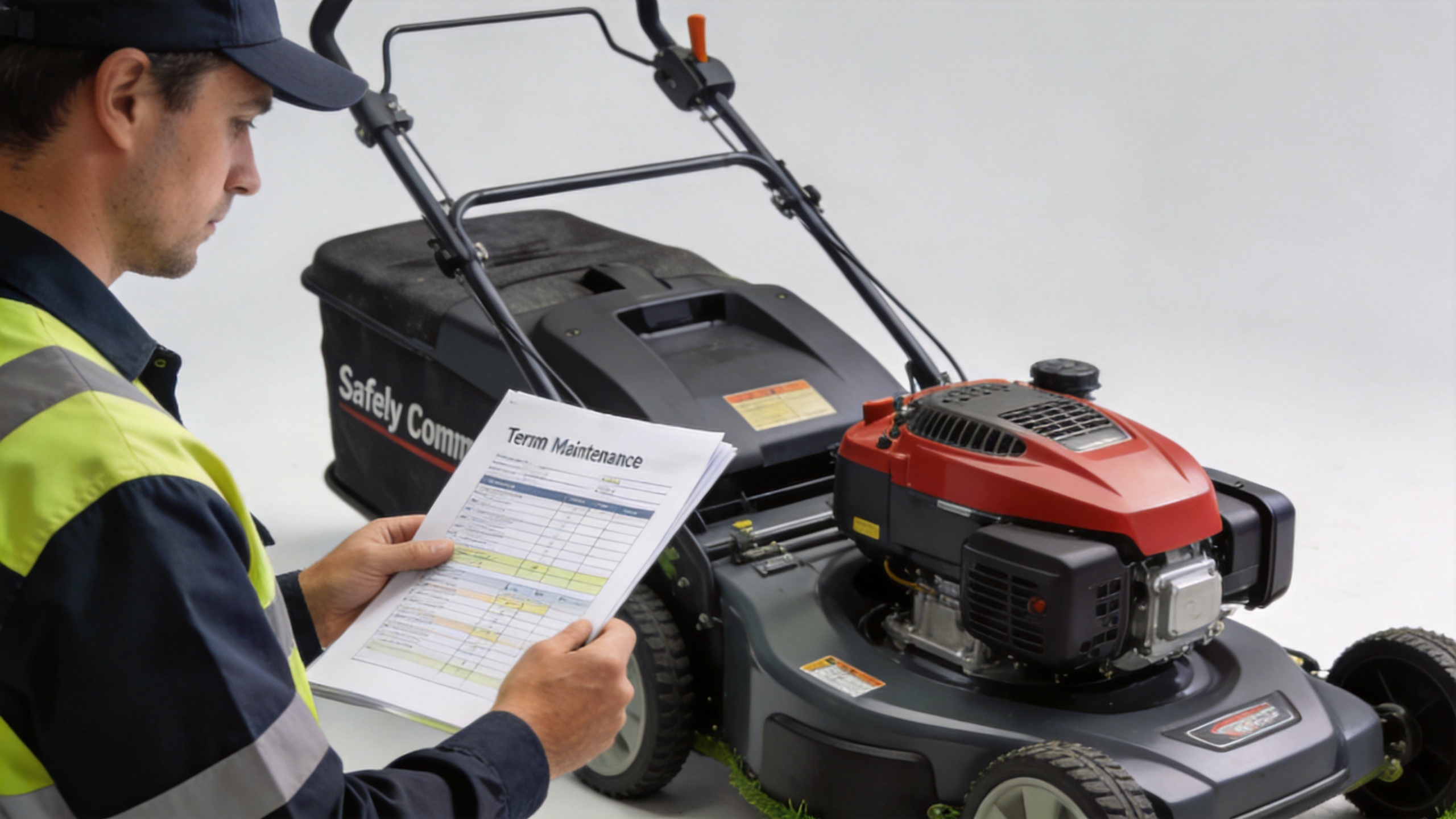
The purchase price is only the opening line of a lawn mower budget. A useful comparison includes energy or fuel, routine inspections, blades and other wear parts, consumables, cleaning time, planned service, repairs, storage, and downtime. Search results for mower ownership guides consistently treat fuel, tune-ups, blade care, and repair exposure as ownership considerations. The exact costs depend on the model and local support, so buyers should request current information from the supplier rather than rely on generic estimates.
Ask each supplier for a clear list of included parts, recommended service intervals, expected wear items, warranty boundaries, and the process for obtaining technical help. If the cost effective lawn mower has a higher initial price but offers a clearer maintenance plan and easier access to replacement parts, it may be the more economical choice over its working life. The opposite is also true: do not pay for complex systems that the site does not need or the team cannot support.
Compare Capability That You Can Verify
Marketing language should be translated into checkable questions. Instead of accepting a claim that a lawn mower is “powerful” or “all-terrain,” ask which grass conditions, slope limits, operating duration, and attachments the claim covers. Ask for the operator manual, configuration sheet, photos or videos of the relevant setup, and a demonstration plan that reflects your own site conditions.
For a remote or specialized lawn mower, also clarify control range, emergency-stop procedure, guard arrangement, permitted operating area, and training needs. These are not minor details: a feature that cannot be used safely in the intended setting adds cost without delivering value. A cost effective lawn mower should have documented limits that the buyer can work within.
Put Safety and Site Readiness Into the Value Test
Safety affects value because incidents, site damage, and interrupted work are expensive. U.S. Consumer Product Safety Commission guidance for riding mowers advises operating up and down slopes rather than across them and avoiding sudden turns. That does not replace the manufacturer’s instructions; the machine-specific manual and stated slope limit must control the decision.
Before purchase, review whether the route can be inspected for debris, holes, soft ground, water edges, low branches, and bystanders. Confirm the required personal protective equipment, the process for stopping work, and who is responsible for pre-use checks. A lawn mower that is appropriate for flat, dry grass may not be appropriate for every property. Treating safety as a purchase criterion keeps a cost effective lawn mower from becoming a false economy.
Check Serviceability Before You Commit
Availability of service and parts often separates a good lawn mower purchase from a frustrating one. Ask who performs commissioning, whether remote technical support is available, what information a technician needs to diagnose a problem, and how replacement parts are identified. Confirm the maintenance tasks your own team can reasonably perform and which tasks should be handled by trained personnel.
It also helps to ask how the lawn mower will be cleaned, stored, loaded, and transported. Access for routine cleaning and inspection may seem ordinary, yet it directly affects whether the machine receives the care assumed in the ownership calculation. A cost effective lawn mower should fit the whole operating routine, not just the cutting pass.
Use a Simple Comparison Scorecard
When several options remain, compare them using the same questions. Give each lawn mower a documented assessment for task fit, safety fit, ownership cost, service support, and evidence quality. Keep “must-have” conditions separate from preferences. For example, a verified route and slope fit may be non-negotiable, while a convenience feature may be optional.
| Decision area | What to confirm | Why it affects value |
|---|---|---|
| Task fit | Grass, terrain, route, frequency | Prevents under- or over-specifying the lawn mower |
| Ownership cost | Energy, wear parts, service, downtime | Shows the cost beyond the quote |
| Safety fit | Manual, slope limit, guards, stopping process | Helps screen out unsuitable operating conditions |
| Support | Parts identification, response process, maintenance plan | Supports availability over time |
| Evidence | Specification sheet, manual, relevant demonstration | Turns claims into purchasing evidence |
When Is a Cost Effective Lawn Mower Worth Buying?
A cost effective lawn mower is worth buying when it meets the recurring job safely, has costs that the owner can plan for, and comes with enough evidence and support to make its performance boundaries clear. It is not simply the lowest-priced lawn mower or the one with the longest list of features.
Bring the site notes, task frequency, safety requirements, and service questions into every supplier conversation. For complex terrain or remote-operation projects, request a configuration discussion based on documented ground conditions. This approach gives buyers a more reliable basis for choosing a lawn mower that supports the work without creating hidden costs later.