EN
What Special Requirements Support Crawler lawn mower custom production
A custom crawler lawn mower is not simply a standard machine with a different paint color or logo. For an OEM/ODM project, the useful starting point is the work the mower must perform: terrain, vegetation, operating routine, transport route, maintenance plan, destination market, and the evidence the buyer needs before accepting the machine. That approach prevents a request for “more power” or “better slope performance” from becoming an untestable promise.
For crawler lawn mower custom production, the central task is to turn a field-use description into a controlled specification. Tracks, cutting system, remote-control behavior, guards, labels, packaging, and documentation may all be discussed, but each item should be tied to an agreed application and verification method. If a feature cannot be defined, tested, or documented, it should stay a discussion point rather than become a commitment.
Start with the job, not the feature list
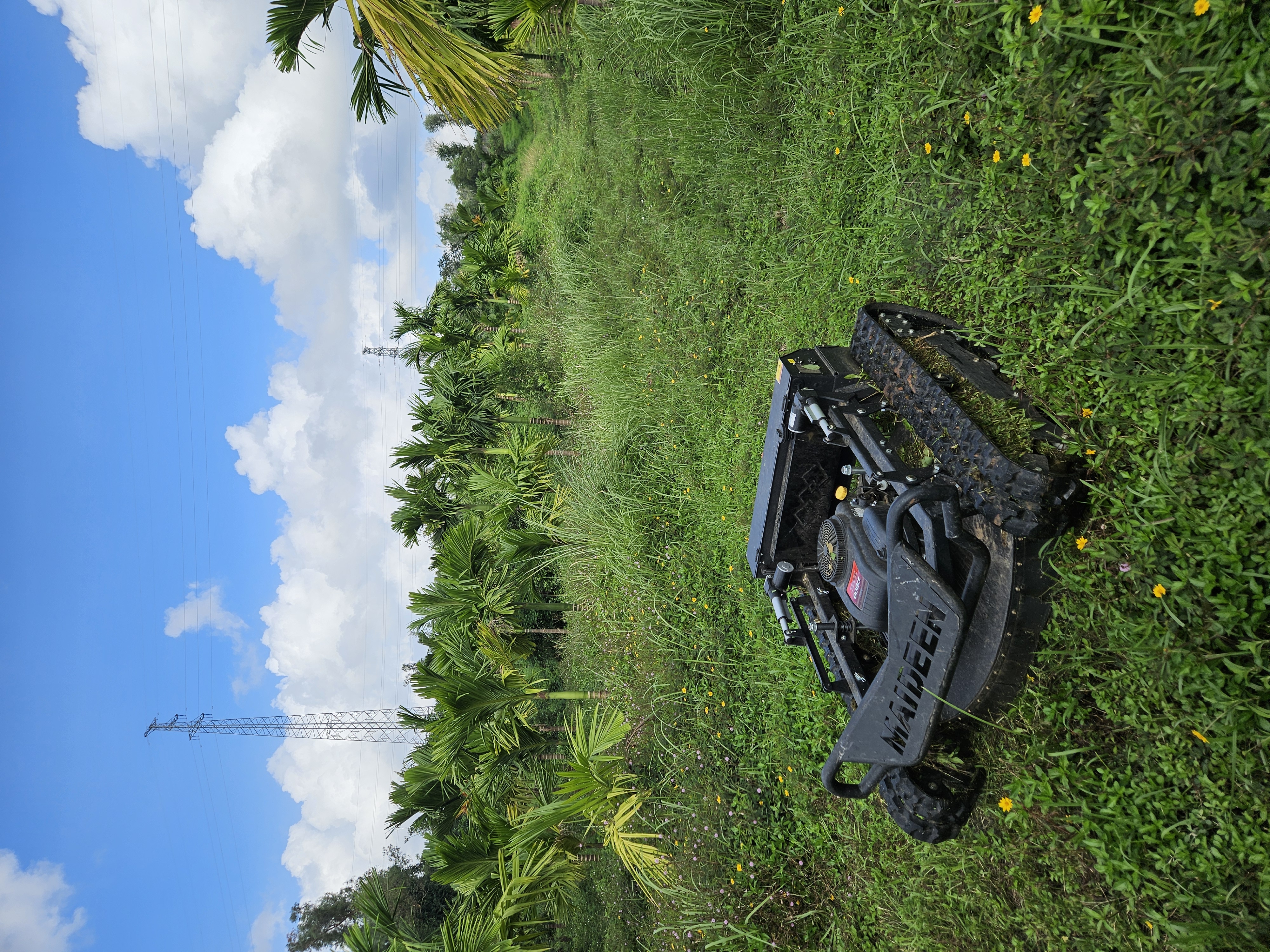
A crawler lawn mower is often considered for orchards, embankments, rough ground, roadsides, or other areas where walking behind a machine or using a conventional wheeled mower may be impractical. Those labels are still too broad for a production brief. Before comparing configuration options, write down the actual site conditions:
- Ground profile: average and maximum slope, changes in grade, soft sections, ruts, loose material, ditches, and obstacles.
- Vegetation: grass height, density, stem toughness, moisture, mixed growth, and how often the site is cut.
- Route and access: gate width, loading method, turning areas, storage location, and whether the machine must cross hard surfaces.
- Operating routine: expected working periods, stops for inspection, number of operators, visibility limits, and required clearance from people or property.
- Service conditions: daily checks, access to consumables, replacement-part expectations, local support, and maintenance records.
It may feel natural to begin with engine output or track width. In practice, those values only become meaningful after the site is described. A configuration that is suitable for regularly maintained grass can require a different cutting approach, traction expectation, or inspection routine when vegetation, moisture, and ground irregularity change.
Define customization in layers
Clear layers make crawler lawn mower custom production easier to review. They also keep a buyer from treating every request as equally simple to implement.
1. Commercial and identity requirements
These usually include logo placement, color references, decals, manuals, carton artwork, language versions, spare-parts labeling, and the level of technical support expected after delivery. Supply artwork files, label text, target languages, and approval owners early. Branding changes still need review for durability, legibility, safety labels, and local regulatory requirements.
2. Work-configuration requirements
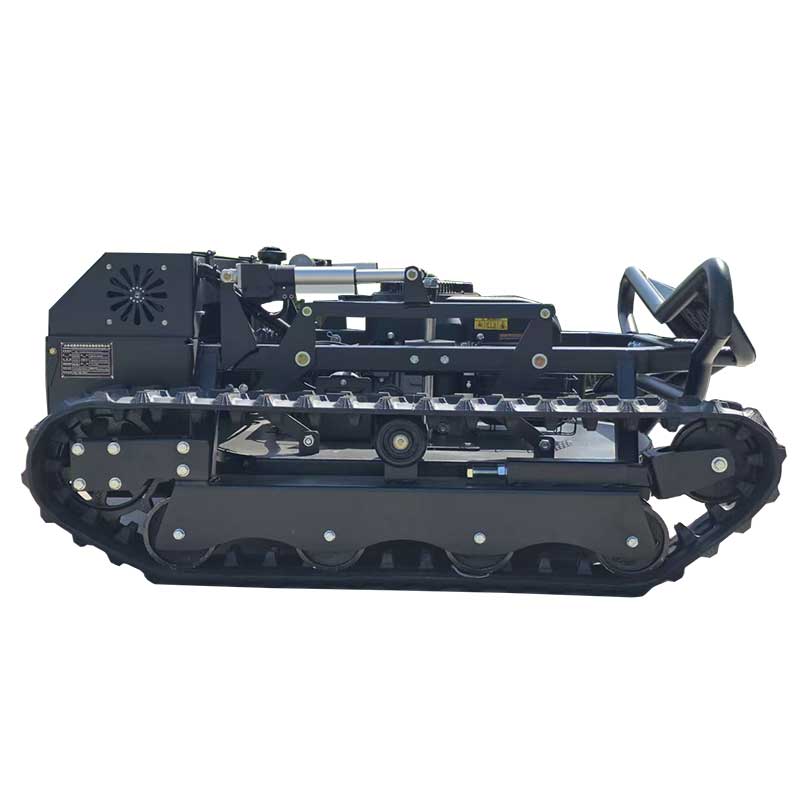
These connect the machine to the task: desired cutting method, cutting-height range to be confirmed, guards, track design, control layout, transport restraints, or options that improve access for routine inspection. State the intended use case rather than assuming a requested feature delivers a particular result. For example, a buyer can request that a proposed configuration be evaluated against damp ground and dense vegetation; the supplier should then confirm the feasible scope and validation method.
3. Engineering-change requirements
Requests involving powertrain changes, remote-control logic, safety functions, structural parts, load paths, or control-system behavior may affect engineering validation and compliance scope. They need a written feasibility review, revision control, and defined acceptance criteria. Do not describe such changes as standard options until the final configuration and its documentation are confirmed.
Put safety and compliance questions before production release
Remote operation can reduce direct exposure in some mowing tasks, but it does not remove the need for trained operation, site inspection, exclusion zones, and safe maintenance. The custom brief should identify the destination market, intended operator arrangement, and whether the final machine is being treated as a pedestrian-controlled mower, a remotely controlled machine, or another applicable category. That classification should be reviewed by the responsible manufacturer and qualified compliance personnel.
As reference points, ISO 5395-1:2013 describes terminology and common test methods used to verify safety requirements for certain combustion-engine-powered lawnmowers, while EN 12733:2018 is described as a European safety standard for pedestrian-controlled motor mowers in agricultural, forestry, and landscaping work. Neither reference automatically proves that a particular custom crawler lawn mower is compliant. The applicable requirements depend on the final product category, power system, control method, destination market, and documented assessment.
Ask for a safety-review matrix that assigns an owner and verification method to each relevant topic. Common subjects include emergency stopping, control-range behavior, loss-of-signal behavior, starting and shutdown sequence, blade and moving-part guarding, hot-surface warnings, stability limits, noise or emissions obligations where relevant, labels, manuals, and maintenance lockout procedures. The point is not to predict a compliance outcome; it is to make the evidence requirement visible before tooling or production release.
Convert field conditions into acceptance criteria
The most useful custom-production brief distinguishes a requirement from a marketing phrase. “Suitable for slopes” is vague. A controlled requirement identifies the representative surface, vegetation condition, travel direction, operator positioning, measurement approach, and pass/fail decision. The same principle applies to cutting quality, maneuvering, remote-control response, packaging, and documentation.
| Requirement area | What to provide | What to confirm |
|---|---|---|
| Terrain and route | Photos, slope survey, obstacle notes, access dimensions | Whether the proposed configuration can be assessed against those conditions and what limits remain |
| Vegetation and cut task | Typical and peak grass condition, cutting interval, material samples if practical | Cutting-system suitability, inspection needs, and test conditions |
| Remote operation | Operator position, expected range, line-of-sight restrictions, work-zone plan | Control functions, emergency procedures, signal-loss behavior, and training content |
| Brand and market | Artwork, labels, manual languages, destination country | Label review, documentation scope, and regulatory responsibilities |
| Service and parts | Maintenance expectations, consumables list, local support plan | Parts identification, service instructions, and agreed support process |
Use a staged OEM/ODM review instead of one final approval
Custom projects are easier to manage when the buyer and supplier approve evidence in stages. First, approve a requirements sheet that separates must-have items from preferences. Next, review the proposed configuration and any items still requiring feasibility confirmation. Then agree how samples, pre-production units, or representative demonstrations will be evaluated. Finally, freeze the approved bill of materials, drawings or artwork where applicable, labels, manuals, packaging, and acceptance record before volume production.
This sequence matters because it protects both sides from silent assumptions. A request for a specialized crawler lawn mower custom production program may be feasible, but feasibility is not the same as a completed engineering commitment. Revision dates, named approvers, photos or records from agreed checks, and a clear treatment of deviations make later communication more reliable.
Custom Production Requirements Checklist
For a crawler lawn mower project, a useful request sheet identifies terrain, vegetation, access, operating routine, and the intended market. That gives engineering a defined basis for a crawler lawn mower custom production review rather than an open-ended feature request.
For each requested feature on a crawler lawn mower, record its purpose, priority, owner, and acceptance evidence. A customized guard, control layout, label set, or track-related choice should be linked to a drawing, sample, inspection record, or agreed demonstration. Requests that change structure, controls, or safety behavior should be marked as subject to engineering feasibility and compliance review.
Before approving a crawler lawn mower for production, ask for an agreed configuration sheet, a pre-production review, operating documentation, maintenance instructions, parts identification, and acceptance records. These materials help separate confirmed items from topics requiring additional testing or clarification.
Questions to send with an inquiry
- What terrain, vegetation, and seasonal conditions will the crawler lawn mower encounter?
- What is the intended operating procedure, including operator location and work-zone controls?
- Which requests are branding or packaging changes, and which alter function, structure, or controls?
- Which destination markets, language requirements, and compliance reviews apply?
- What evidence is required before acceptance: configuration list, drawings, test record, demonstration, manual, labels, or spare-parts list?
- Who approves each stage, and how will changes after approval be documented?
Final perspective
The special requirements for a custom crawler lawn mower are not limited to tracks or a remote handset. They include the discipline of describing the work site, distinguishing cosmetic choices from engineering changes, defining safety and compliance review responsibilities, and agreeing on evidence before production. Shandong Maide En Intelligent Technology can use a requirements-led discussion for remote-control mower projects and OEM/ODM inquiries; the final scope should be based on confirmed site information, the selected configuration, and documented feasibility review.