EN
Why Eco friendly lawn mower Reduce Carbon Emission During Work
Choosing an eco friendly lawn mower is not only about a quieter garden. During work, a lawn mower that does not burn gasoline can avoid direct tailpipe exhaust at the place where people, pets, and workers are present. That distinction matters. A battery-powered lawn mower still uses electricity, and its total climate impact depends on charging, battery care, and the local power supply. Yet moving away from onsite fuel combustion gives many property managers a practical starting point for reducing operational emissions.
As a lawn equipment technical explainer, I would start with the job rather than a slogan. The right lawn mower for a flat residential yard, a school campus, an orchard edge, or a sloped commercial site may be different. When the machine, cutting route, and maintenance plan fit the work, an eco friendly lawn mower can reduce wasted energy as well as eliminate fuel use at the point of mowing.
Where a gasoline lawn mower creates emissions
A conventional gasoline lawn mower burns fuel in a small internal-combustion engine while the blade is turning. That process releases carbon dioxide from the fuel and creates local exhaust pollutants. The U.S. Environmental Protection Agency has documented lawn and garden equipment as a nonroad emissions source, which is a useful reminder that small engines are not emissions-free simply because they are used in open air.
Carbon is not the only concern. Fuel handling, idling, repeated cold starts, and poor engine maintenance can add avoidable waste to a mowing routine. If a lawn mower is operated with a clogged air filter, a dull blade, or a route that overlaps the same ground repeatedly, the crew may burn more fuel without improving the finish. The most useful comparison is therefore not just “gas versus electric”; it is a comparison of complete operating habits.
How an eco friendly lawn mower changes the work phase
An electric or battery-powered lawn mower has no combustion engine running during the cut. In practical terms, it does not produce direct tailpipe carbon dioxide, nitrogen oxides, or volatile organic compounds while it travels across the site. This is the clearest operational advantage of an eco friendly lawn mower: the local work phase is separated from gasoline burning.
It is worth correcting a common shortcut here. “Zero emissions” is not the same as “zero environmental impact.” Electricity used to charge a lawn mower can carry upstream greenhouse-gas emissions, depending on how that electricity is generated. Battery manufacturing and eventual recycling also matter. Still, an eco friendly lawn mower gives a site team control over several levers that a gasoline machine does not: charging timing, renewable-electricity purchasing where available, battery stewardship, and lower-energy work planning.
No idling fuel engine during setup
With a gas lawn mower, preparation can include fueling, warming the engine, and moving between small areas with the engine running. A battery lawn mower may still consume energy while travelling and cutting, but it does not need to idle a fuel engine at the curb or beside a planting bed. For frequent short tasks, avoiding those combustion periods can be especially meaningful to the local operating profile.
Less fuel transport and spill exposure
Gasoline requires delivery, storage, filling, and safe handling. Replacing routine fuel filling with managed charging removes a source of onsite vapor and spill risk. This is not a reason to ignore battery safety: chargers, cables, and battery packs still need manufacturer-approved handling and dry, protected storage. It is simply a different—and often easier to standardize—operational control.
Four operating choices that make the carbon benefit more credible
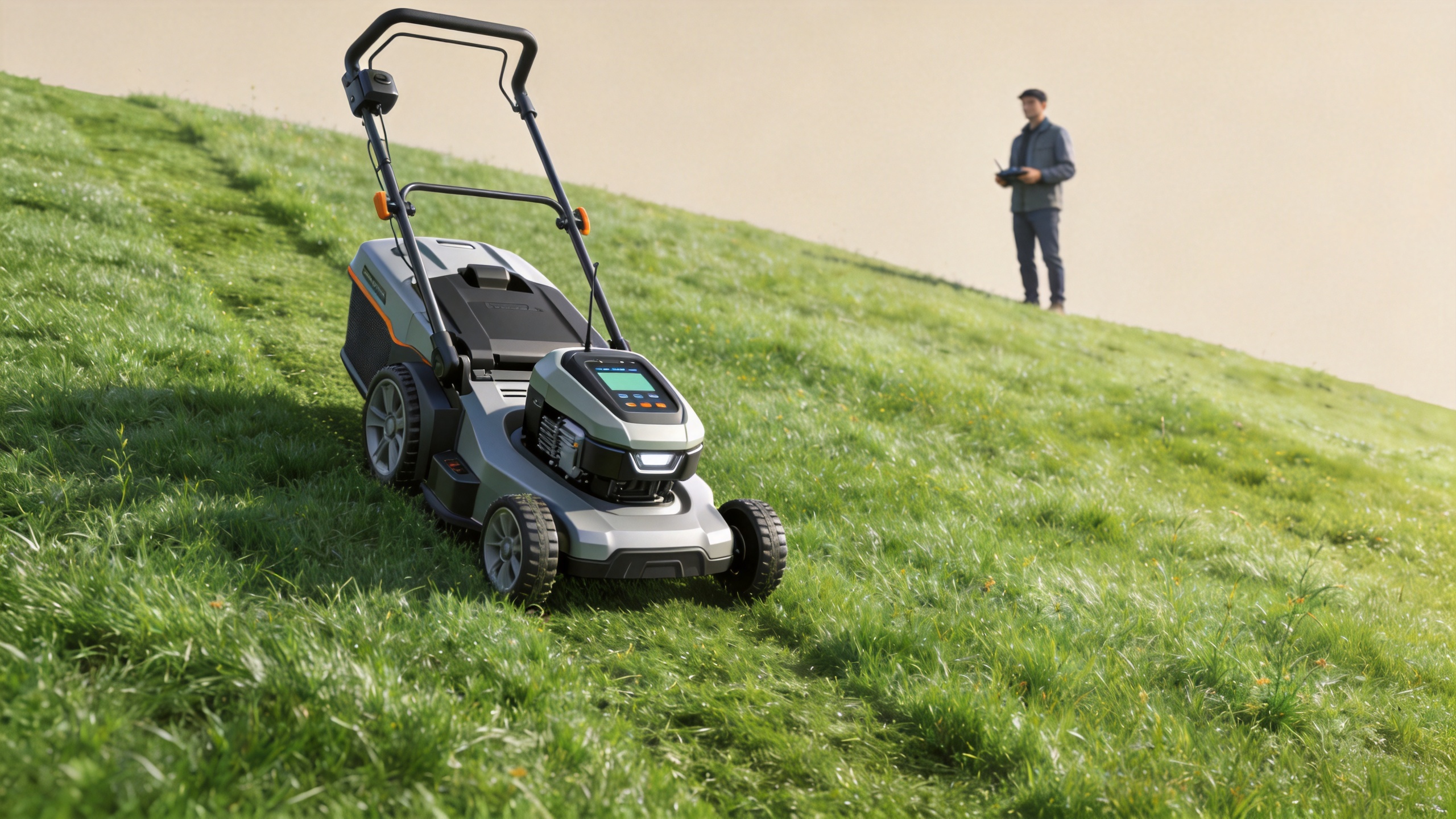
An eco friendly lawn mower delivers a more credible practical result when the operation is organized around real conditions. A larger machine is not automatically better, and a larger battery is not automatically the lowest-carbon answer. Consider these four decisions before building the mowing schedule.
- Match the lawn mower to terrain and vegetation. Measure slope, grass density, obstacle frequency, and access routes. A lawn mower that is too small may require repeated passes; one that is oversized may use unnecessary energy and be harder to maneuver safely.
- Set a sensible cutting frequency. Mowing on a calendar without looking at growth can create avoidable runtime. Seasonal growth, irrigation, and the desired grass height should guide the schedule. Do not let “eco” become an excuse to mow unsuitable wet or overgrown conditions.
- Plan the route before the battery is low. Group adjacent zones, reduce deadhead travel, and identify charging breaks before the job begins. On a complex site, a clean route can save more energy than a small difference in nameplate battery capacity.
- Keep the cutting system efficient. A sharp blade, clear deck, correct tire or track condition, and routine inspection help a lawn mower complete the same work with less resistance. Maintenance is not glamorous, but it is part of emissions-aware operation.
Why charging strategy belongs in the calculation
The work-phase benefit of an eco friendly lawn mower is strongest when charging is planned rather than improvised. Charge only with compatible equipment, follow the manufacturer’s battery-temperature and storage guidance, and avoid leaving packs in conditions that shorten their useful life. A battery that lasts through more useful charge cycles spreads its manufacturing impact over more mowing work.
Where a facility can choose when to charge, it may be able to align charging with a lower-carbon electricity tariff or onsite renewable generation. Availability varies by location, so this should be checked rather than assumed. For a commercial crew, logging charge time, mowing hours, and rework trips for several weeks can reveal whether the chosen lawn mower and battery count actually suit the route.
Comparing a lawn mower beyond the marketing label
When evaluating an eco friendly lawn mower, ask suppliers for documentation that can be verified: rated runtime under stated conditions, charging requirements, battery warranty terms, service access, safe slope limits, and end-of-life battery guidance. Do not rely on an unqualified claim that any electric lawn mower will cut carbon by a fixed percentage. The answer depends on the replaced fuel use, the local grid, the work pattern, and how long the equipment remains productive.
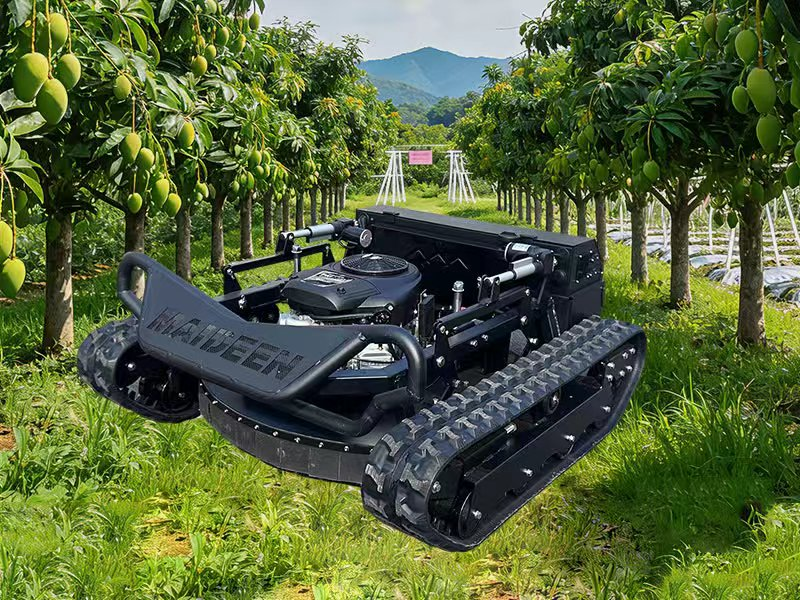
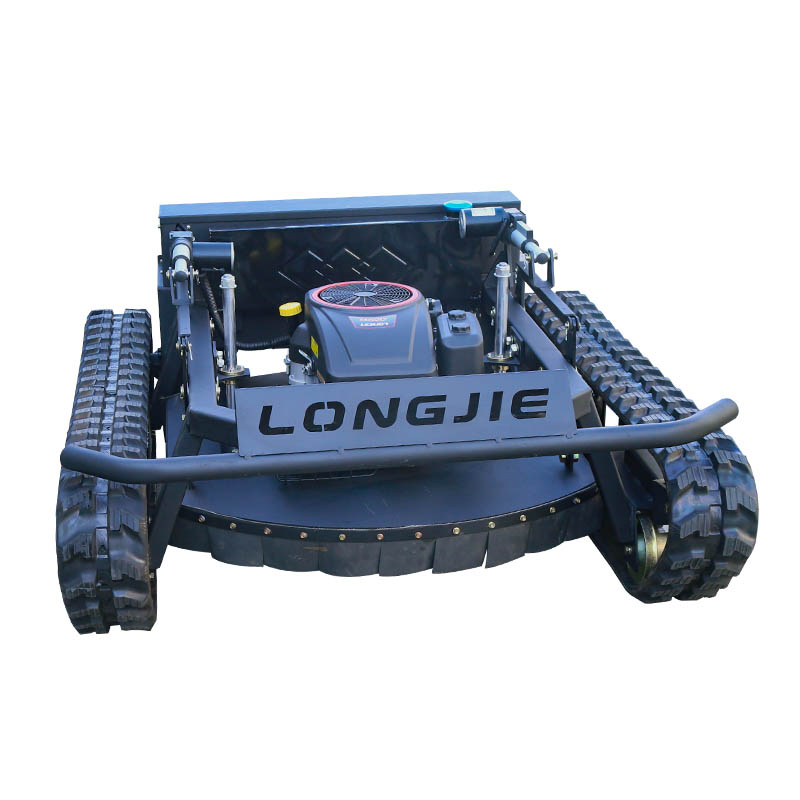
For buyers considering remote-control equipment, safety comes first. Remote operation does not mean unattended operation. The site needs defined exclusion zones, line-of-sight practices where required, an emergency-stop procedure, and a review of slopes, holes, rocks, and changing ground conditions. Better route control can reduce unnecessary travel, but it must not override the manufacturer’s instructions or site safety rules.
A practical checklist before changing your mowing fleet
- Record current fuel use and mowing hours for each lawn mower over a representative season.
- Map terrain, access points, charging locations, and the longest continuous routes.
- Compare the expected runtime under your actual grass and slope conditions, not only a brochure figure.
- Set a battery charging, inspection, storage, and replacement process before deployment.
- Review how electricity is supplied at the site and whether charging can be scheduled intelligently.
- Train operators on the lawn mower, blade safety, emergency procedures, and the limits of remote operation where applicable.
The bottom line
An eco friendly lawn mower can reduce carbon emissions during work because it avoids burning gasoline at the point of mowing. The improvement is real, but it is not automatic or identical for every property. A stronger outcome comes from selecting a lawn mower that fits the terrain, reducing unnecessary passes, maintaining the cutting system, extending battery life, and using a considered charging plan.
Start by measuring the current job: fuel, hours, route, grass conditions, and safety constraints. Then test an eco friendly lawn mower against those conditions and keep the records needed to make a transparent decision. That approach is more credible than a broad green claim—and more useful for a working fleet.