EN
Why Spray Attachment Crawler Remote Control Lawn Mower Realize Dual Functions
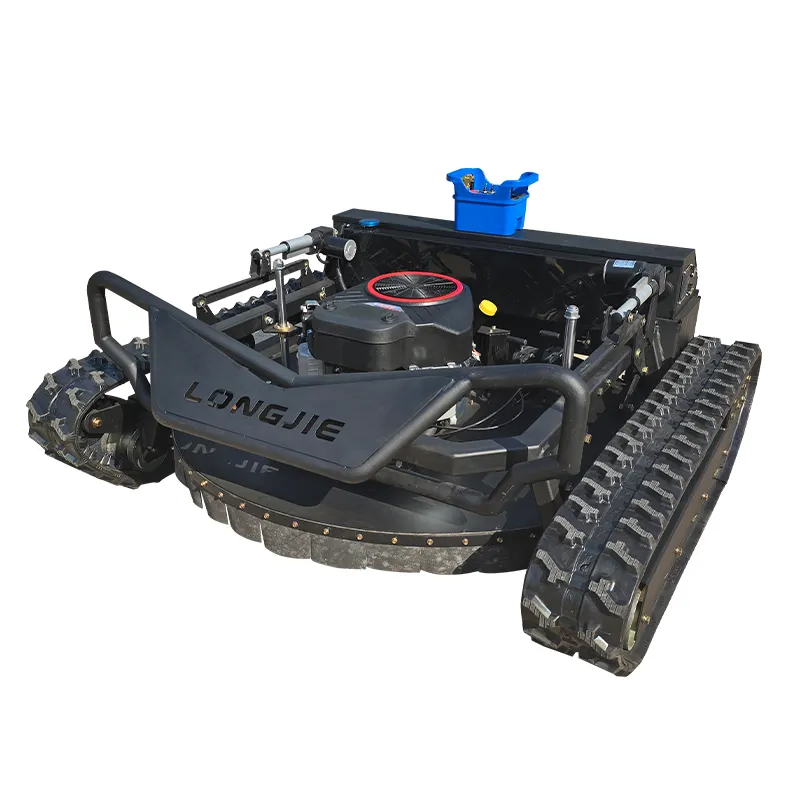
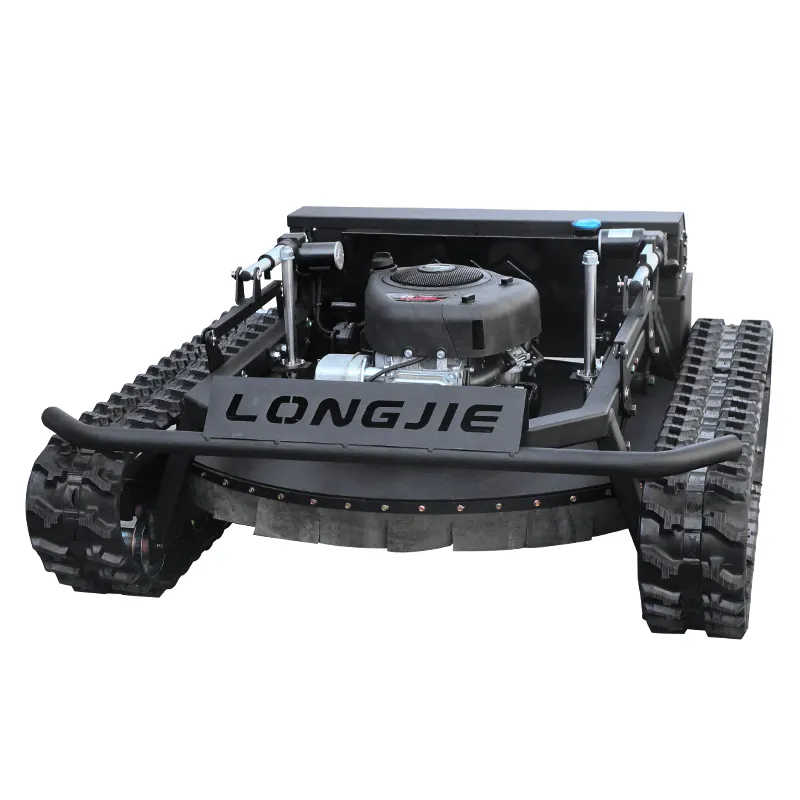
A crawler remote control lawn mower can be discussed as a mowing platform first and an attachment carrier second. That distinction matters. A crawler undercarriage may help a machine travel over uneven turf, orchard rows, or managed green areas, while remote operation can move the operator away from the immediate cutting path. Adding a spray attachment does not simply turn one job into another; it creates two work systems that need separate setup, inspection, and approval.
As a technical explainer, I recommend starting with the task rather than a feature list. A crawler remote control lawn mower may support a workflow in which vegetation is cut during one pass and an approved liquid is applied during another. Whether a particular configuration can do both at one site depends on the machine, attachment interface, local rules, product labels, terrain, and the operator’s training. Those checks are more useful than assuming every attachment fits every mower.
What “dual functions” actually means
The first function of a crawler remote control lawn mower is vegetation management. The cutting deck, travel system, route, guards, and remote controls are considered together to cut grass or light vegetation within the manufacturer’s stated limits. The second function is application: a compatible tank, pump, hose, filter, boom or nozzle arrangement may place an approved liquid on a target area. It is prudent to treat these as separate operating modes, not as two systems that must run simultaneously.
That separation prevents a common planning error. Mowing is a mechanical task with its own blade, guarding, slope, obstacle, and discharge considerations. Spraying is an application task with its own mixing, calibration, drift, buffer, cleaning, and recordkeeping considerations. A crawler remote control lawn mower can make both tasks easier to organize when the attachment is properly designed, but it does not remove either set of responsibilities.
Why a crawler platform can support the workflow
Tracks can distribute contact over a larger area than a narrow wheel footprint, yet they do not make every wet, steep, soft, or rough surface suitable. Before selecting a crawler remote control lawn mower, map the route: entry points, turns, slopes, drainage channels, trees, rocks, people, animals, and sensitive plants. A planned route also reveals where an attachment could affect clearance, stability, visibility, or the ability to stop safely.
Remote control changes the operator’s position, not the need for supervision. The operator still needs a clear view, a tested stop function, an exclusion area, and a plan for interruptions. If the site has blind corners or changing ground conditions, split the work into shorter zones and inspect each zone. Efficiency is important, but a remote workflow is not a substitute for site checks.
How the spray attachment becomes a distinct system
For a crawler remote control lawn mower, attachment compatibility begins with verified information: mounting points, allowed load, power or hydraulic requirements, controls, and the manufacturer’s permitted operating configuration. Do not infer compatibility from appearance. Ask the supplier for documentation showing how the tank is secured, how hoses are protected from heat and moving parts, how the pump is controlled, and how the system is drained and cleaned.
The application circuit deserves its own inspection. Confirm the correct liquid and label directions, tank condition, filters, hose connections, nozzle condition, and leak-free operation. Sprayer calibration is a separate step because nozzle output and travel speed affect the intended application rate. Guidance on drift management commonly emphasizes that applicators must follow the applicable label and assess factors such as wind, nozzle setup, application height, and sensitive areas. Those requirements remain in force even when the carrier is remotely operated.
A practical sequence for two jobs
- Survey the site. Mark hazards, drainage, public access points, non-target vegetation, and any area where spraying is restricted or unsuitable.
- Choose the task order. Decide whether mowing should be completed before application. Separate passes are often easier to inspect and document than trying to combine actions.
- Prepare the mowing mode. Inspect the crawler remote control lawn mower, cutting components, track condition, guards, remote, and emergency-stop procedure according to its manual.
- Prepare the application mode. Mount only an approved attachment, verify load and balance, calibrate the spray system, and follow all label, training, and local requirements.
- Control the work zone. Keep bystanders out, maintain visual oversight, and pause when weather, ground, or visibility changes.
- Close out separately. Inspect the mower, clean the spray system as required, manage residues correctly, and record maintenance or application information required at the site.
Questions to ask before buying or configuring
Instead of asking whether a crawler remote control lawn mower has “more functions,” ask whether the dual-function setup is supportable in your conditions. What vegetation will be cut? What is the maximum verified slope and surface condition? Which attachment model is approved? What liquid is proposed, and who is qualified to use it? Where are water, occupied areas, sensitive crops, and drainage paths? What parts, cleaning procedure, and service support are available?
These questions help purchasing, technical, and operating teams compare like with like. They also make an OEM or ODM discussion more productive: the supplier can evaluate the requested mowing platform, attachment interface, work route, and documentation rather than responding to a vague request for a machine that “does everything.”
The value is controlled task planning
A crawler remote control lawn mower with a suitable spray attachment can support a more organized equipment plan when mowing and application are treated as distinct, controlled functions. The strongest case is not a promise of universal capability. It is a documented workflow: verify the platform, verify the attachment, separate the inspections, respect application rules, and confirm the site conditions before work begins. For buyers, that approach produces a clearer specification and a safer basis for supplier discussions.