
 EN
EN
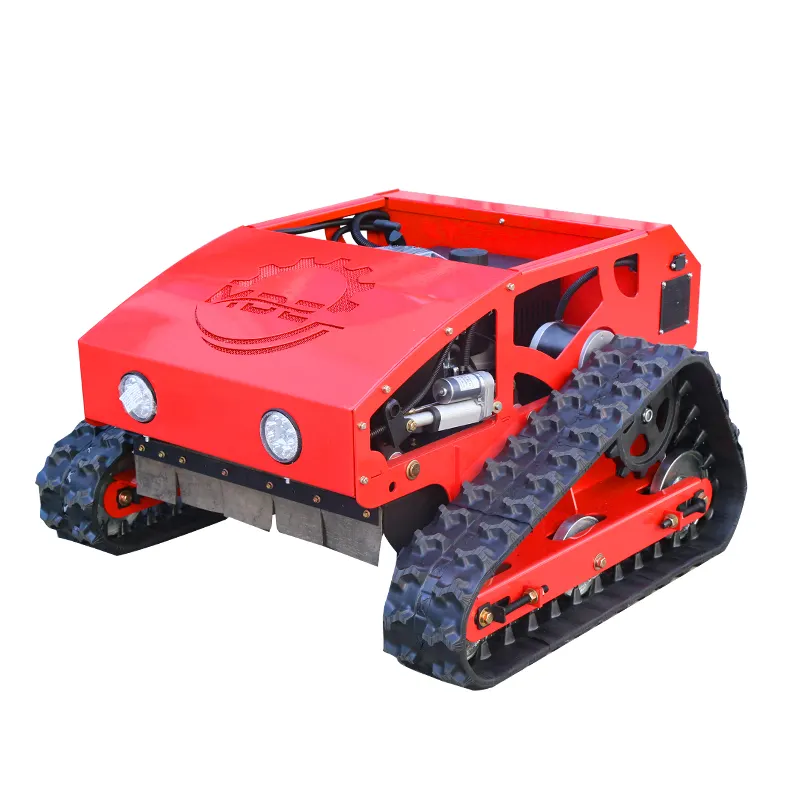
Laser Weeding Technology for Chemical-Free Weed Control
How laser weeding enables precision weed elimination without herbicides
Laser weeding tech works by zapping weeds with focused heat that messes up their internal systems. Tests published in Agronomy last year found these systems work between 89% and almost 97% of the time. What makes them different from just spraying chemicals all over? Well, they actually protect the good microbes in the soil while going after tiny weeds, sometimes as small as just 1.5 millimeters across. Looking at real world numbers, most systems need around 7 to 10 kilojoules of energy for each weed tackled. The fancier models can handle about five thousand plants every hour without messing up the ground at all. Pretty impressive when compared to traditional methods.
Integration of high-resolution imaging sensors for targeted laser application
The combination of hyperspectral cameras covering the 400 to 1000 nm spectrum along with 3D depth sensors makes it possible to tell crops from weeds down to just 0.2 mm in detail. When these technologies work together, they can spot targets accurately even among thick plant growth. Some top systems have hit around 98% accuracy when working with lettuce plants according to recent studies published last year in Precision Agriculture. Getting real time processing done quickly is crucial too since these devices need to react fast enough for machines moving at about 8 kilometers per hour across fields.
Case study: Laser-weeder performance in organic row crops
A three-year USDA-sponsored trial in organic carrot fields demonstrated:
- 94% weed suppression compared to manual labor
- 37% reduction in overall weeding costs
- Zero crop damage across 120 operational hours
The system proved especially effective against broadleaf weeds like lambsquarters and pigweed, which represent 68% of herbicide-resistant species (2024 Organic Farming Report).
Challenges in energy efficiency and scalability of laser systems
Most laser weeders on the market today need between 15 and 25 kilowatts of power, which basically means they can only be attached to tractors right now. But there's something new coming out with these capacitor based pulse systems that cut down energy usage around 40 percent without losing effectiveness against weeds. The plants still get hit with about 2.8 joules per square millimeter, enough to kill them off properly. A recent study in the Agricultural Engineering Review from 2024 points towards modular fiber laser setups as probably the way forward for bigger farms over 200 acres. Still, farmers should know that managing heat buildup continues to be a real problem when running these systems non stop for long periods.
Autonomous Navigation and Real-Time Field Adaptation in Robotic Weeders
Modern weeders now leverage autonomous navigation that combines GPS precision with adaptive terrain mapping, enabling real-time adjustments in dynamic field conditions. A 2024 field robotics study found autonomous models achieved an 8.3 cm average lateral deviation during row tracking in cotton fields—34% better than traditional tractor-towed systems.
Real-time path planning using GPS and terrain mapping for weeders
Equipped with RTK-GPS and inertial measurement units (IMU), these systems generate centimeter-accurate field maps. Algorithms process elevation changes and soil compaction data in milliseconds, optimizing paths to maximize coverage while minimizing crop damage.
Sensor fusion in autonomous navigation: LiDAR, IMU, and visual odometry
Reliable navigation relies on three core technologies:
- LiDAR for 360° obstacle detection at 40 scans/sec
- IMUs maintaining orientation accuracy within <2° during GPS outages
- Visual odometry analyzing 30 fps crop row footage via edge computing
This multi-sensor integration reduces navigation failures by 62% compared to single-sensor setups (ScienceDirect 2024).
Performance comparison: Autonomous vs. tractor-towed weeders in large-scale farming
Field trials highlight key advantages of autonomous systems:
| Metric | Autonomous | Tractor-Towed | Improvement |
|---|---|---|---|
| Operational precision | ±1.5 cm | ±5.8 cm | 286% |
| Fuel efficiency | 0.8 L/ha | 2.3 L/ha | 188% |
| Night operation capability | Full | Limited | N/A |
Data source: Navigation Technology Comparison Study
AI-Powered Weed Detection with Deep Learning and Machine Vision
Convolutional Neural Networks in Weed Classification Using Field Imagery
The latest robotic weeders rely on something called convolutional neural networks, or CNNs for short, to look at pictures of fields and identify plant species with pretty impressive accuracy around 94% according to a study published last year in Agricultural Robotics. What these smart systems do is basically pick out details we humans might miss, things like how leaves branch out and grow across different plants from regular color photos taken in the field. When it comes down to telling apart actual crops such as soybeans or wheat versus pesky broadleaf weeds, there's been some interesting findings recently. Tests have shown that using what's known as VGG16 architecture cuts down on mistakes made by about 38% compared to older methods that just looked at edges in images. That means farmers can trust their machines a lot more now when deciding which plants need pulling out.
Edge Computing for On-the-Go Weed Identification in Robotic Weeders
To support real-time decisions, robotic weeders integrate Jetson Xavier-class processors capable of running quantized CNN models at 15—30 FPS with less than 200ms inference latency. This edge computing approach achieves 89% detection accuracy at 8 km/h, enabling immediate weed targeting without cloud connectivity or workflow delays.
Multispectral and Thermal Sensing for Enhanced Crop-to-Weed Differentiation
The latest agricultural tech blends 5 band multispectral cameras covering wavelengths from 520 to 850 nanometers with long wave infrared thermal sensors. These systems spot the biochemical distinctions between healthy crops and unwanted weeds. When looking at chlorophyll content, crops typically register NDVI values above 0.7 while weeds fall below 0.3. Thermal readings pick up on plant stress patterns too. This combination approach achieves around 92 percent accuracy in telling plants apart. Farmers testing these systems in corn fields have seen roughly five times fewer false alarms compared to older visible light only methods, which makes a big difference in actual field operations.
Smart Spraying and Mechanical Innovations for Sustainable Weed Management
Precision application through variable-rate sprayers guided by AI detection
AI-driven nozzles analyze field imagery in milliseconds to apply herbicides only where weeds are present. In sugarcane trials, this approach reduced overspray by 58—72% compared to conventional spraying (ScienceDirect, 2023). The system dynamically adjusts droplet size and pressure based on weed density, enhancing efficacy in row crops like corn and soybeans.
Reduction in chemical usage: Field data from commercial robotic weeders
Data from 42 organic farms in 2024 show robotic weeders reduced herbicide reliance by 85% in vegetable production. Leveraging centimeter-level GPS and spectral imaging, these machines distinguish crops from 237 common weed species. Farmers report equivalent weed control to traditional methods but with 40% lower operational costs due to decreased chemical input.
Adaptive mechanical tools integrated with machine vision for selective weeding
Next-generation mechanical weeders use 3D cameras to guide retractable blades that selectively remove weeds while avoiding crop stems:
| Feature | Traditional Tools | Advanced Weeders |
|---|---|---|
| Weeding Accuracy | 60—75% | 92—97% |
| Crop Damage Rate | 8—12% | <2% |
| Soil Disturbance | High | Minimal |
Trials confirm these systems eliminate 98% of broadleaf weeds in lettuce fields without harming seedlings. Strain sensors on tillage implements further prevent soil compaction, supporting long-term field health.
Integration of AI Weeders with Farm Management Platforms
Seamless data flow from weeder sensors to cloud-based analytics
Robotic weeders generate over 15 data points per second—including weed density, soil moisture, and pass timing—which cloud platforms aggregate into actionable insights. Through standardized APIs, these systems integrate with weather forecasts and satellite imagery, offering a unified view of field conditions across growing seasons.
Enabling predictive weed management through historical pattern analysis
By analyzing multi-season datasets, AI models identify recurring weed emergence linked to soil temperature and crop rotation patterns. Platforms using predictive analytics reduced herbicide applications by 38% in 2023 trials by anticipating infestations before visible growth.
Future trend: Interoperability standards for precision agriculture ecosystems
Initiatives like the Open Ag Data Alliance are advancing cross-platform compatibility, allowing weeders to share machine-readable weed maps with irrigation and harvesting equipment. With 73% of agritech providers adopting ISO 24001 IoT protocols by Q3 2024, emerging standards are enabling seamless real-time data exchange across multi-vendor fleets.
FAQs
What is laser weeding technology?
Laser weeding uses focused heat to eliminate weeds without harming the soil's beneficial microbes, offering a chemical-free alternative to traditional weed control methods.
How does AI-powered weed detection work?
AI-powered systems use deep learning and machine vision to identify and differentiate between crops and weeds, achieving high accuracy in field applications.
What are the benefits of robotic weeders in agriculture?
Robotic weeders offer precision, reduced chemical usage, and lower operational costs while maintaining effective weed control.
How do autonomous weeders navigate fields?
Autonomous weeders utilize GPS, LiDAR, and AI to map and adapt to field conditions in real-time, ensuring precise operational paths.
Table of Contents
- Laser Weeding Technology for Chemical-Free Weed Control
- Autonomous Navigation and Real-Time Field Adaptation in Robotic Weeders
- AI-Powered Weed Detection with Deep Learning and Machine Vision
- Smart Spraying and Mechanical Innovations for Sustainable Weed Management
- Integration of AI Weeders with Farm Management Platforms
- FAQs