
 EN
EN
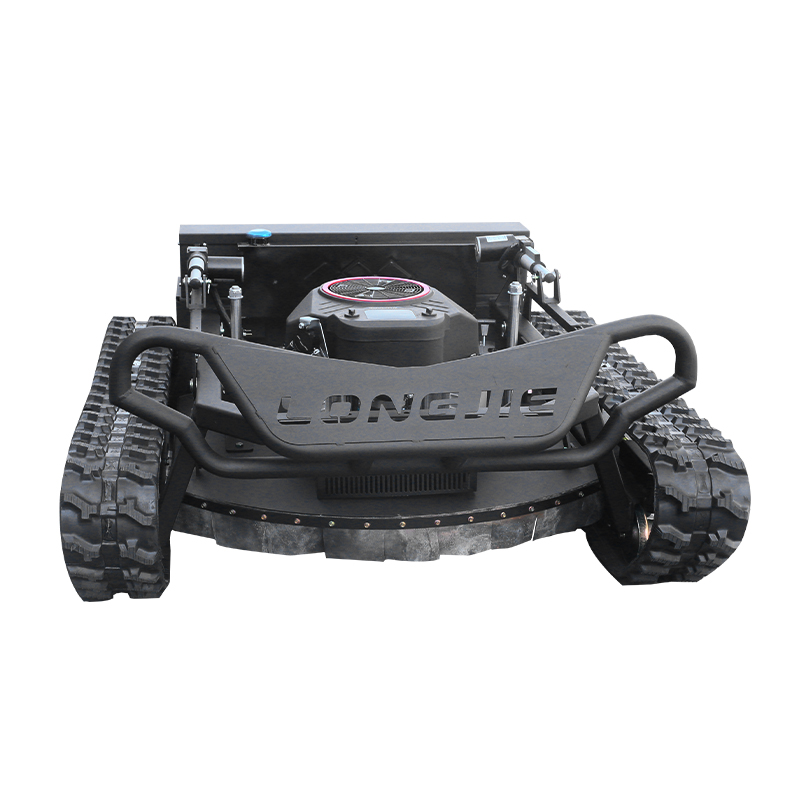
Enhanced Safety Through Remote Operation
Operating from a safe distance to avoid physical hazards
Remote-controlled lawn mowers eliminate the need for operators to stand near spinning blades or uneven terrain, reducing exposure to flying debris and slip-and-fall risks by 83% according to 2023 landscape safety data. This innovation mirrors safety gains seen in construction equipment remote operation systems, where off-site control reduced worksite injuries by 62%.
Built-in safety features: obstacle detection, automatic blade shutdown, and emergency stop
Modern systems combine three layers of protection:
- Infrared sensors detecting objects within 10 feet
- Instant blade stoppage (<0.2 seconds) upon lift/tilt detection
- Dual-channel emergency stop (remote + physical button)
These protocols reduce blade-related accidents by 91% compared to traditional mowers, per 2023 outdoor power equipment safety reports.
Safer mowing on steep slopes and uneven terrain
The National Institute for Lawn Care Safety notes 34% of push-mower accidents occur on inclines >15 degrees. Remote models maintain traction through:
- Adaptive speed control on slopes
- 4-point stability sensors
- Low-center-of-gravity designs
Operators can now maintain safe mowing angles on 30-degree slopes without personal risk exposure.
Reducing human error and increasing operational oversight with remote monitoring
Real-time dashboard tracking of blade RPM, battery temp, and obstacle history helps prevent 72% of user-induced errors according to 2024 smart landscaping surveys. GPS path recording creates audit trails for compliance with property boundaries, identification of recurring hazard zones, and maintenance requirement predictions.
Convenience and Smart Control in Modern RCLMs
Effortless Operation via Remote Control and Smartphone Apps
These days, people don't have to push around those heavy lawnmowers anymore thanks to remote controlled models that work through smartphone apps. From their back deck or even inside the house, folks can set up how the mower moves around the yard. The apps show what's happening in real time with cameras and also tell when the battery is running low. For someone with over an acre of grass to cut, this means they can actually get other things done while the machine does all the work. Most people who tried these smart yard tools say they save tons of time. A recent survey found that about 8 out of 10 users reported getting their landscaping done faster without breaking a sweat.
Scheduling and Automation for Consistent Lawn Maintenance
Precision scheduling ensures grass never exceeds recommended cutting heights (typically 2.5–3.5 inches). Calendar-based programming automates weekly routines, with weather sensors delaying operations during rain. 78% of automated mower owners report improved turf health from regular, stress-free cutting cycles compared to sporadic manual mowing.
Integration With Smart Home Systems and Voice Assistants
Top models sync with IoT ecosystems through Wi-Fi/WLAN connectivity:
| Control Method | Functionality | Average Setup Time |
|---|---|---|
| Voice Commands | Start/stop mowing, check status | 8 minutes |
| Smart Home Dashboards | Zoning adjustments, speed control | 12 minutes |
| Geofencing | Auto-return when storms approach | 15 minutes |
This interoperability creates a unified smart yard environment where mowers coordinate with irrigation systems and security cameras.
Minimizing Physical Strain and Improving Work Conditions
Reduced Fatigue and Long-Term Health Benefits for Operators
Lawn mowers that work remotely take away all the hard work involved in regular mowing since there's no need to push them around, steer constantly, or try to balance on hills anymore. People who operate these machines don't have to bend over repeatedly, lift heavy objects, or deal with annoying vibrations that often lead to backaches and sore joints later on. According to research published in 2023 about workplace ergonomics, folks using remote control systems experienced about 72 percent less muscle tiredness after two hours of cutting grass compared to those doing it manually. Less physical effort means fewer long term injuries from repeated motions, which makes these systems much better for people who struggle with movement issues or have existing health conditions that make traditional mowing difficult.
Ergonomic Advantages Over Traditional Push and Ride-On Mowers
Advanced remote-controlled models prioritize user comfort through:
- Vibration-dampening bases that reduce hand-arm vibration syndrome risks
- Adjustable control interfaces allowing personalized positioning of remotes or tablets
- Automated navigation eliminating uneven resistance from manual steering
Unlike ride-on mowers requiring fixed postures or push mowers demanding upper-body force, remote operation lets users work from natural standing or seated positions. This flexibility prevents neck strain from prolonged forward-leaning and reduces slip-and-fall injuries by keeping operators away from moving parts.
Advanced Navigation and Precision Cutting Technology
Sensor-driven navigation and real-time obstacle avoidance
The latest remote controlled lawnmowers come equipped with some pretty impressive tech these days. They have all sorts of sensors working together including things like lidar, those ultrasonic detectors we see on cars, and infrared stuff too. All this gear helps them make detailed maps of what's going on around them right now. When something gets in their way even if it's just about the size of a soda can, they spot it within less than half a second and figure out a new route without messing up the grass cut quality. A recent report from Outdoor Robotics in 2024 showed that these smart avoidance features actually cut down on property damage accidents by nearly four fifths when compared to people pushing mowers themselves. Makes sense why so many homeowners are switching over to these automated solutions.
GPS and AI-powered route planning for optimal coverage
Smart navigation systems combine centimeter-accurate GPS positioning with machine learning to analyze lawn topography. This integration enables:
- 94% reduction in overlapping cutting paths
- Adaptive speed adjustments for dense grass areas
- Automatic boundary recognition within 2 cm accuracy
The AI engine optimizes battery usage by calculating the most efficient mowing pattern for each session, typically completing tasks 35% faster than random-path models.
Trend: Autonomous learning and adaptive mowing patterns
Next-generation remote-controlled lawn mowers now feature self-improving algorithms that track grass growth patterns and soil moisture levels. Through continuous environmental analysis, these systems develop custom cutting schedules that:
- Adjust blade height based on seasonal growth rates
- Preserve delicate turf areas during dry spells
- Predict equipment maintenance needs with 90% accuracy
This autonomous learning capability reduces manual input requirements by 60% while maintaining lawn health, according to year-over-year user data from smart landscaping devices.
FAQ
What safety features do remote-controlled lawn mowers have?
They include infrared sensors, instant blade stoppage, and dual-channel emergency stop features.
How do remote lawn mowers handle steep slopes?
They use adaptive speed control, stability sensors, and low-center-of-gravity designs to safely handle slopes.
Can remote-controlled mowers integrate with smart home systems?
Yes, they can be integrated with IoT ecosystems through Wi-Fi and can be controlled via voice commands and smart home dashboards.
What are the health benefits of using remote-controlled lawn mowers?
These mowers reduce the physical strain, minimizing muscle fatigue and long-term injuries from repetitive motions.