
 EN
EN
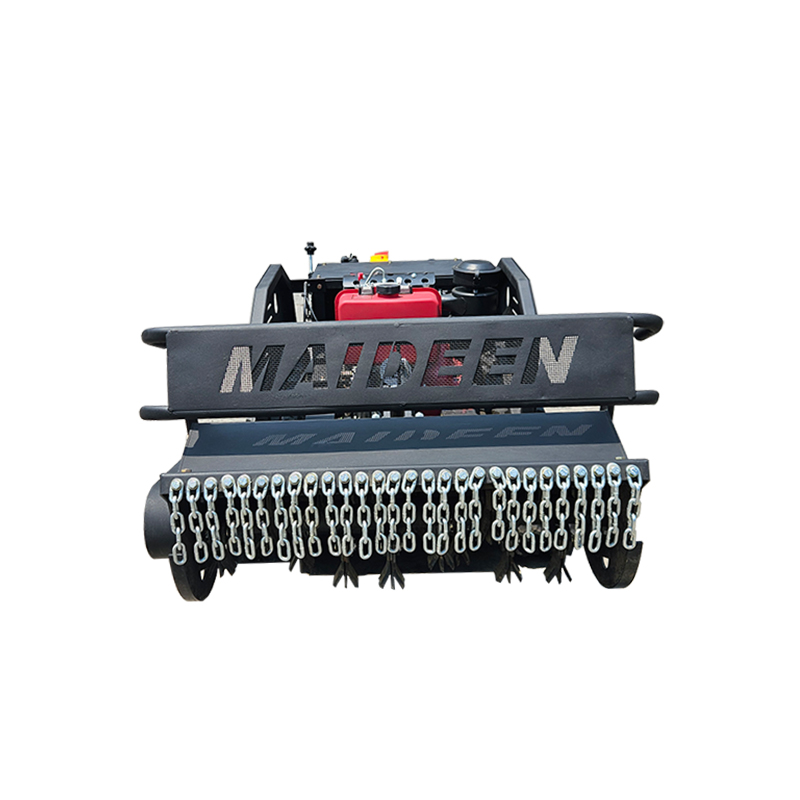
Match Your Lawn Profile to the Right Mower Grass Cutter
Selecting the optimal mower grass cutter requires aligning equipment capabilities with your lawn’s unique characteristics. A mismatch leads to inefficiency, unnecessary physical strain, and inconsistent results.
Rotary, Reel, and Robotic Mower Grass Cutter: Trade-Offs for Speed and Ease
Three primary technologies dominate residential lawn care—each excelling in specific scenarios:
- Rotary mowers use horizontally spinning blades, offering versatility across uneven terrain and taller grass. They require moderate effort but deliver reliable performance in diverse conditions.
- Reel mowers employ scissor-like blade action for precise, clean cuts on flat, well-maintained lawns. Quiet and eco-friendly, they are less effective on thick growth or around obstacles.
- Robotic mowers automate cutting via programmed routes and boundary wires. Best suited for open, obstacle-light lawns under 1 acre, their higher upfront cost is offset by long-term labor savings and consistent maintenance.
Slopes, Obstacles, and Surface Consistency: Minimizing Manual Intervention
Terrain complexity directly impacts both performance and user exertion:
- Steep slopes (>15°) demand self-propelled models with all-wheel drive (AWD) to prevent slippage and reduce pushing effort.
- Obstacles like trees or garden beds require zero-turn agility or compact footprints for tight maneuvering.
- Uneven surfaces benefit from larger rear wheels and adjustable deck suspensions, minimizing scalping and ensuring uniform cut height.
Prioritizing terrain compatibility reduces rework and physical fatigue by up to 40% compared to ill-suited equipment.
Prioritize Power Efficiency and Drive Systems for Effortless Operation
Gas, Electric, and Battery-Powered Mower Grass Cutter: Real-World Performance Comparison
The right power source balances runtime, torque, noise, and long-term cost:
- Gasoline models deliver high torque for dense or damp grass but emit five times more CO₂ than electric alternatives (U.S. Environmental Protection Agency, 2023) and incur ~$120/year in fuel and maintenance.
- Corded electric units provide unlimited runtime and lower noise (70–80 dB), yet mobility is limited to a 100-ft radius—and tangled cords cause over one-third of user interruptions.
- Battery-powered systems, now equipped with lithium-ion cells and brushless DC (BLDC) motors, achieve 45–75 minutes of runtime per charge. BLDC efficiency cuts energy loss by 30% versus brushed motors, while modern torque output matches gas units on slopes up to 15°.
| Power Type | Avg. Runtime | Noise Level | Annual Op. Cost |
|---|---|---|---|
| Gasoline | Unlimited | 85–95 dB | $140 |
| Battery | 45–75 min | 65–75 dB | $40 |
| Corded Electric | Continuous | 70–80 dB | $25 |
Self-Propulsion, Variable Speed, and All-Wheel Drive (AWD): Reducing Physical Load
Drive systems are pivotal for reducing operator fatigue:
- Self-propelled configurations cut pushing effort by up to 80% on inclines. Front-wheel drive (FWD) offers responsive handling on level ground; rear-wheel drive (RWD) provides superior traction on hills.
- Variable-speed controllers automatically modulate torque based on grass density and moisture—preventing stalls in wet or thick conditions.
- AWD systems distribute power evenly across all four wheels, enabling stable operation on slopes up to 20° and reducing wheel slippage by 62% versus two-wheel drive. Gearless direct drives eliminate belt replacements, saving ~1.5 hours of annual maintenance.
Operators report half as much fatigue using AWD models on uneven terrain.
Evaluate Ergonomic and Smart Features That Sustain Long-Term Time Savings
Height Adjustment, Vibration Control, and Weight Distribution Metrics
Ergonomic design translates directly into sustained efficiency—reducing fatigue, minimizing breaks, and preventing rework:
- Single-lever height adjustment enables instant deck changes across varying terrain, eliminating 20–30 seconds per pass—critical on undulating lawns.
- Vibration levels below 2.5 m/s², aligned with OSHA’s 2023 occupational threshold, significantly delay hand-arm vibration syndrome onset and correlate with 37% fewer user breaks during extended sessions.
- Optimal weight distribution (40% front / 60% rear) improves slope traction while lowering required push force.
| Feature | Time-Saving Impact | Target Metric |
|---|---|---|
| Deck Adjustment | Eliminates rework | <10 sec per setting change |
| Vibration Damping | Reduces fatigue breaks | ≤2.5 m/s² exposure |
| Balanced Weight | Lowers maneuver effort | 40/60 front/rear ratio |
Integrated control panels with predictive maintenance alerts—such as blade wear notifications issued 8–10 hours before performance decline—further reduce unplanned downtime. When optimized, these features conserve 15–20 operational hours annually per property.
Assess Maintenance Demands to Protect Your Time Investment
High-maintenance mowers erode time savings gained during operation. Models requiring weekly blade sharpening, monthly oil changes, or seasonal part replacements can consume 15–30 hours annually—equivalent to a full work week. Prioritize designs with sealed bearings, washout ports, and tool-free adjustments to minimize upkeep frequency.
Adopt a tiered maintenance strategy aligned with usage:
- Low-use lawns (<5,000 sq ft): Quarterly inspections and annual blade service
- High-use properties (>15,000 sq ft): Monthly cleaning and bi-annual tune-ups
- Commercial-grade equipment: Follow manufacturer-specified hourly service intervals
Modern electric lawnmowers come equipped with self-diagnostic features that monitor motor condition and track blade wear without needing constant human intervention, which cuts down on manual inspections by about forty percent. When people skip regular maintenance, they end up paying the price. According to research from the Ponemon Institute in 2023, typical homeowners shell out around seven hundred forty dollars each year for fixes that could have been avoided with proper care. To make sure this expensive purchase lasts longer, look for models where filters are easy to reach, decks resist rust, and parts follow standard specifications. These practical design choices can cut down future servicing time nearly in half when compared to those fancy proprietary systems that require special tools and expertise.
FAQ Section
What is the best mower for uneven terrain?
Rotary mowers are versatile and work well on uneven terrain due to their adjustable deck suspensions and larger rear wheels.
How does AWD improve mower performance?
AWD systems distribute power equally across four wheels, enhancing stability on slopes up to 20° and reducing wheel slippage.
How often should I maintain my mower?
Low-use lawns (<5,000 sq ft) need quarterly inspections, while high-use properties (>15,000 sq ft) require monthly cleaning and bi-annual tune-ups.