
 EN
EN
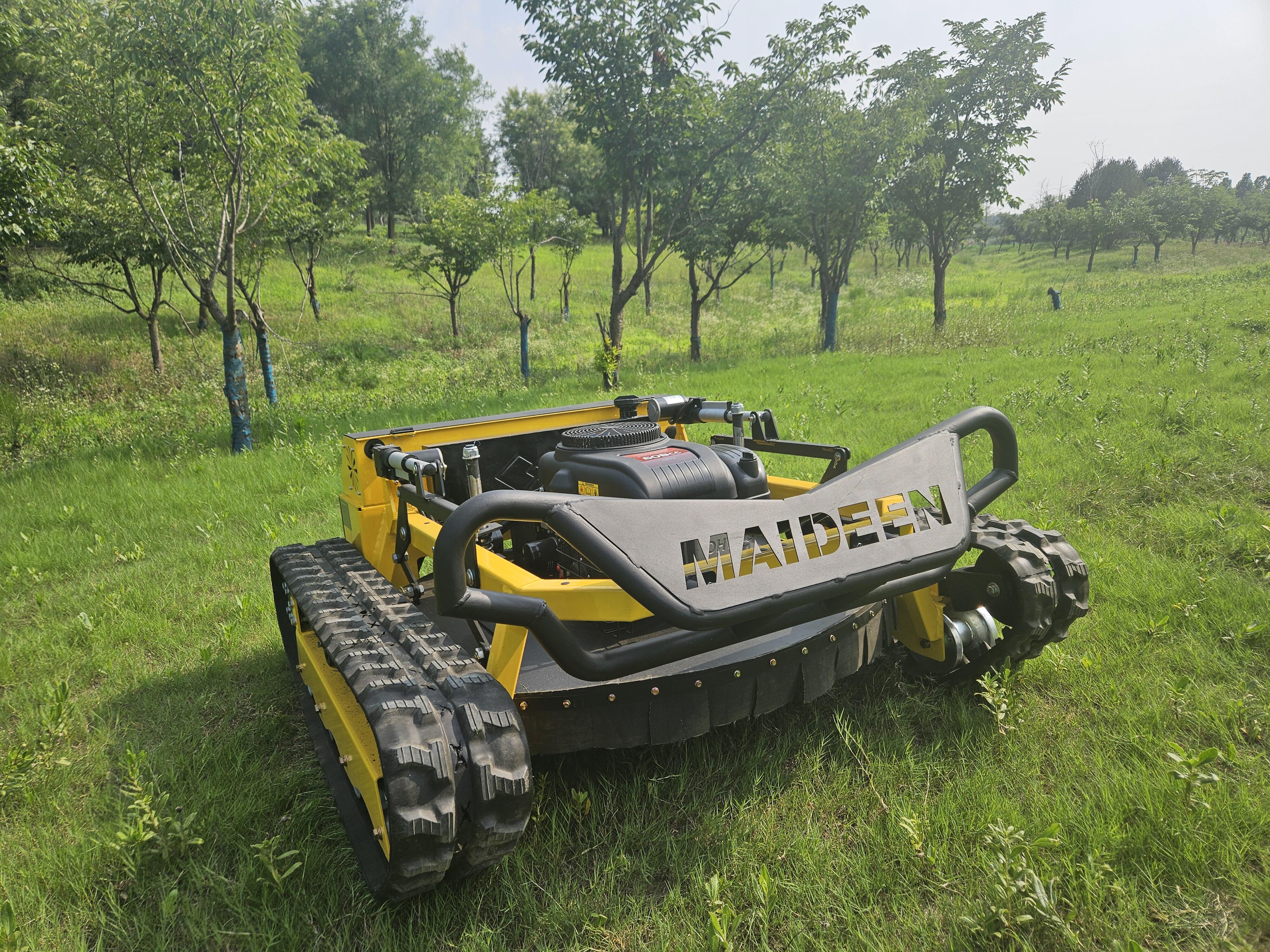
Understanding the Crawler Lawn Mower: What Sets It Apart?
What is a crawler lawn mower and how does it differ from traditional mowers?
Crawler lawn mowers replace regular wheels with tank-style tracks, giving them three times more surface area touching the ground. This makes them much safer when tackling steep hills, sometimes going as high as 45 degrees without tipping over. The idea comes straight from heavy machinery used in construction sites. These machines spread their weight out at around five pounds per square inch, which is way lighter than standard wheeled mowers that typically sit around fifteen psi according to Maideen Group research from last year. Regular riding mowers tend to slip badly once they hit slopes steeper than twenty degrees. But crawlers stay put thanks to those interlocking tracks that push aside dirt and grass clippings. Their frames are built stronger too, so they don't twist apart under stress. Some models even let people control them remotely, keeping operators away from dangerous spots altogether.
Why choose a crawler lawn mower for challenging terrain?
Crawler mowers reduce turf damage by 63% compared to wheeled models on slopes, according to turfgrass studies. Their superior grip remains effective in wet conditions where conventional mowers lose up to 40% traction (Maideen Group 2024). This makes them ideal for:
| Terrain Type | Crawler Performance | Wheeled Mower Risk |
|---|---|---|
| 35° slopes | Stable operation | Rollover danger |
| Wet clay soils | 0.8g lateral grip | Hydroplaning |
| Rocky landscapes | 12mm track padding | Tire punctures |
Crawler mower vs. other types: A comparative analysis
Zero turn mowers work great on level ground but struggle when faced with hills. Crawler mowers handle slopes much better actually finishing them about 27 percent quicker while missing only around 9 percent of spots compared to other models. When going uphill, walk behind mowers require roughly triple the physical exertion according to recent studies. Tractor type machines aren't much better either since they compact the soil nearly 20% more than alternative options per the latest Landcare Efficiency Report from 2023. Properties over half an acre where the terrain gets steeper than 25 degrees really benefit from crawlers though. These machines provide safer operation, better accuracy across uneven surfaces, and just plain get the job done faster without wearing out operators quite so badly.
Power Source Options: Electric vs Gas-Powered Crawler Mowers
Electric vs gas-powered crawler mowers: Performance, noise, and maintenance
Crawler mowers running on gas tend to pack around 35 percent extra torque compared to their electric counterparts, which makes them far better options when dealing with really steep hills (think anything steeper than about 30 degrees) and thick grass or brush. On the flip side though, electric models run pretty quietly between 62 and 68 decibels, actually quieter than most regular conversations we have every day. Gas engines tell a different story altogether, producing noise levels above 90 decibels that's similar to riding right behind a motorcycle. When it comes time for maintenance work, there's quite a gap too. Gas powered machines need oil changed every three months plus new belts once a year. Electric versions cut out all those hassles since they don't have spark plugs, fuel filters, or carburetors needing cleaning. Most people find this cuts down on overall maintenance needs somewhere around two thirds.
Battery life and recharging times for electric crawler mowers
Modern lithium-ion batteries provide 2.5 to 4 hours of continuous runtime, with rapid chargers restoring 80% capacity in 75 minutes. Professional-grade electric crawlers often feature swappable battery systems, allowing seamless transitions during large-scale mowing. Batteries typically last 500 charge cycles—about 3 to 5 years—with replacement costs representing 20–30% of the original purchase price.
Environmental impact and fuel availability considerations
Electric crawler mowers don't release any emissions directly into the air, but how green they really are depends a lot on where someone lives. If the local power grid runs mostly on coal, then those eco benefits drop around 40%. Gas powered machines definitely pollute more, putting out as much CO2 as 11 cars just sitting there idling for an hour straight. Still, folks in remote locations often need these gas models because there's no good place to charge electric ones. About 25% of people working farms and ranches struggle to find enough fuel when things get busy seasonally. Meanwhile most city based landscape crews (around 8 out of 10) say they can easily find places to plug in their electric equipment whenever needed.
Matching Lawn Size, Terrain, and Budget to the Right Crawler Lawn Mower
Lawn Size and Terrain Considerations for Optimal Crawler Mower Selection
Lawns smaller than half an acre with gentle slopes up to about 15 degrees work great with compact electric crawlers which have enough power without being overwhelming. When dealing with larger properties over 0.5 acres and steeper hills above 20 degrees, going for heavy duty gas powered machines makes more sense. Recent studies looking at different terrains showed that these crawler type mowers can cut down mowing time by around 35 percent on rough or hilly ground when compared against regular wheeled mowers. For folks worried about damaging delicate spots in their yard, it's worth looking at models featuring adjustable tracks along with those special counter rotating blades. These features help keep the soil intact and prevent tearing of the grass, something many homeowners notice especially after a rainstorm when the ground is softer.
Best Applications for Crawler Lawn Mowers: Steep Slopes and Rough Terrain
Designed to tackle tough conditions, crawler mowers can handle slopes as steep as 65 degrees and manage rough terrain like rocks, tree roots, and wet soil without breaking a sweat. The design keeps these machines stable thanks to their low center of gravity, so they won't tip over even when going up hills steeper than 40 degrees. That makes them perfect for cutting grass along roadsides, through vineyard rows, and around solar panels where regular equipment would struggle. Tests showed something pretty impressive too. When faced with muddy 30 degree inclines, crawler mowers kept going with 92% traction efficiency while standard wheeled models barely managed 58%. This kind of performance difference matters a lot in places where getting the job done safely is always top priority.
Total Cost of Ownership: Maintenance, Parts, Lifespan, and Value Over Time
Long-term ownership costs include:
- Diesel engines lasting 1,500+ hours versus 800–1,000 for gas models
- Annual maintenance ranging from $240 to $600 based on terrain severity
- Track replacements every 3–5 years at $400–$900 per set
Pro Tip: Choose models with universal attachment points to add trimmers or leaf collectors later, enhancing versatility and extending ROI across an 8- to 12-year lifespan.
Top Crawler Lawn Mower Models and Industry Innovations in 2024
Recommended Crawler Lawn Mower Models for Different Use Cases
The compact residential models such as the EZTrack S2 handle urban lots pretty well even when there are slopes going up to around 35 degrees. These machines come equipped with 22 inch cutting decks plus those handy collision avoidance sensors that make them great for working in cramped areas. On the other hand, commercial operations need something much tougher. They go for industrial grade units featuring massive 48 inch decks and heavy duty tracks built to tackle steep 60 percent inclines all day long without breaking down after just a few hours. Looking at recent market trends, we see growth rates hitting about 14.7 percent year over year for these remote controlled crawler mowers until 2032. Pretty impressive actually. And guess what? Even basic models today can take care of an entire acre worth of lawn work before needing another charge.
Emerging Trends: Smart Controls, Enhanced Traction, and Autonomous Features
In 2024, leading models incorporate three transformative technologies:
- AI terrain mapping using LiDAR and soil moisture sensors to dynamically adjust blade height
- Modular track systems enabling quick switches between rubber (for lawns) and steel (for rugged terrain)
- Swarm capabilities allowing coordinated fleets via 5G networks
These innovations reduce labor costs by 40%, according to the latest industry report, while real-time tilt monitoring enhances safety on steep inclines.
Are Premium Crawler Mowers Worth the Investment? Evaluating ROI
The top tier crawler mowers on the market today typically offer warranty periods ranging from seven to ten years, while regular models usually only cover three to five years. These premium machines cost around two and a half times what standard ones do upfront, but they're packed with hybrid diesel electric engines that slash fuel usage by almost half according to industry research from Ponemon in their 2023 report. Landscaping companies tell us that despite the higher initial investment, most see their money back within just eighteen months when factoring in both lower labor expenses and fewer accidents happening during operation. On steep terrain where slopes go over fifteen degrees, businesses have found that investing in these high performance crawlers actually saves them about ninety two percent in ongoing maintenance bills compared to trying to modify older conventional mowers for similar conditions.
FAQ
What is a crawler lawn mower?
A crawler lawn mower is a type of mower that uses tank-style tracks instead of wheels. This design provides improved stability and traction, especially on steep slopes.
How do crawler lawn mowers perform on different terrains?
Crawler mowers excel on steep slopes, wet clay soils, and rocky landscapes due to their superior grip and track padding.
Are electric crawler mowers environmentally friendly?
Electric crawler mowers produce no direct emissions, but their environmental benefits depend on the energy sources powering the grid in your area.
What are the maintenance requirements for gas vs electric crawler mowers?
Gas-powered mowers require regular oil changes and new belts, while electric models have fewer maintenance needs due to the absence of spark plugs and fuel filters.
What considerations should I make when selecting a crawler lawn mower?
Consider the size of your lawn, the terrain, and your budget. Smaller lawns with gentle slopes might benefit from compact electric models, while larger, challenging terrains may require heavy-duty gas-powered mowers.
Table of Contents
- Understanding the Crawler Lawn Mower: What Sets It Apart?
- Power Source Options: Electric vs Gas-Powered Crawler Mowers
- Matching Lawn Size, Terrain, and Budget to the Right Crawler Lawn Mower
- Top Crawler Lawn Mower Models and Industry Innovations in 2024
- Recommended Crawler Lawn Mower Models for Different Use Cases
- Emerging Trends: Smart Controls, Enhanced Traction, and Autonomous Features
- Are Premium Crawler Mowers Worth the Investment? Evaluating ROI
- FAQ