
 EN
EN
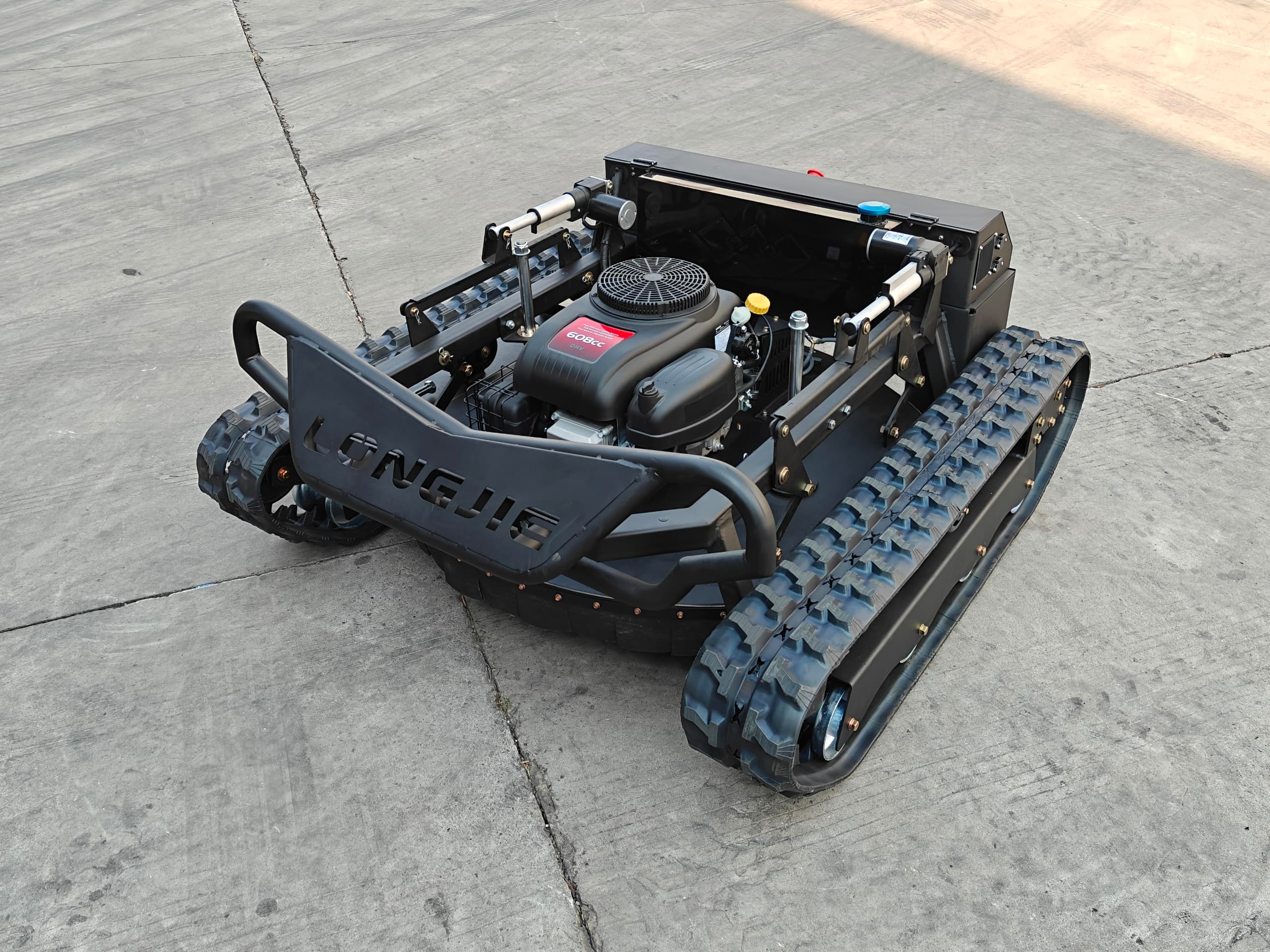
Why Crawler Lawn Mowers Dominate Tough and Sloped Terrains
Superior traction and stability of crawler vs. wheeled mowers on steep slopes
Track-style lawn mowers beat regular wheeled ones when dealing with hills because they have those continuous tracks instead of wheels. These tracks spread the mower's weight across more ground, bringing down the pressure on the soil to around 5 pounds per square inch versus about 15 psi for standard models. The difference matters a lot when cutting grass on slopes steeper than 20 degrees, something most gardeners know from experience since ordinary mowers tend to slip and slide all over the place. Looking at numbers from the US Consumer Product Safety Commission paints a pretty grim picture too: roughly 75 people die each year and nearly 18 thousand get hurt while operating riding mowers, with many accidents happening when machines tip over on inclines. That's why so many professionals now prefer crawler systems these days. They offer better balance overall and can actually descend slopes safely without losing control, making them much safer options for anyone tackling challenging landscapes.
Physics of slope climbing: weight distribution and center of gravity advantages
Crawler mowers handle slopes much better because they spread their weight more evenly across the ground and sit lower to the earth. The rubber tracks stay planted firmly on the terrain, so there's no bouncing around or shifting weight back and forth like what happens with regular wheeled mowers when going over bumps or hills. What makes this work is basically having a base that's almost twice as wide (around 67%) compared to traditional models, which means these machines just don't tip over nearly as often during operation. Plus, those segmented tracks actually cushion impacts from roots or rocks hiding beneath the grass while keeping grip on the soil. Wheels simply cannot do this same thing since they tend to pop up off the ground unexpectedly, leading to all sorts of dangerous situations where control gets lost completely.
Real-world performance on rocky, uneven, and wet terrain
When dealing with real world situations like rocky patches, muddy slopes, or those tricky wet clay areas, crawler mowers just plain do better than their wheeled counterparts most of the time. Some research done last year by city maintenance folks showed that these tracked machines finished hillside jobs about 22 percent quicker when working through wet clay soils compared to regular wheel mowers. Plus there were around 83% fewer times they got stuck and needed help getting unstuck. The way tracks work is pretty smart actually. They push mud and dirt sideways instead of getting bogged down, so they don't sink into soft spots. The segmented track system also helps absorb bumps on rough ground without losing speed, and even when things get slippery from rain or moisture, these machines keep moving forward where ordinary tires would just spin helplessly.
Balancing upfront cost with long-term safety and operational reliability
Crawler mowers definitely cost more upfront compared to their wheeled counterparts, but most maintenance managers will tell anyone who asks that they pay for themselves in the long run through better safety records, longer lifespan, and simply staying operational when others break down. These machines just don't roll off steep hillsides like regular mowers do, which means no expensive emergency repairs after someone gets hurt or equipment crashes into things. Landscapers working on rough terrain find themselves spending far less time waiting for breakdowns to fix, particularly during those brutal summer months when heat and humidity take their toll on standard equipment. City parks departments across the country have noticed something interesting too: they spend way less money calling in tow trucks for stuck machines and fixing grass damage from skid marks, so the savings pile up month after month even if nobody tracks them formally.
Key Durability Features in Crawler Lawn Mower Construction
Reinforced steel frames and rugged undercarriage for impact resistance
What makes crawler mowers so durable? It all begins with their strong frames designed to handle tough outdoor environments. Most models come equipped with steel frames that have been strengthened against damage, along with heavy duty undercarriage systems capable of taking hits from stones, tree roots, and other garden obstacles. The way these machines distribute stress across their entire body helps avoid problems like warping or parts getting out of alignment over time. For commercial applications, manufacturers often build them using box section steel combined with cross bracing throughout. This design gives exceptional resistance to twisting forces, which means important parts stay properly positioned even when operating on rough, bumpy ground where standard equipment would struggle.
Track system durability: rubber compounds, steel-reinforced belts, and wear life
A good track system makes all the difference for how long a crawler mower will keep working reliably. The best tracks mix vulcanized rubber with steel belts inside, giving them both flexibility and real strength. These tracks stand up against wear and tear, won't puncture easily, and handle whatever weather comes their way without losing traction on different kinds of ground. Looking at data from the latest Commercial Landscaping Cost Analysis, we find that quality track systems can actually last about 40 percent longer than cheaper alternatives if they get proper care and maintenance. Many high end models come with replaceable wear pads and sealed lubrication systems built right in, which means fewer times technicians need to do big repairs down the road.
Corrosion-resistant components and sealing for harsh environments
Good quality crawler mowers fight off environmental damage by incorporating materials that resist corrosion. Think powder coated steel frames, stainless steel bolts, and zinc plated parts wherever they're most likely to get damaged. The machines also have sealed bearings, hydraulic lines, and electrical components that stay dry and clean thanks to better gaskets and protective housing. This matters a lot for people working near the coast or in places with high humidity. Salt laden air combined with constant dampness really takes its toll on equipment over time, making these protective features not just nice to have but absolutely necessary for anyone who wants their mower lasting longer than six months before needing major repairs.
Engine and transmission protection in high-debris conditions
When building tough crawler mowers, engineers put special focus on protecting the powertrain components. Most models have robust air filtration systems these days, typically featuring cyclonic pre-cleaners along with washable paper filters that stop dirt and dust from getting into the engine's combustion area where it could cause serious damage over time. The transmission units themselves are completely sealed inside protective housings, sometimes with extra metal guards added to prevent rocks and branches from knocking them around during rough terrain work. For cooling purposes, manufacturers install debris resistant screens across radiator intakes while also placing cleaning ports at strategic locations so maintenance crews can quickly clear out accumulated gunk without dismantling half the machine. This attention to detail makes all the difference when operating in fields full of tall grass or areas where dust storms roll through regularly.
Matching Crawler Mower Specs to Your Lawn’s Size and Terrain Challenges
Assessing lawn size and mowing frequency for optimal crawler mower selection
Picking out a good crawler mower starts by looking at how big your yard is and what kind of upkeep it needs. For smaller spaces, say anything below half an acre, those little electric models usually work fine. But when dealing with bigger properties, anything over about half an acre really calls for a gas powered unit with a broader deck. Some research indicates these crawlers can cut down mowing time around 35 percent on tough terrain compared to regular wheeled mowers. That makes all the difference for folks with expansive lawns or places that need frequent trimming throughout the season.
Evaluating slope gradient, surface moisture, and debris load for model suitability
How rough the terrain is makes a big difference when picking the right model. Most basic crawlers handle slopes below 15 degrees just fine, but anything steeper than 20 degrees really needs those special stability features built in. When dealing with wet ground or damp surfaces, it's important to get tracks that actually stick and have good seals so they don't slip around or let water get inside and cause problems. Lawns covered in leaves, sticks, or rocky dirt present their own challenges too. Anyone working in these conditions should consider machines with stronger frames underneath and better filters that can keep going even when things get tough.
Choosing the right cutting deck size and engine power for efficiency
Getting good results from lawn equipment really comes down to pairing the right deck width with appropriate engine power based on how big the land actually is. For those dealing with smaller spaces around half an acre up to about one acre, going with a 42 inch cutting deck backed by a 14 to 16 horsepower engine works pretty well most of the time. When tackling bigger areas between one and two acres though, folks generally find they need something heavier duty – think 48 to 54 inch decks paired with engines ranging from 18 to 24 horsepower. Finding this sweet spot helps cover more ground efficiently while keeping things light enough so the machine stays maneuverable even when working across hills or uneven terrain where extra weight would just cause problems.
Maneuverability and turning radius in tight or obstructed areas
Crawler mowers are typically built for rough, open areas but they work surprisingly well in tight spots too if they have those independent track controls installed. The tracks let them make those really tight turns almost on the spot, which makes maneuvering around trees, flower beds and all those little garden features much easier. Some studies looking at how these machines perform show that when the tracks are set up right, there's about a 40 percent drop in grass damage near sensitive plants compared to regular wheel mowers. That kind of difference matters a lot for people who want their yards looking good without tearing things apart.
Advanced Safety Engineering for Hillside Operation
Low center of gravity and wide track design for slope stability
Crawler mowers built for commercial use have special features that make them safer on hillsides. They come with a low center of gravity and wide tracks that spread out over the ground. This combination really helps when working on slopes that can be as steep as 30 degrees. The machines maintain constant contact with the terrain which spreads their weight properly throughout the entire frame and cutting deck area. Regular wheeled mowers tend to tip over easily when going down side slopes or navigating rough patches of land where the ground isn't level. That's why many landscapers prefer crawlers for tricky terrain jobs.
Integrated braking systems and anti-rollback mechanisms
Today's crawler mowers come equipped with two separate braking systems that give operators much better control over their machines. The hydraulic disc brakes provide solid stopping power, something every landscaper appreciates after a long day of work. There's also this neat feature called automatic anti-rollback that stops the mower from rolling back down hills when stopped. Pretty handy stuff really. What makes these systems so effective is how they kick in immediately as soon as someone lets go of the controls. The tracks just lock right up there until the operator decides to move again. This means the machine stays put exactly where it needs to be, even if the engine gets turned off mid-job.
Operator presence controls and automatic shutdown sensors
Operator presence detection adds another layer of safety to the system. When someone gets up from their seat, pressure sensors combined with infrared technology kick in almost instantly, shutting down the engine power in just fractions of a second. The system also keeps watch for other issues like when vibrations get out of hand or tracks start slipping, which can be early warning signs of bigger problems. These built-in safeguards automatically shut things down before anything dangerous actually happens. For operators working long hours on heavy machinery, this multi-tiered protection system makes a real difference in preventing accidents while also protecting expensive equipment from damage caused by unexpected operator absence or mechanical failures.
Certifications and safety standards for commercial-grade crawler mowers
Top mower makers design their crawler machines to hit those safety benchmarks we all care about, things like ROPS structures and that ANSI/OPEI stuff everyone talks about. The certification process isn't just paperwork either it actually puts these machines through the wringer testing how well they hold up structurally, whether they stay stable when going up hills, and if their emergency systems work properly when needed most. A lot of the big name commercial models get checked out by independent testers too, which gives operators peace of mind knowing these units have been put to the test in real world situations where failures just aren't an option.
Total Cost of Ownership: Maintenance, Longevity, and Value
When thinking about what something really costs over time, we need to look past just how much it costs when bought new. Maintenance expenses, how long it lasts, and whether it runs efficiently day to day all matter a lot too. Crawler mowers definitely need more regular attention compared to others, usually needing service somewhere around every 50 to 75 hours of operation. But here's the catch: these machines handle rough ground so well that they actually break down less often than many alternatives. The tradeoff works out pretty well for most people who take good care of them. Quality units can easily reach between 2,000 and 3,000 working hours before showing signs of wear, which is quite impressive when compared against standard wheeled mowers doing similar work under the same tough conditions.
Track replacement cycles and wear monitoring best practices
Most tracks tend to run anywhere from 1,200 to around 1,500 operating hours before needing replacement, though this varies quite a bit based on how hard they're worked and what kind of ground they're moving across. If folks want their tracks to stick around longer, checking the tension at least once a month makes good sense. Also worth looking out for signs of uneven wear patterns since these often point to alignment troubles down the road. Getting a qualified technician involved roughly every 200 hours of operation catches small issues before they turn into big headaches later on. Research into equipment durability shows pretty clearly that sticking with regular maintenance routines can actually boost track lifespan by somewhere in the neighborhood of 40 percent over time.
Service intervals and labor requirements compared to wheeled mowers
Crawler mowers require more frequent inspections than wheeled models, and each service takes about 25% more labor due to track system complexity. However, the gains in stability, reduced turf damage, and consistent performance on slopes often justify the added maintenance effort, particularly for properties with challenging topography.
Parts availability and support for long-term reliability
Major brands maintain comprehensive parts networks, with standardized components improving accessibility across model lines. Most common replacement parts are available through authorized dealers within 48 hours. Building a relationship with a local service provider ensures timely repairs and ongoing technical support.
Lifespan value: justifying investment through durability and uptime
Investing in top quality crawler mowers pays off over time because they last longer and stay working when most needed. These machines tackle rough ground without breaking down, which means fewer replacements and less time sitting idle in the garage. Homeowners dealing with hills and slopes, as well as landscaping pros who manage tricky properties, find that while these mowers cost more upfront, they actually save money later on. The savings come from needing fewer repairs, avoiding costly fixes after breakdowns, and keeping lawns looking good without constant intervention. Many users report getting their money's worth within just a couple seasons of regular use.
FAQ
What makes crawler lawn mowers better for steep slopes?
Crawler lawn mowers have continuous tracks that distribute weight evenly, reducing soil pressure and increasing stability. This feature helps prevent tipping over and allows safe operation on steep slopes.
Are crawler mowers suitable for rocky or wet terrain?
Yes, crawler mowers perform well on rocky and wet terrain due to their wide track base, which provides better traction and prevents them from getting stuck like wheeled mowers.
Do crawler mowers require frequent maintenance?
While crawler mowers do need regular maintenance, usually every 50 to 75 hours of operation, their robust design means they tend to have fewer breakdowns compared to wheeled mowers operating under similar conditions.
Is investing in a crawler mower cost-effective in the long run?
Despite a higher initial cost, crawler mowers offer long-term savings through reduced maintenance, fewer repair needs, and durability, making them a cost-effective choice over time.
Table of Contents
- Why Crawler Lawn Mowers Dominate Tough and Sloped Terrains
- Key Durability Features in Crawler Lawn Mower Construction
- Matching Crawler Mower Specs to Your Lawn’s Size and Terrain Challenges
- Advanced Safety Engineering for Hillside Operation
- Total Cost of Ownership: Maintenance, Longevity, and Value
- FAQ