
 EN
EN
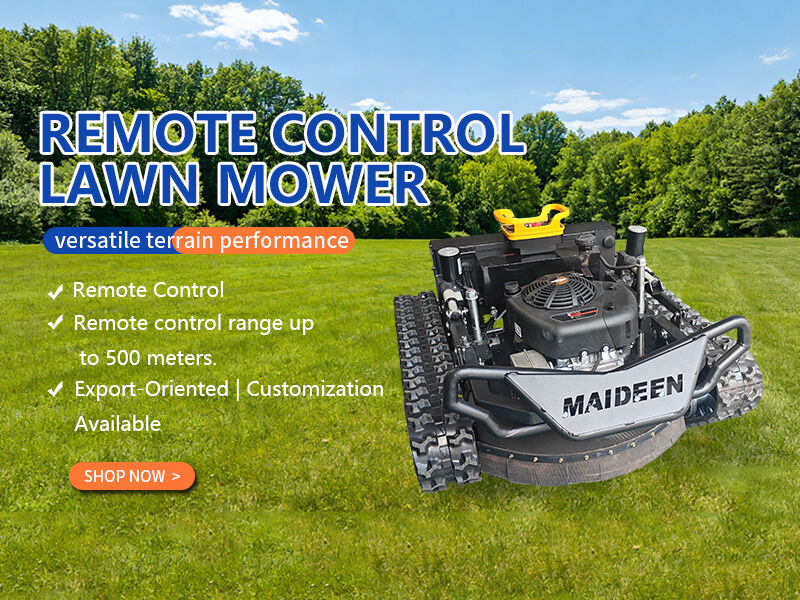
Why a Remote Control Lawn Mower Outperforms Traditional Mowers on Uneven Ground
The Stability Gap: How Human-Balanced Mowers Fail on Slopes and Bumps
Most traditional walk behind and riding mowers depend on operators shifting their body weight to stay stable. But this approach hits serious problems when dealing with slopes steeper than about 15 degrees. The National Institute for Occupational Safety and Health has actually found that the chance of a mower rolling over jumps by almost two thirds at those steep angles. Things get even worse on rough terrain where constant vibrations wear down the operator's grip. Research from the USDA shows that gardeners who spend too much time on vibrating equipment often develop what they call white finger syndrome. This condition can cut steering accuracy in half after extended periods. When tackling hills, grass tends to clump together and wheels slip around, leading to patchy cutting results. Fixed frame mower decks aren't much help either since they tend to strip away grass from high areas while missing low spots completely. This forces landscapers to go over the same ground repeatedly, which not only damages the lawn but adds anywhere from a quarter to half more time to complete jobs on uneven property.
The Remote Advantage: Decoupling Operator Safety from Machine Motion Dynamics
Remote controlled lawn mowers take humans out of dangerous situations by letting them stay safely away from tricky terrain. With just a handheld radio controller in hand, operators can watch from solid ground as their mower tackles slopes going all the way up to 45 degrees angle, which is actually twice what most regular mowers are rated for. This separation keeps people from falling off hillsides, something that causes plenty of injuries according to safety reports we've seen from OSHA over the years. These machines have smart systems built right into them that constantly adjust how power gets distributed between wheels depending on which ones have better grip, so grass stays cut evenly even when moving over bumps and dips. When it hits something unexpected like a rock or stump, brushless motors kick in fast to change power delivery without spinning wheels and damaging the lawn. Plus they handle those pesky spots near trees, around drainage ditches, and close to drop offs where normal mowers often get stuck or damage blades trying to push through.
Essential Features of a High-Performance Remote Control Lawn Mower for Rough Terrain
All-Terrain Mobility: AWD, Brushless Torque, and Adaptive Traction Control
The AWD system spreads power to all four wheels so there's no slipping when mowing on muddy ground or wet lawns. According to TurfTech Journal from last year, brushless motors pack around 30% more punch compared to old school brushed ones, which means blades keep spinning even through thick weeds and tall grass. The smart traction control actually watches what kind of surface it's cutting on and tweaks how much power goes to each wheel separately. This keeps things stable on hills steeper than 30 degrees something most regular mowers can't handle at all. And for those controlling the machine, they've got these tough remote controls that work reliably from distances as far as half a football field away.
Precision Cutting on Irregular Surfaces: Floating Decks and Adjustable Suspension
Floating cutting decks adjust themselves to follow the ground as it goes along, keeping the blades at about the same height between 1 and 5 centimeters even when going over hills or valleys. The special suspension system takes care of shocks from stones and tree roots, which cuts down on bouncing by around 70 percent according to tests. Two blades spinning in opposite directions create much smaller grass pieces that work better for making natural mulch. Some recent studies found these adjustable decks can maintain an even cut across rough ground about 95% of the time, while standard fixed decks only manage about 63% effectiveness according to Lawn Care Quarterly last year. This means no more bald spots appearing after mowing and less need to go back over areas again.
Safety, Accessibility, and Operator Confidence with a Remote Control Lawn Mower
Eliminating Fall Hazards on Embankments, Ditches, and Steep Gradients
Regular mowing puts workers at risk on hazardous ground where slips, falls, and equipment rollovers lead to around 34 thousand emergency room visits each year according to the Consumer Product Safety Commission back in 2021. With remote controlled mowers, people no longer need to be out there in those risky areas. These machines can handle slopes steeper than thirty degrees safely from flat land. The built in tilt sensors stop the blades spinning within just two tenths of a second when something goes off balance, which cuts down accidents caused by tricky terrain by about eight out of ten cases based on Landscape Safety Council research from last year. Companies that switch to these remote systems see roughly half as many work related injuries, which means lower insurance bills and fewer legal problems as noted by OSHA in their 2022 report. Getting operators away from dangerous spots gives them peace of mind when dealing with complicated landscapes like steep drops, retaining walls, or muddy ditches while still keeping everything safe and accurate.
Beyond Mowing: Expanding Utility with Modular Attachments for Tough Landscapes
Flail Mowers, Edgers, and Sweepers — Enhancing Versatility on Rough Ground
A remote control lawn mower evolves into a multifunctional landscape platform with purpose-built modular attachments:
- Flail mowers shred dense brush, tall weeds, and uneven vegetation using rotating hammers—ideal for overgrown ditch banks or woodland edges where traditional decks clog or stall.
- Precision edgers deliver clean, sharp boundaries along garden beds, fences, and retaining walls with angled blades—even on slopes—eliminating manual trimming hazards.
- Debris sweepers collect leaves, clippings, and small rocks from bumpy or rocky terrain using rotating brushes, clearing surfaces that would stop wheeled push carts.
This modularity reduces equipment changes and labor intensity, particularly on complex terrain where human access poses safety risks. Operators maintain full control from secure positions while attachments perform specialized tasks—transforming steep slopes, rocky zones, and overgrown areas from high-risk obstacles into efficiently managed workspaces.
FAQ
Why do remote control lawn mowers perform better on uneven ground?
Remote control lawn mowers outperform traditional ones on uneven terrain because they handle slopes up to 45 degrees, have smart power distribution for even cuts, and keep operators safe and removed from hazardous areas.
What safety features do remote control lawn mowers offer?
They include tilt sensors to stop blades quickly if off balance, operate safely on steep slopes, and reduce accident risks and work-related injuries by allowing operators to stay on solid ground.
Can remote control mowers handle rough terrain effectively?
Yes, these mowers have AWD systems, brushless motors, and adaptive traction control for effective operation on muddy or uneven surfaces, ensuring consistent performance.
What additional functions can remote control lawn mowers perform?
Besides mowing, they can use modular attachments like flail mowers, edgers, and sweepers for tasks such as shredding dense vegetation, edging, and debris collection.
Table of Contents
- Why a Remote Control Lawn Mower Outperforms Traditional Mowers on Uneven Ground
- Essential Features of a High-Performance Remote Control Lawn Mower for Rough Terrain
- Safety, Accessibility, and Operator Confidence with a Remote Control Lawn Mower
- Beyond Mowing: Expanding Utility with Modular Attachments for Tough Landscapes
- FAQ