
 EN
EN
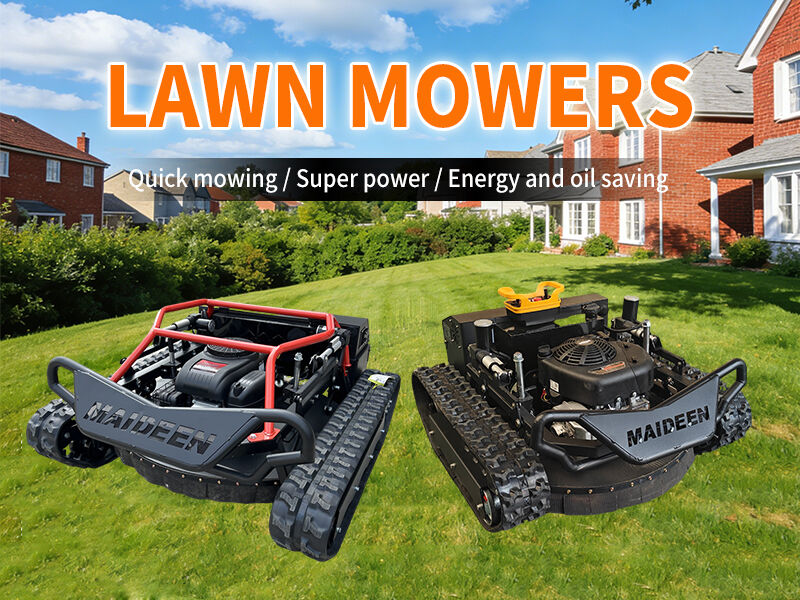
Why Tracked Lawn Mowers Excel on Slopes and Uneven Ground
Physics of traction: How continuous track contact eliminates slippage on slopes >15°
Lawn mowers with tracks instead of wheels spread their weight over roughly 2 to 3 times more ground space compared to regular wheel designs. This means the pressure on the soil drops below 5 psi, whereas wheel models typically push down with around 15 psi or more. When going up hills steeper than about 15 degrees, most wheel mowers start losing grip because all their weight concentrates on small spots. The track systems stay connected to the ground thanks to those overlapping treads that create countless tiny gripping points across the surface. These little contacts stop the machine from slipping even when conditions get slick or muddy. Tracks actually push dirt sideways as they move forward, maintaining progress without getting stuck. Plus, the flexible nature of the tracks lets them roll over bumps and dips in the terrain without bouncing around like wheels tend to do, making them much steadier on tricky landscapes where standard mowers would struggle.
Real-world safety impact: 37% fewer operator incidents on 22° slopes (UL 2023)
The physics behind tracked equipment actually makes a real difference in worker safety. According to UL's research from last year, operators using tracked mowers had 37 percent fewer accidents when working on slopes around 22 degrees steeper than what wheeled machines can handle safely. This is mainly because the tracks stop sideways slipping during turns and prevent those dangerous downhill speed spikes that happen so often with wheels. These tracked machines keep going downhill at a steady pace below three miles per hour even on steep terrain. Plus, they sit lower to the ground which means they just don't tip over like wheeled models do when cutting across slopes something that causes plenty of injuries near hillsides, drainage areas, and along river edges. Landscape professionals who have switched to tracked equipment tell us they feel about half as tired after a day's work since there's less vibration bouncing through their bodies. They also mention better focus and control while operating these machines simply because they aren't constantly adjusting their posture to compensate for rough rides.
Tracked Lawn Mower vs Wheeled Mower: Key Performance Differences
Drive system comparison: Dual-track mobility vs AWD wheeled systems for terrain adaptability
Tracked mowers work differently from regular ones because they have these dual track systems that stay planted on the ground even when going over really rough or unstable terrain. Just think about how AWD wheeled mowers struggle so much in places like wet dirt, muddy patches, or sandy areas where their tires just lose grip fast. The tracks themselves adjust individually to whatever surface they're moving across, which means less slippage compared to wheeled versions that might lose as much as 40% of their traction power in tough conditions. This makes a big difference for landscapers working around muddy riverbanks, sandy beachfronts, or rocky hillsides where traditional wheels tend to get stuck, spin out, or need constant adjusting to keep moving forward.
Design advantages: Low center of gravity, 7 cm obstacle clearance, and weight distribution
Three integrated engineering features make tracked mowers uniquely suited to rough terrain:
- Low center of gravity: Reduces rollover risk by 67% on sidehill grades versus wheeled equivalents
- 7 cm obstacle clearance: Navigates roots, rocks, and debris without deck damage
- Balanced weight distribution: Maintains under 5 psi ground pressure—preventing turf compaction and damage common with wheeled units
Municipal operators report 22% faster project completion in irregular landscapes, thanks to these features enabling uninterrupted, confident operation where wheeled mowers stall or require repeated manual intervention.
Built to Last: Durability Features of Professional Tracked Lawn Mowers
Rugged construction essentials: Reinforced undercarriage, sealed track drives, corrosion-resistant chassis
Tracked mowers designed for professionals last much longer when put through tough conditions. The undercarriage gets extra reinforcement with strong steel crossmembers that soak up impacts from rocks and other debris around the worksite. This helps keep the frame from warping after hitting obstacles repeatedly. For the track drives, manufacturers include triple lip seals along with pressurized lubrication systems. These components stop dirt and moisture from getting inside, which means the drivetrain lasts about 40 percent longer than regular open systems. On top of that, the chassis resists corrosion thanks to powder coated metals and stainless steel bolts. This setup holds up against harsh chemicals used in fertilizers, road salt, and constant wet weather. All these parts working together give machines commercial grade reliability over many thousands of hours in service. Maintenance becomes necessary about 30 percent less often, and the blades stay accurate even when cutting through rough ground.
Enhancing Safety with Remote and Smart Operation Options
Remote-controlled tracked lawn mower benefits and liability considerations in hazardous zones
Tracked mowers that can be controlled remotely really boost safety when working on dangerous terrain like steep hills, shaky ground, thick underbrush, or tight areas where people might otherwise get hurt. Operators stay far away from risky spots instead of getting too close for comfort. The machines cut down on those typical landscaping injuries we all know about rollover accidents, slipping off edges, getting tangled in machinery parts. Most models come with live video so operators can see exactly what's happening, which makes steering around obstacles much easier than guessing through blind spots. For companies running bigger operations, using these remote systems shows they're taking real steps toward reducing risks something insurance folks definitely notice compared to just sending workers through basic safety training. Plus, having one person handle several machines at once from somewhere safe means better efficiency across the board while still meeting all the necessary safety rules and regulations that govern commercial landscaping work.
FAQ Section
What are the benefits of using tracked lawn mowers on uneven ground?
Tracked lawn mowers offer better traction and stability compared to wheeled mowers due to their track-based design. This design allows the mowers to distribute weight more evenly, reducing the risk of slipping and providing smoother operation on slopes and uneven terrains.
How do tracked mowers enhance safety for operators?
According to recent studies, tracked mowers reduce operator incidents by 37% on steep slopes. They maintain stable speeds and have a lower risk of tipping over compared to wheeled mowers, enhancing safety for operators.
What makes tracked mowers more durable than wheeled models?
Tracked mowers feature reinforced undercarriages, sealed track drives, and corrosion-resistant chassis. These components improve their durability, allowing them to withstand tough working conditions and extend their lifespan.
Can tracked lawn mowers be operated remotely?
Yes, many tracked mowers offer remote operation capabilities. This feature enhances safety by allowing operators to manage the mower from a safe distance, especially in hazardous terrains.