EN
How Does A Crawler Remote Control Lawn Mower Combine Power And Safety
A crawler remote control lawn mower is built for a job that ordinary walk-behind equipment handles poorly: cutting vegetation where slopes, soft ground, rough surfaces, or roadside obstacles raise the operator’s exposure. The useful question is not whether this tracked remote mower is powerful in isolation. It is how traction, drive control, cutting power, remote operation, and disciplined work practices operate as one system.
From a remote-mower technical perspective, the safest choice begins with the site. A large area does not automatically demand the biggest crawler remote control lawn mower. Grade changes, grass density, ground moisture, obstacles, access routes, and the operator’s sightlines all shape the right configuration.
Why the crawler layout matters before power is considered
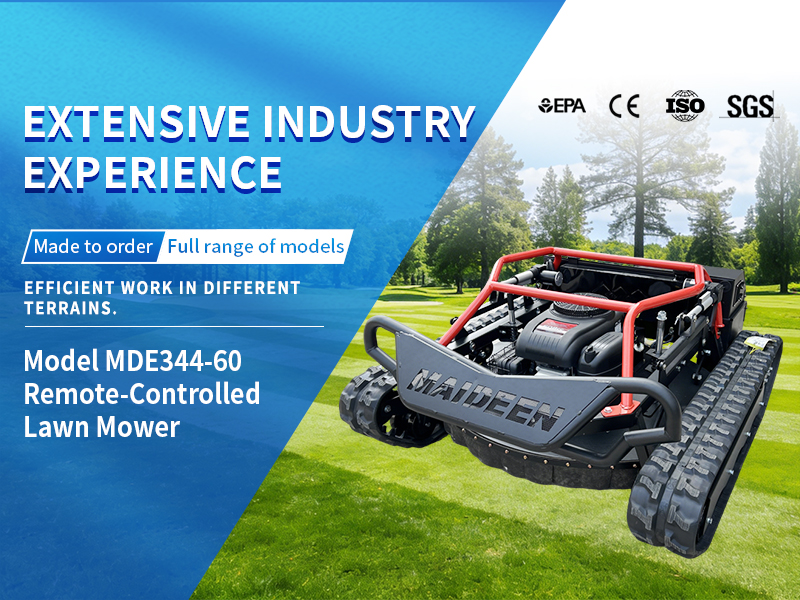
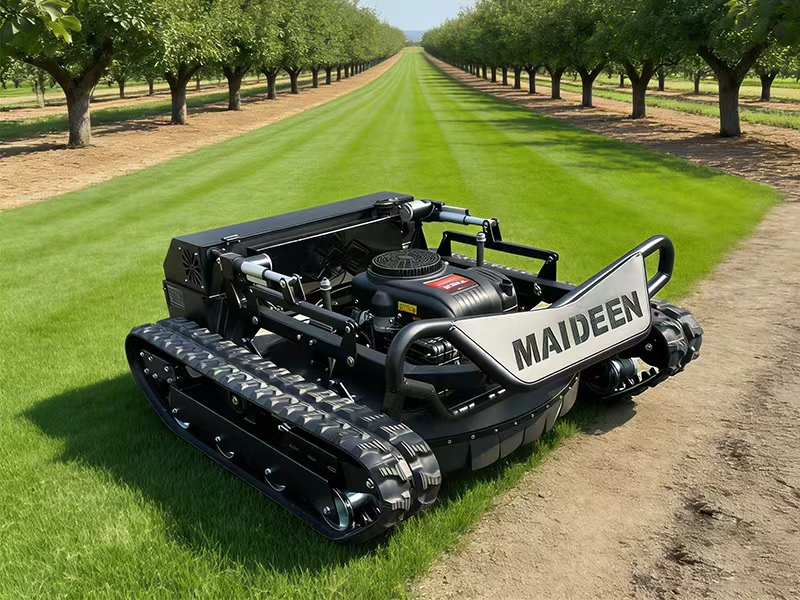
The tracks on a crawler remote control lawn mower spread machine weight over a longer contact area than a conventional wheeled layout. In suitable ground conditions, that can support steadier travel over uneven grass, loose soil, and broken terrain. More importantly, the crawler layout gives the machine a stable platform from which its drive system and cutting deck can work. It does not remove the need to assess slope limits, surface condition, or the instructions for the exact model.
Traction is only useful when it remains controllable. The machine needs predictable forward, reverse, and turning response so that the operator can choose a route with margin for correction. Wet grass, mud, hidden holes, and side slopes can change stopping behavior. A sensible plan therefore separates the task into preparation, mowing, and review rather than treating every acre as the same pass.
How power reaches the cutting task
Power in a crawler remote control lawn mower has two jobs: moving the machine and driving the cutting system. The engine or other power source must deliver enough usable output for the vegetation and terrain while the drive system maintains controlled movement. Thick growth can load the cutter; a climb can load the travel system; turning on uneven ground can change both demands at once. That is why headline power alone is not a safety measure.
In this type of equipment, the practical result comes from matching operating pace to conditions. In heavy brush or damp grass, a slower route may leave more capacity for clean cutting and predictable steering. Operators should use the speed range, deck settings, and working limits specified by the manufacturer—not assumptions based on a demonstration on level ground. The same principle applies to a wireless remote lawn mower: radio control is a way to manage position, not a reason to rush a difficult site.
Remote control changes exposure, not responsibility
The central safety advantage of this equipment is that it can place the operator away from the immediate cutting zone, slope, or vegetation hazard when the site and machine instructions permit. A wireless remote lawn mower can make it easier to maintain a useful view of the machine while avoiding the most exposed standing position. Still, radio range is not the same as safe working distance. Trees, banks, traffic, bystanders, and poor visibility can all dictate a closer or different position.
It should be operated from a location that preserves a clear view of its route, edges, and discharge area. Establish an exclusion zone, keep people and animals out, and do not assume that sound alone tells you what the machine is doing. If the route disappears behind an obstacle or the operator cannot see a recovery path, stop and reposition. This is where remote capability becomes a controlled safety tool rather than a convenience feature.
Layered controls make the system safer
Safe operation does not come from one switch. The machine should be evaluated as a set of layers: the operator’s remote controls, an accessible emergency-stop function, a reliable control link, protective guards, clear operating procedures, and model-specific warnings. Published remote-mower manuals commonly include emergency-stop instructions and pre-operation inspections, but the location and sequence vary by machine. Verify them before work begins.
Before starting, inspect the site for wire, stones, branches, holes, drop-offs, and concealed obstacles. Check tracks, guards, fasteners, cutting components, fluid or battery status as applicable, and the remote-control connection according to the manual. Confirm that the emergency stop is known, reachable, and tested only as the manufacturer directs. A radio-controlled mower is safer when its communication link and stop procedure are treated as critical equipment, not an afterthought.
Site planning protects both productivity and people
With this type of tracked mower, route planning should begin at the perimeter. Identify entry and exit points, slope direction, turnaround room, drainage paths, hazards below the work area, and safe places to stand. Where terrain is wet or loose, leave enough space to stop or redirect; stopping distance can change with surface conditions. Do not use an unverified slope rating as permission to operate at a site’s limit.
Then divide the job into manageable zones. The machine may perform well in one section but require a different route, slower speed, or manual vegetation preparation in another. This condition-based approach helps avoid a common mistake: assuming tracked mobility makes every surface suitable. It does not. It gives a correctly selected machine a better chance to work steadily within its verified boundary.
What to ask before selecting a tracked remote mower
- What ground types, slope ranges, vegetation height, and growth density will it encounter?
- Which documented operating limits, safety features, and emergency-stop procedures apply to the exact configuration?
- How will the operator retain line of sight and protect people, property, traffic, and drainage areas?
- What inspection, cleaning, blade-service, and track-maintenance routine can the team realistically follow?
- Can the supplier provide current specifications and operating documentation for the intended application?
The balanced answer
This equipment combines power and safety by making those two qualities depend on each other. Tracked mobility helps position the machine; managed power helps it cut under changing load; remote operation can reduce direct exposure; and operating discipline turns those features into a safer work process. A tracked remote mower is not a substitute for training, site inspection, exclusion zones, or the manufacturer’s manual. It is a tool whose strongest value appears when the machine, terrain, and procedure are matched carefully.
For buyers evaluating a wireless remote lawn mower, start with the site and the safety plan, then compare documented machine capabilities. That order leads to a more defensible purchase decision and a more controlled mowing operation.