EN
Evaluating Power and Torque Demands for Thick Grass Mowing
Commercial property managers, municipal maintenance teams, and residential estate owners frequently face challenging outdoor conditions where overgrown, dense turf tests the operational limits of traditional turf equipment. Understanding how internal combustion systems handle dense vegetation requires analyzing rotational torque, blade tip velocity, and engine displacement under heavy load conditions. When tackling dense turf, standard battery or electric units often suffer from voltage drops, causing severe blade bogging, uneven cutting heights, or complete motor stalling. In contrast, heavy-duty gasoline lawn mowers rely on direct gasoline fuel combustion to maintain consistent blade tip speed even under intense mechanical resistance. During field operational testing at Shandong Maide En Intelligent Technology Co., Ltd, equipment powered by high-capacity commercial engines, such as the Briggs & Stratton 810cc engine with a global three-year warranty, demonstrated exceptional torque retention when navigating overgrown field areas. High engine displacement provides the necessary kinetic energy to slice through thick, fibrous grass stalks without dragging down engine revolutions per minute. Furthermore, executing thick grass mowing effectively depends on high deck airflow to prevent clipping buildup beneath the mower deck. Commercial gas-powered mowers generate strong internal air circulation that forces cut material smoothly out through side discharge or mulching chutes, ensuring clean cuts and preventing engine overload across demanding landscapes. Proper engine maintenance and sharp cutting blades further ensure that power delivery remains constant throughout extended clearing operations across large acreage properties. Choosing the right power system ensures long-term field productivity.
Traction Control and Terrain Adaptability in Heavy Vegetation
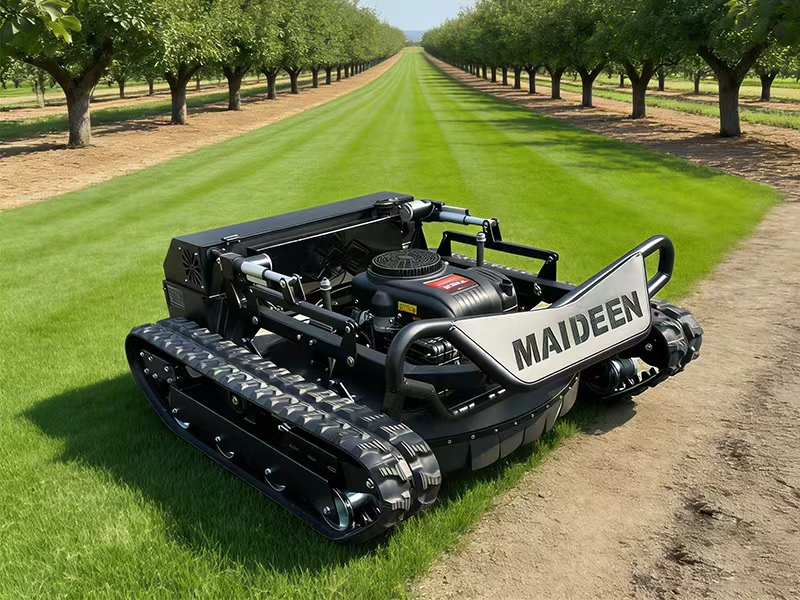
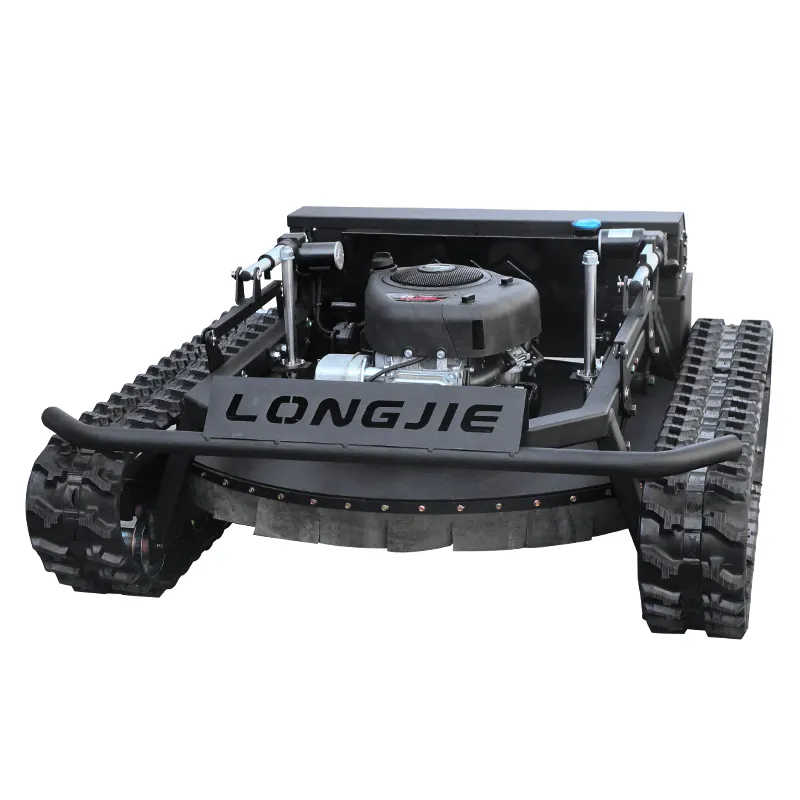
Cutting through dense, overgrown vegetation requires more than just raw cutting deck power; it demands superior ground traction, stable weight distribution, and mechanical drive efficiency. Standard push mowers often slip or sink on damp, thick turf, causing uneven cutting heights, turf damage, and excessive operator physical fatigue. Utilizing a commercial self-propelled lawn mower equipped with advanced drive systems resolves these traction limitations by delivering steady, controlled forward momentum. At Shandong Maide En Intelligent Technology Co., Ltd, our engineering focus emphasizes heavy-duty chassis designs paired with engineering rubber tracks embedded with internal steel wire and steel plates. This tracked drive structure spreads total machine weight evenly across micro-terrains, preventing wheel sinkage and traction loss in soft, muddy, or overgrown soil conditions. When deploying a self-propelled lawn mower across challenging thick grass mowing tasks, operators maintain smooth forward travel speeds without needing to manually push heavy machinery through thick brush or uneven ground. Consistent ground propulsion ensures that cutting blades engage vegetation at a steady, controlled pace, reducing sudden engine strain and producing clean, uniform grass height across varied slopes, rough fields, and unmaintained outdoor terrain across all seasons. Tracked chassis designs provide exceptional stability across wet, muddy grounds.
Mechanical Durability and Deck Architecture Under High-Resistance Loads
Sustained operational performance in overgrown fields depends heavily on structural deck durability, heavy-duty chassis architecture, and reliable component integration. Heavy vegetation subjects cutting decks, rotating spindles, and height adjustment mechanisms to severe mechanical resistance, continuous vibration, and potential impact forces. High-performance gasoline lawn mowers utilize reinforced steel cutting decks combined with low-failure electric push rods featuring internal iron gears to adjust cutting height effortlessly and reliably. During rigorous field testing conducted by Shandong Maide En Intelligent Technology Co., Ltd, units subjected to continuous thick grass mowing demonstrated exceptional structural resistance against frame flexing, deck clogging, and mechanical wear. Incorporating well-known brand engines alongside heavy-duty internal iron gears ensures that power transmission remains smooth even when blades strike dense weed clusters, tough reed patches, or thick brush stems. Additionally, utilizing robust remote control and drive systems allows operators to adjust cutting deck heights dynamically while on the move. This prevents blade binding when entering extremely tall grass patches, safeguarding internal drive belts, reducing mechanical stress, and extending the overall operational lifespan of the equipment under demanding commercial mowing conditions in tough environments. Continuous testing under real field conditions validates mechanical endurance.
Operational Safety and Remote Management in Overgrown Conditions
Mowing tall, dense vegetation often hides unseen physical obstacles such as hidden rocks, tree stumps, discarded debris, and sudden terrain drop-offs, posing significant safety hazards to equipment operators. Traditional ride-on or walk-behind mowers force operators to remain directly on or behind the machine, exposing them to flying debris, extreme engine heat, toxic exhaust fumes, and potential tipping risks on steep embankments. Transitioning to advanced wireless remote control systems fundamentally alters how commercial operators manage thick grass mowing in hazardous or unfamiliar areas. Using a heavy-duty self-propelled lawn mower integrated with industrial wireless remote control allows field technicians to operate machinery from a safe distance of up to several hundred meters with an unobstructed view of the terrain ahead. At Shandong Maide En Intelligent Technology Co., Ltd, our remote-controlled platforms provide sensitive response times and stable performance, enabling operators to guide gasoline lawn mowers precisely around hidden obstacles and along dangerous slopes. Wireless remote navigation eliminates physical operator exertion, protects crew members from hidden debris strikes, and allows commercial lawn care teams to tackle dense overgrown vegetation safely and efficiently across steep hillsides, drainage ditches, and rough terrain without personal injury risks. Remote operation keeps crew members out of harm's way on steep hillsides.
Maintenance Efficiency and Commercial Quality Inspection Standards
Maintaining consistent cutting performance and engine efficiency across demanding field environments requires rigorous manufacturing standards, comprehensive testing, and preventative maintenance procedures. Gasoline lawn mowers engineered for commercial applications require reliable engine starting systems, multi-stage air filtration, and durable blade engagement components. At Shandong Maide En Intelligent Technology Co., Ltd, all remote-controlled lawn mower products undergo strict quality inspections and testing before leaving the factory to ensure compliance with international CE and EPA standards. To ensure reliable execution during thick grass mowing, routine maintenance includes inspecting air filters, checking spark plugs, and verifying blade sharpness before entering dense vegetation. Using a heavy-duty self-propelled lawn mower equipped with well-known brand engines simplifies routine maintenance thanks to widely accessible replacement parts and global warranty coverage, such as the three-year global warranty provided for our Briggs & Stratton 810cc engine configurations. Proper maintenance ensures long-term operational reliability, reduces unexpected field downtime, and delivers consistent cutting efficiency season after season in demanding commercial environments across global export destinations. Comprehensive customer support and clear maintenance guidelines maximize equipment working lifespan.
Economic Advantages and Field Performance Optimization
Investing in high-performance turf equipment offers clear financial and operational advantages for agricultural enterprises, municipal agencies, solar farm operators, and commercial landscaping contractors. While basic push mowers may suffice for light residential lawns, tackling dense, overgrown vegetation requires the heavy-duty power output and high torque of commercial gasoline lawn mowers. Deploying a tracked self-propelled lawn mower dramatically reduces labor hours required to clear challenging terrain compared to manual brush cutting or handheld string trimming. At Shandong Maide En Intelligent Technology Co., Ltd, our engineering focus combines high-torque gas engines, engineering rubber tracks, and low-failure electric push rods with internal iron gears to deliver long-term equipment reliability. By optimizing cutting speed, reducing fuel consumption per acre, and streamlining thick grass mowing operations, commercial operators achieve lower total cost of ownership and faster job completion. Combining high torque output, remote control safety, and durable track drive systems establishes a reliable, cost-effective solution for managing tough outdoor vegetation across diverse global markets and commercial land management projects. Investing in robust machinery optimizes operational productivity and protects capital investment.