EN
How Does Side Cutting Crawler Remote Control Lawn Mower Clean Lawn Edges
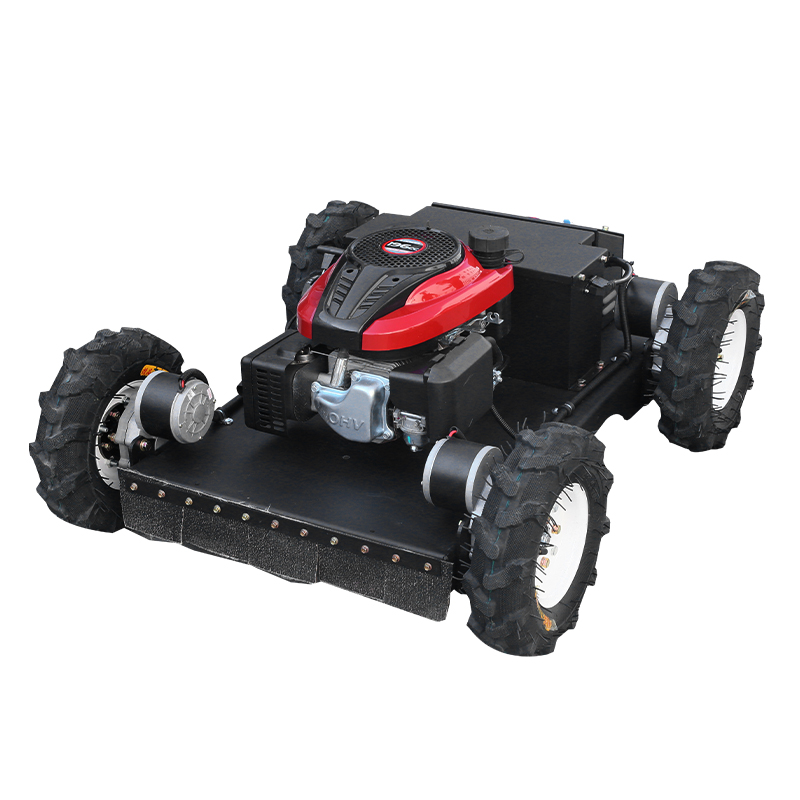
A clean edge changes how a lawn, orchard row, embankment, or managed green space looks and how easy it is to maintain. A crawler remote control lawn mower with a side-cutting layout is designed to put the cutting path closer to a boundary than a centrally mounted deck can reach. It does not make every edge automatic, but it can reduce the strip of grass left beside fences, walls, tree lines, drainage channels, and paths when the machine, route, and site are properly matched.
From an operations perspective, the useful question is not simply whether a crawler remote control lawn mower has a side cutter. It is whether the cutter can travel with safe clearance, follow a repeatable pass, and leave an edge that needs little follow-up work. The answer depends on cutter offset, ground shape, vegetation, obstacles, and the operator’s ability to see the cutting zone.
Why lawn edges are harder than open-area mowing
In open grass, the deck can overlap each pass and the crawler remote control lawn mower can work in a broad, predictable pattern. Along an edge, the machine has only one usable side. A wheel, track, guard, or deck housing may prevent the blades from reaching the final strip next to the boundary. Curves, exposed roots, posts, stones, and changes in grade make the problem more demanding.
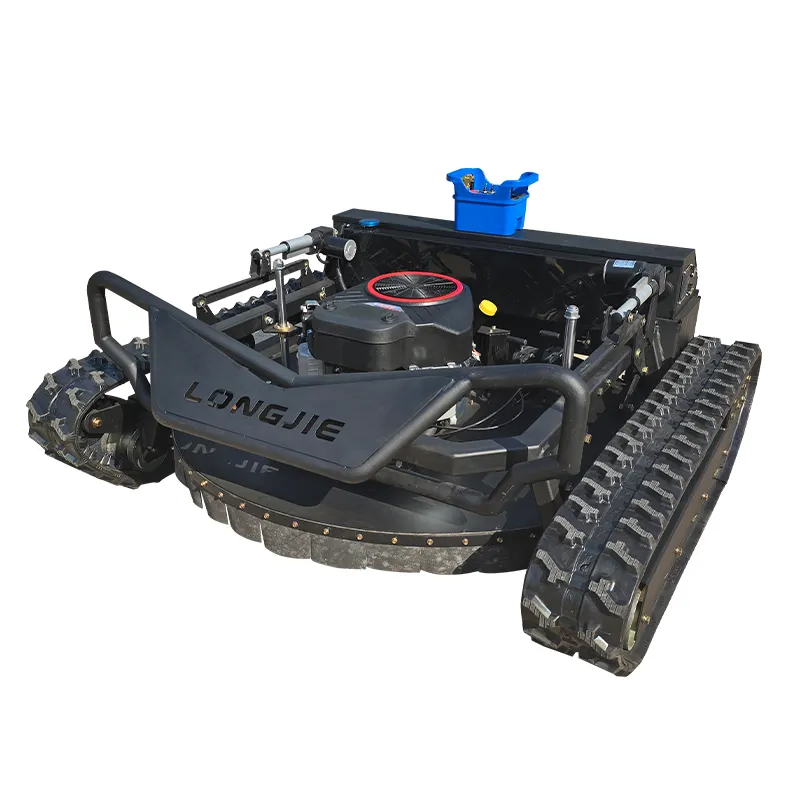
Side cutting addresses that reach issue by placing part of the cutting action to one side of the crawler remote control lawn mower. When the machine runs parallel to the lawn boundary, the operator can position the main track on firm ground while the cutter works nearer the grass line. The result is an overlap between the cutting swath and the uncut border, rather than a narrow missed band.
How the side-cutting path works
1. The crawler follows a parallel reference line
The operator first identifies a safe reference line: a path edge, a previously cut strip, a fence line with adequate clearance, or a visible change in vegetation. The crawler remote control lawn mower is driven parallel to that line instead of pointed directly at it. This orientation helps keep the tracks stable and allows the side cutter to work consistently along the outside of the travel path.
2. The cutting zone overlaps the border
A side-mounted or side-reaching cutter can extend the effective cut closer to the boundary. The operator should begin with a conservative offset, observe the remaining strip, then make a second controlled pass if needed. Trying to place a crawler remote control lawn mower exactly against a wall, curb, tree trunk, or ditch on the first pass can create avoidable contact and visibility problems. A small planned overlap is usually more reliable than a single aggressive pass.
3. Tracks support position on suitable uneven ground
Tracks can help a crawler remote control lawn mower maintain contact across suitable rough or sloping sections, but they do not remove site limits. Ground firmness, traction, obstacles, and the manufacturer’s operating guidance still determine whether the route is appropriate. Remote operation can let the operator stand farther from an immediate bank or rough cutting zone, yet it does not replace a clear exclusion area or careful supervision.
Set up the edge before mowing
Good edge quality starts before the engine or cutting system is engaged. Walk the route and remove loose wire, plastic, branches, hidden debris, and objects that could be thrown or wrapped around the cutting system. Mark culverts, soft shoulders, drop-offs, irrigation heads, low stumps, and drainage openings. If the boundary is near pedestrians, vehicles, livestock, or windows, establish an exclusion zone and follow the machine manual’s safety directions.
Next, decide where the crawler remote control lawn mower should start and turn. The most effective route often begins with the longest straight edge, then works toward short return runs and curved sections. Leave extra room at each turning point. A crawler machine may cut well alongside an edge but still need a wider, stable area to reverse or turn without pushing the side cutter into vegetation or an obstacle.
Choose the right pass for each edge type
- Fence lines: Keep a visible clearance from posts and wire. Use the side cutter to reduce the remaining strip, then inspect for wrapped vegetation or hidden debris.
- Paths and curbs: Run parallel with a modest overlap. Slow down near uneven paving, loose gravel, or abrupt height changes so the crawler remote control lawn mower remains predictable.
- Tree rows: Treat trunks, roots, guards, and low branches as separate obstacles. A side-cutting pass can clean the row between trees, but a hand tool may still be appropriate around the final tight radius.
- Ditches and banks: Confirm surface condition, route, and the equipment’s approved operating limits before entering. Do not assume that crawler tracks make every slope or drainage edge suitable.
What affects the finished edge
Travel speed matters. When grass is tall, wet, tangled, or dense, a slower first pass gives the side-cutting system more time to process the vegetation. If the first pass lays grass over instead of producing a clean cut, let the material settle and make a controlled second pass from the same reference line. The crawler remote control lawn mower should not be forced through material that blocks visibility or causes repeated discharge buildup.
Cutting height also changes the visual result. A very low cut may expose uneven soil, roots, or stones near the boundary. A moderate, consistent setting often produces a neater line while protecting the turf and reducing the chance of striking concealed objects. Before committing to a long run, test a short section and check both the cut line and machine behavior.
When side cutting is not the final answer
A crawler remote control lawn mower can reduce hand finishing, but it cannot safely reach every narrow corner. Grass behind a fixed guard, directly against a building, inside a tight tree basin, or beneath low obstructions may still require a trimmer or another purpose-built tool. Treating these areas as planned finish work is better than forcing the crawler remote control lawn mower into a space with poor clearance.
For recurring maintenance, document the preferred route, turning areas, hazards, and a suitable cutting height for each property. That simple record makes edge work more repeatable across crews and seasons. It also supports a useful supplier discussion: share grass type, ground condition, edge photos, obstacle spacing, desired finish, and local safety requirements so the cutting layout can be evaluated against the actual task.
Practical takeaway
Side cutting helps a crawler remote control lawn mower clean lawn edges by moving the cutting path closer to the boundary while the tracks remain on a stable, visible route. Consistent results come from conservative overlap, a planned parallel pass, appropriate speed, and a clear decision about which tight areas still need manual finishing. In other words, the feature is most valuable when it is part of an edge-management process, not treated as a substitute for site inspection and safe operating practice.