EN
How Far Can a Wireless Remote Lawn Mower Receive a Control Signal?
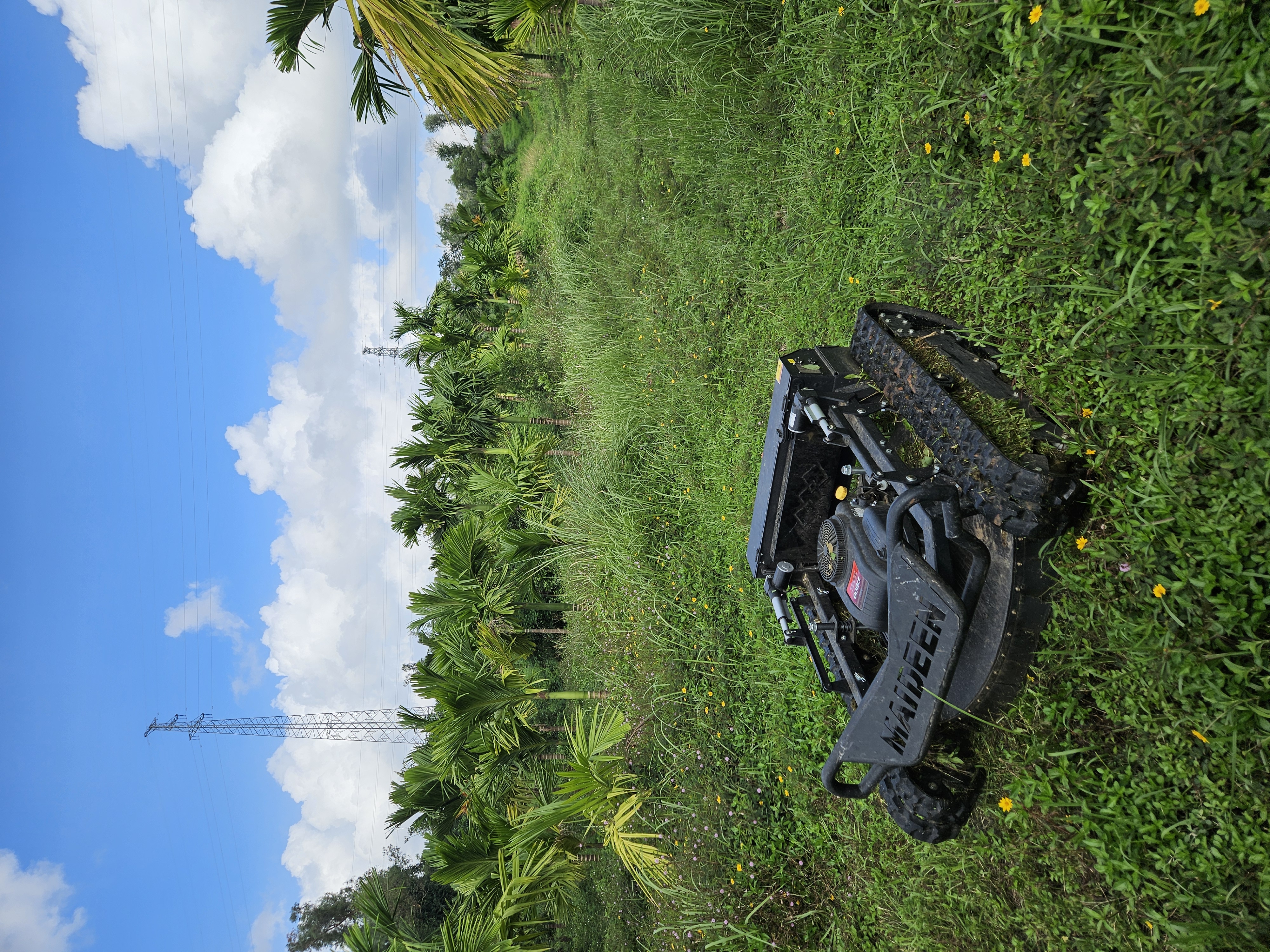
A remote control lawn mower can be a useful way to cut grass on slopes, orchard rows, embankments, and other places where walking behind a machine is uncomfortable or unsafe. But there is no honest universal answer to “how far?” The usable distance depends on the mower’s radio system, the site, the operator’s line of sight, battery condition, antenna placement, and the machine’s loss-of-signal behavior.
As a practical rule, treat the number in a brochure as a maximum test-condition specification, not a distance you should automatically use on every job. One commercial manufacturer, for example, states a 1,000-foot remote range for a remote-operated mower line. That is a helpful reference point, but it does not mean every remote control lawn mower will work reliably at 1,000 feet, or that 1,000 feet is the right operating distance in tall grass, behind a bank, or near buildings.
The short answer: range is not the same as safe working distance
A wireless remote lawn mower may receive a signal hundreds of feet away in open ground when the transmitter and mower have a clear path between them. In real work, operators should choose a closer distance that keeps the machine visible, leaves room to react, and follows the manufacturer’s operating instructions. The safe distance can therefore be substantially shorter than the published radio range.
Think of a remote control lawn mower range in three layers:
- Rated range: the manufacturer’s stated maximum under its specified test conditions.
- Usable range: the distance at which controls remain responsive at your site.
- Safe working range: the distance that still lets the operator see hazards, people, animals, ground changes, and the mower’s path.
Those layers are different. A radio link can still be present while a dip, hedge, tree line, parked vehicle, or sun glare makes a remote control lawn mower difficult to supervise. For that reason, line of sight is often more important than trying to reach the farthest advertised distance.
What changes the signal range?
Line of sight and terrain
Radio signals generally work most reliably when the controller and a remote control lawn mower can “see” each other across open ground. A hill crest, drainage channel, retaining wall, dense brush, or row of trees can block or weaken the path. Even if the mower reappears after passing an obstacle, the temporary shadow can matter if you need to stop, steer, or back away promptly.
On a sloped site, walk the route before operating. Notice where the machine will disappear from view and where terrain may sit between the handheld remote and the mower. A wireless remote lawn mower is better treated as an actively supervised machine than as a device to send beyond visual control.
Vegetation, structures, and radio noise
Wet vegetation, metal fencing, sheds, vehicles, concrete walls, and power-related equipment may change radio conditions. They do not necessarily cause a problem, but they are good reasons to test before beginning a full mowing pass. Radio-frequency devices can also experience interference; in the United States, FCC Part 15 includes general conditions related to causing and accepting interference. That regulatory context is not a performance promise for a particular mower, but it explains why a site check is sensible.
If the job includes buildings, roadside infrastructure, orchards, or steel equipment, expect the practical reach of a remote control lawn mower to be site-specific. Do not solve a weak signal by standing where you lose sight of the cutting area.
Controller, mower, and battery condition
Check both power sources before you start. A low transmitter battery, a loose antenna, damaged controls, poor electrical connections, or an uncharged mower can make a remote control lawn mower appear to have a range issue. Follow the model’s inspection and charging instructions rather than assuming the radio itself is at fault.
Also keep the controller in the orientation recommended by the manufacturer. Avoid covering its antenna area with your body or placing the controller against metal objects during a range test. Small handling details can affect the consistency of a wireless remote lawn mower signal.
How to test a remote control lawn mower before mowing
Do not make the first range test while the blade is engaged near a slope or obstacle. A short, repeatable pre-operation check is more useful.
- Read the model-specific manual for its pairing procedure, stated range, stop function, and signal-loss response.
- Inspect the remote control lawn mower, controller, emergency stop, guards, and visible antenna components with the machine powered down.
- Choose a clear, level test area with no bystanders, animals, traffic, or loose debris.
- With cutting functions disengaged, verify steering, forward, reverse, stop, and any speed control at close range.
- Increase distance gradually while maintaining direct sight of the mower. Stop at the first sign of delayed response, an obstructed view, or uncertain footing.
- Repeat the check from the positions you expect to use on the site, especially around corners, grade changes, and vegetation.
This process turns an abstract remote control lawn mower specification into an operating boundary for the actual property. If the manual requires a particular test or minimum separation, that requirement takes priority over general advice.
Why failsafe behavior matters as much as maximum range
When comparing a remote control lawn mower, ask what happens if it loses the signal. Some products describe an automatic stop or shutdown response, but that feature is not universal and its exact behavior must be confirmed in the manual for the model under consideration. Do not assume that every wireless remote lawn mower will brake, stop the blade, or remain in place in the same way.
Before purchase or deployment, ask the supplier to document:
- the rated control range and the conditions behind that rating;
- the communication frequency or system description, where appropriate;
- the machine response to a dropped signal, low controller battery, and emergency stop command;
- how pairing, antenna inspection, and range testing should be performed; and
- any recommended visibility, slope, exclusion-zone, or training requirements.
For a remote control lawn mower used on a commercial site, these questions are part of a safe operating plan, not just a technical specification checklist.
Choose the operating position, not just the radio distance
A good operating position gives the person holding the remote a clear view of the mower’s travel path, a stable place to stand, and a route away from the cutting area if conditions change. On a bank, that may mean working from the top, side, or another approved position described by the equipment guidance. A suitable place is not necessarily the one that makes the remote control lawn mower look farthest away.
Set a boundary that keeps people and animals out of the work zone. Pause if someone enters that boundary, if visibility falls, or if the machine approaches a hidden obstacle. In difficult grass or uneven terrain, slower passes and shorter control distances can be more productive than recovering from a stop or route correction.
Questions to ask before buying a wireless remote lawn mower
- What is the stated range, and is it measured in open line-of-sight conditions?
- What is the recommended working distance for normal mowing?
- How does the remote control lawn mower react if the controller signal is lost?
- Can the supplier demonstrate the signal and stop functions on terrain similar to your site?
- What daily checks are required for the remote, batteries, emergency stop, and antennas?
- What training and safety rules apply to operators?
Final takeaway
Many remote control lawn mower systems can communicate over a substantial distance in open conditions, and a stated 1,000-foot range exists in the commercial market as one example. Still, the number that matters for daily work is the shorter distance that preserves signal reliability, clear visibility, and a controlled response to hazards. Test each site, understand the specific machine’s failsafe behavior, and operate within the manual’s safety limits. That approach helps a wireless remote lawn mower deliver its practical benefit without turning maximum radio reach into an unnecessary operating risk.