EN
What Is The Difference Between Remote start lawn mower And Standard Mower
A buyer comparing a remote control lawn mower with a conventional mower can easily run into confusing language. “Remote start” and “remote control” are not interchangeable features. A remote-start lawn mower lets the operator initiate the engine from a distance, while a remote control lawn mower normally lets the operator direct travel and, depending on the machine, manage cutting functions from a separate position. That difference changes how you assess terrain, staffing, safety controls, and daily workflow.
From a lawn-equipment selection perspective, start with the worksite rather than the feature list. The grass height, slope, obstacles, access route, and supervision plan matter more than whether a button can start an engine. This article compares the two approaches so purchasing teams and operators can ask more useful questions before choosing a mower.
Remote Start vs. Remote Control: The Core Difference
A remote start lawn mower has a starting function that can be triggered without standing directly at the engine controls. On a conventional mower, that may be a convenience feature: it starts the engine, but the operator still has to move to the normal control position to steer, travel, and cut. The machine remains a standard mower in its operating method.
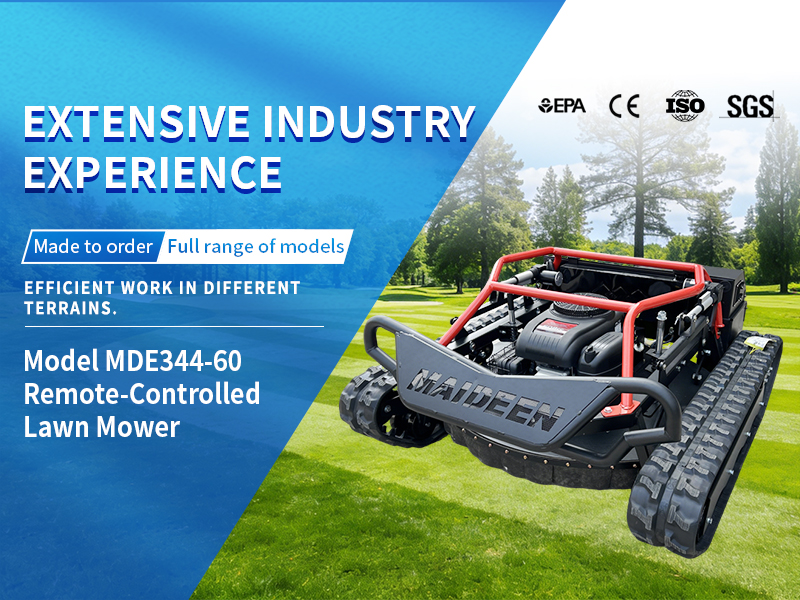
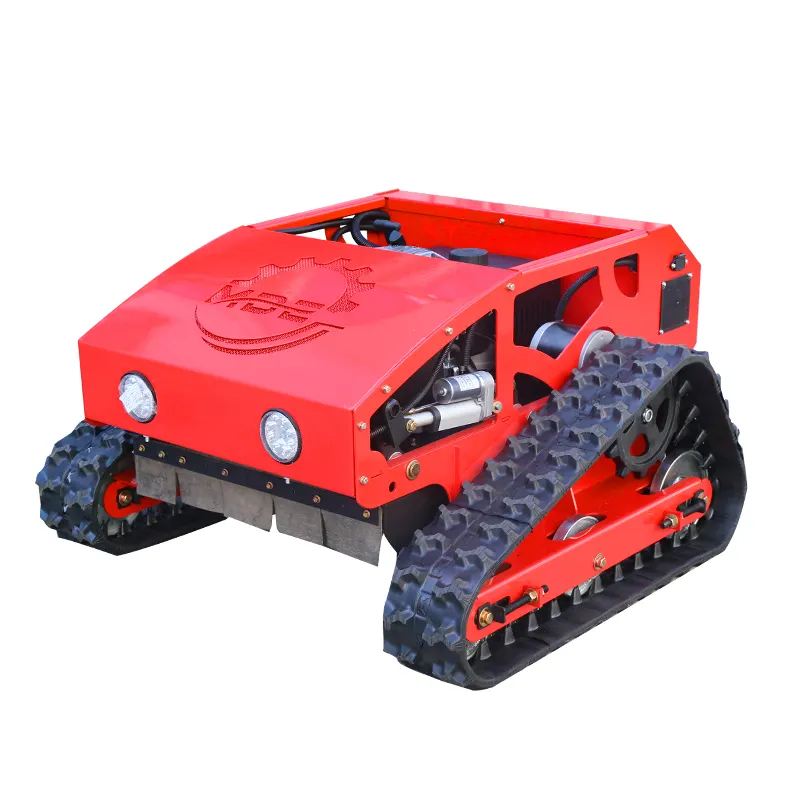
A remote control lawn mower, by contrast, is designed for active operation through a wireless controller. The operator can generally position themselves away from the mower while directing its movement. Exact functions vary by model, so buyers should verify what the controller actually handles: propulsion, steering, blade engagement, stopping, speed selection, and emergency shutdown are separate questions. Do not assume that a remote-start feature creates a fully remote-operable machine.
| Question | Remote-start mower | Remote control lawn mower |
|---|---|---|
| What is controlled remotely? | Usually engine starting only | Typically machine travel and operating commands, subject to model design |
| Where does the operator work? | At the usual walk-behind or ride-on controls after starting | At a separate, safe observation position within the stated control range |
| Main buying purpose | Starting convenience | Changing the operator’s position during mowing |
| What still needs verification? | Starting interlocks, normal controls, and safe parking | Control functions, emergency stop, terrain limits, visibility, and radio-control behavior |
How a Standard Mower Fits Into the Comparison
A standard mower may be walk-behind, ride-on, zero-turn, or another familiar configuration. Its essential characteristic here is not the engine type; it is that the operator controls it from the machine or from the intended handle position. That can be a sensible choice when the lawn is open, level enough for the equipment’s manual, and easy to observe while mowing.
The advantage is straightforward operating familiarity. Training, maintenance routines, transport, and daily checks may be simpler when the crew already understands the platform. A standard mower is not automatically the lower-cost or lower-risk choice in every setting, however. Repetitive work near rough edges, dense vegetation, or terrain that makes close operator positioning undesirable deserves a separate assessment.
When a Remote Control Lawn Mower May Change the Workflow
The real value of a remote control lawn mower is not merely that it feels more advanced. It may allow the operator to stand in a position with a clearer view of the mowing path instead of standing on or immediately beside the machine. This can be relevant for managed slopes, orchard rows, roadside margins, embankment-adjacent areas, or other sites where access and observation are part of the work plan.
That said, remote operation does not remove the need for site control. A remote control lawn mower still needs a defined working area, a clear line of sight where the manual requires it, controlled access for bystanders, and a preplanned response if the surface changes. Search results for this category often emphasize slope work, but a slope alone does not prove a particular mower is suitable. Use the manufacturer’s stated angle limit and operating instructions as the final boundary.
Before treating remote control as the answer, break the task into preparation, active mowing, and review. Preparation includes checking ground conditions, loose objects, people and animals, visibility, and the controller’s condition. Active mowing includes pace, turning space, safe separation, and the emergency-stop procedure. Review includes parking, blade shutdown, debris removal, and maintenance checks. This task-based approach is more useful than comparing feature names in isolation.
Safety Is Not a Feature Checklist
Both a remote-start lawn mower and a remote control lawn mower need safety systems that are understood, tested as instructed, and used within their design limits. OSHA guidance for riding mowers emphasizes that work should not take place on slopes beyond the manufacturer-specified limit. That principle is useful here: no remote feature overrides the manual, the worksite assessment, or local operating rules.
For a remote control lawn mower, ask how the machine stops, what happens if communication is interrupted, and which commands require deliberate activation. Confirm the planned operator position, visibility of the blade area, exclusion zone, and recovery process before work starts. For a remote-start lawn mower, confirm that normal start interlocks, parking procedures, and operator-presence protections still apply. Convenience should not be described as a substitute for supervision or training.
Which Option Is Better for Your Site?
There is no universal winner. A standard mower may fit a routine, accessible lawn where the normal control position gives the operator a good view and comfortable footing. A remote start lawn mower may add a limited convenience function without changing the basic mowing method. A remote control lawn mower may be worth evaluating when the work requires the operator to manage distance, visibility, or access differently.
Start with four questions: What surface will be cut? Where can the operator safely stand? What must the remote controller actually command? What support, parts, documentation, and training are available after delivery? In other words, first confirm the non-negotiable safety and terrain conditions, then compare optional functions. That prevents a remote-start feature from being mistaken for a complete remote control lawn mower solution.
A Practical Supplier Checklist
- Request the operator manual and confirm the manufacturer’s terrain and slope limits.
- Ask whether “remote start” means engine start only or whether a remote control lawn mower function is included.
- List every remote command separately: travel, steering, blades, speed, stop, and restart.
- Confirm emergency-stop behavior, communication-loss behavior, and required operator distance.
- Share site photos or a task description so the proposed configuration can be checked against real conditions.
- Discuss maintenance access, replacement parts, training, and support before making a purchase decision.
Conclusion
The difference is simple but important: a remote start lawn mower changes how the engine starts, while a remote control lawn mower changes how the mower is operated. For many buyers, a sound decision follows the same sequence: define the job, verify the safety boundary, confirm the exact controls, and then compare configurations. Shandong Maide En Intelligent Technology can use this kind of job-focused discussion to help buyers clarify lawn, slope, vegetation, and operating requirements before evaluating a remote-control mowing solution.