EN
How To Choose Between Walk Behind And Ride On Mowers
Choosing between walk behind and ride-on mowers is less about buying the largest machine and more about matching the mower to the work. A compact property with gates, trees, and narrow turns asks for something different from an open acreage with long passes. As a buyer-guide rule, start with the route an operator must mow, not just the total area shown on a map.
The right choice affects labor, finish quality, storage, maintenance planning, and safety. Both types of mowers can be useful, but neither is automatically the better option. This guide gives a practical way to compare them before you request a quotation or arrange a demonstration.
Start With the Site, Not the Mower Category
Area matters, yet it is only one part of the decision. Walk the site and note the usable cutting zones, not just the property boundary. A lawn broken up by beds, benches, trees, drainage edges, and narrow gateways can take longer than a larger but open lawn. Measure the narrowest access point, identify where the machine can turn around, and note whether the operator must move between separated sections.
Also look at grass height, seasonal growth, wet patches, curbs, and the distance from storage to the work area. These details help explain why two sites with similar square footage may need different mowers. Before comparing features, write down the longest straight run, the number of obstacles, the expected mowing frequency, and the available storage space.
When Walk Behind Mowers Make Sense
Walk behind mowers are often a sensible fit where access and maneuverability matter most. They can work well around landscaped beds, along boundaries, through gates, and in smaller zones where a larger machine would spend too much time turning. A walk-behind format may also be easier to store when indoor space is limited.
For a crew or property owner, the trade-off is operator effort. Longer routes require more walking, and repeated starts, turns, and travel between areas add fatigue. That does not make walk behind mowers unsuitable for larger sites; it means the expected workload should be realistic. Think about the mowing schedule during peak growth, not only the first neat cut of the season.
Questions to ask before choosing a walk-behind model
- Can the mower pass through every gate and around fixed obstacles without forcing awkward turns?
- Will the operator be comfortable walking the full route at the required mowing frequency?
- Is the site divided into small areas where precision matters more than travel speed?
- Can the mower be cleaned, serviced, and stored close to the work area?
When Ride On Mowers Make Sense
Ride-on mowers are generally worth evaluating when the job includes broad, open turf and repeated long passes. Seated operation can reduce the amount of walking required, and the machine may make the most sense when the route has enough room for turning, loading, and storage. The key word is open: a ride-on mower can be inefficient if it constantly stops for tight corners and obstacle avoidance.
Check the practical footprint, not only cutting width. Consider access gates, trailer or shed clearance, turning room at the end of each pass, and the path between zones. A ride-on mower also changes the maintenance routine: tires, controls, battery or fuel checks, blades, belts, and safe parking all need a planned inspection process.
Operator comfort is a valid selection factor, especially where mowing is a recurring task. However, comfort should not replace a site assessment. A machine that feels efficient on a level, open lawn may be a poor match for crowded terrain, wet ground, or a slope beyond the limits in its manual.
Compare the Work Pattern, Not Just Lawn Size
| Decision factor | Walk behind mowers | Ride-on mowers |
|---|---|---|
| Access and obstacles | Often easier to guide through narrow or landscaped areas. | More suitable where entries and turning zones are generous. |
| Open, repeated passes | Possible, but operator walking time becomes important. | Often more practical to evaluate for broad, unobstructed turf. |
| Storage | May suit smaller storage areas, subject to the actual machine dimensions. | Needs enough room for the machine, safe access, and routine checks. |
| Routine control | Direct walking control can help around detail work. | Requires confident steering, braking, and awareness of the machine envelope. |
| Workforce planning | Plan for walking effort and route length. | Plan for trained operation, pre-use checks, and safe parking. |
This comparison is intentionally conditional. The better choice is the machine that completes the required route safely and consistently, not the one with the most impressive category label.
Treat Slopes and Safety as a Separate Decision
Do not use a general comparison article as a slope rating. Every mower has its own operating instructions, and the manufacturer’s manual, labels, and local site procedures take priority. Before choosing mowers for uneven ground, identify slope direction, surface condition, drop-offs, holes, wet grass, obstacles, and the safe route for entering and leaving the area.
Safety guidance also differs by machine type. Public guidance commonly advises operating a walk-behind mower across a slope rather than up and down, while ride-on equipment has rollover and traction considerations that require strict attention to the specific manufacturer instructions. For a ride-on mower, do not assume that a slope handled by one model is suitable for another. If a location exceeds the approved operating conditions, choose another method or purpose-built equipment rather than forcing a general-purpose mower into the job.
Basic controls remain essential: inspect the area before mowing, keep bystanders away, clear debris, wear appropriate protection, avoid unsafe reverse travel, and stop the machine before adjustments. Training and a documented daily check are especially useful when several operators share the equipment.
Where Does a Mass Production Remote Lawn Mower Fit?
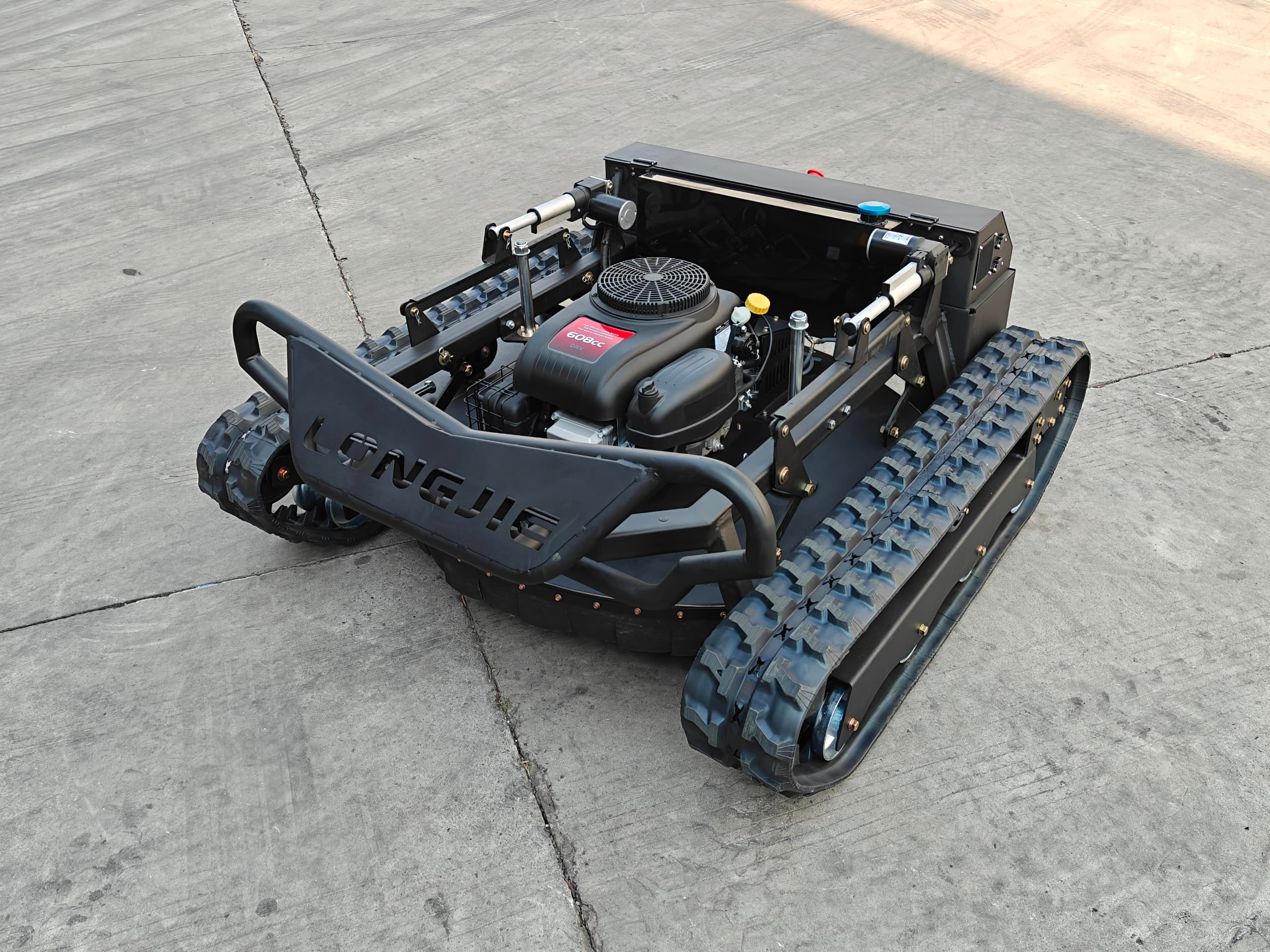
A mass production remote lawn mower should be evaluated as a separate operating concept, not casually grouped with every ride-on mower. Remote operation may be relevant where operators need distance from certain work zones or where the site has repetitive mowing tasks, but suitability depends on the actual remote-control system, terrain limits, visibility, emergency-stop design, maintenance support, and local safety requirements.
Ask for confirmed documentation rather than assuming capabilities. Review the approved slope range, control distance, fail-safe behavior, operator training requirements, blade configuration, service process, and the type of ground conditions the model is intended to handle. Remote equipment can be part of a broader mower plan, but it should not be selected solely because it appears to reduce walking.
Build a Shortlist With a Site Checklist
- Map the route. Mark gates, narrow sections, trees, drainage areas, slopes, and turnaround points.
- Estimate the real work cycle. Include loading, travel, trimming, cleaning, and storage—not only cutting time.
- Define the operator profile. Note experience, expected shift length, training needs, and who will perform daily checks.
- Verify operating limits. Compare the exact manual against site slope, surface, weather, and access conditions.
- Plan maintenance before purchase. Confirm where blades, fluids, tires, batteries, and cleaning will be handled.
- Request a relevant demonstration. If possible, evaluate mowers on a route that resembles the actual site.
A Practical Mowers Comparison Worksheet
Use one worksheet for all mowers under review. Compare mowers by route, gates, turns, storage, transport, cleaning, service access, and daily checks. Record whether walk-behind mowers finish detail zones cleanly and whether ride-on mowers have safe turnaround space. On a demonstration, assess mowers on the real route and ask where mowers lose time or need clearance. For remote options, document mowers control, stop, visibility, and recovery procedures. This keeps mowers selection grounded in the property. A written comparison also helps buyers evaluate mowers with different configurations, while confirming that mowers fit training, maintenance, and operating limits.
Make the Choice Based on the Hardest Part of the Job
For detailed, confined, or obstacle-heavy lawns, walk behind mowers often deserve the first look because access and control may shape the whole job. For larger, open areas with room to turn and a recurring workload, ride-on mowers may be the more practical category to evaluate. In many real operations, the answer is not one format for every task; it is a deliberate mix that assigns each mower to the work it can do safely and efficiently.
Before you decide, organize the site measurements, operating conditions, and maintenance expectations into one brief. That makes it easier to compare confirmed product information without relying on assumptions. A sound mower choice fits the route, the operator, and the documented operating limits every time it is used.