EN
How To Customize An RC Lawnmower For Your Needs
Customizing an RC lawnmower starts with the job, not a wish list of features. A remote-controlled mower can change how a team approaches rough grass, repetitive routes, or areas where keeping the operator away from the cutting zone is preferable. Still, the right setup depends on the site, vegetation, work routine, and the people responsible for operating and maintaining the machine. Before comparing configurations, turn the mowing task into a clear set of conditions.
This practical framework is written from the perspective of a remote-mower technical explainer: separate what the machine must do from what would merely be convenient, then verify the final configuration against the manufacturer’s documentation and local safety requirements. That distinction matters. A feature that helps on an open, level property may add little value on a narrow, obstacle-filled route.
Start With a Site and Task Map
The first customization decision for an RC lawnmower is not the cutter or the controller. It is the work area. Map each zone that will be mowed and note the ground surface, slope changes, access points, drainage, obstacles, and places where people, vehicles, or animals may enter the work area. A large site is not automatically difficult; a smaller site with ditches, trees, gates, uneven ground, and frequent turns can demand more careful planning.
- Terrain: Record firm, soft, rutted, wet, and uneven sections separately.
- Slope: Measure slopes with a suitable indicator and compare them with the final machine manual rather than relying on a visual estimate.
- Vegetation: Identify typical grass height, density, woody growth, and seasonal variation.
- Route: Mark narrow passages, turning areas, blind spots, property boundaries, drainage channels, and places that require a spotter or exclusion zone.
- Work cycle: Define how often each zone must be cut and how much preparation or cleanup is realistic.
It is tempting to let acreage drive every decision. In practice, slope, traction conditions, sightlines, and obstacle density may change the configuration more than total area. An RC lawnmower should be selected for the hardest routine section it must handle safely, not only for the easiest part of the property.
Choose the Mobility Setup Before Adding Convenience Features
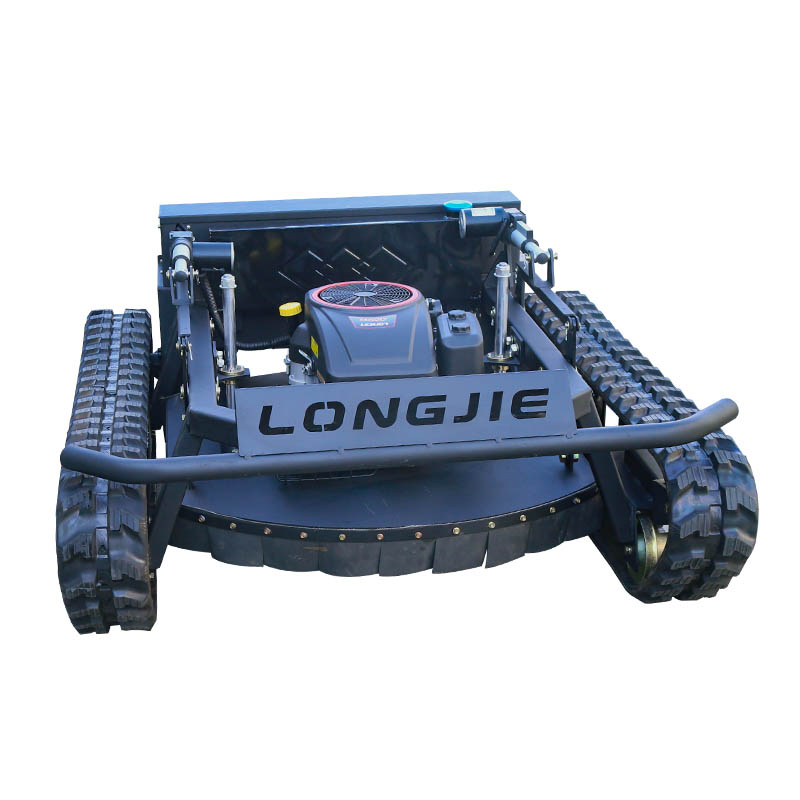
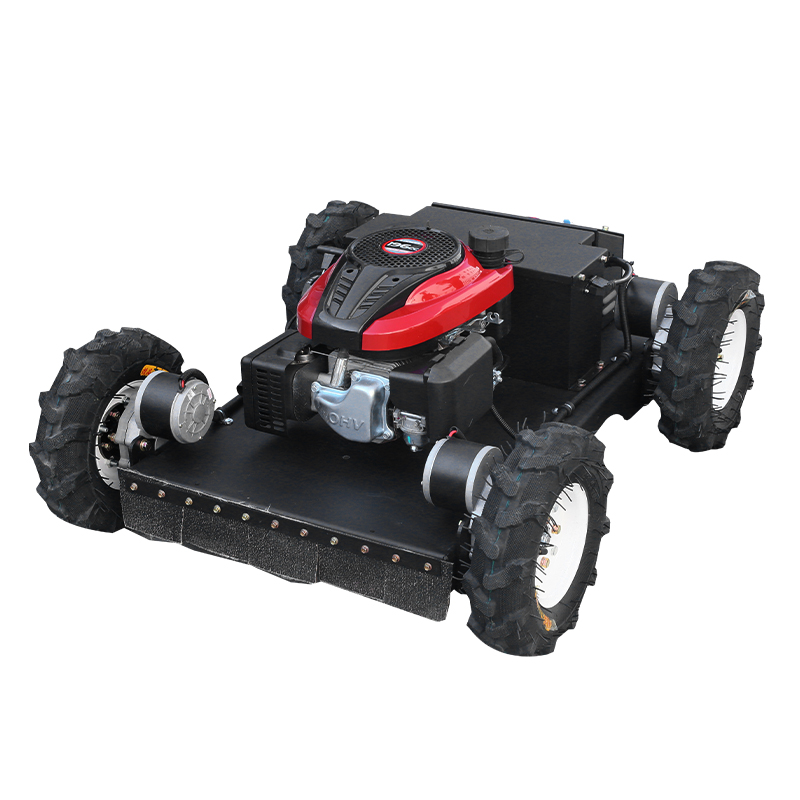
Once the site map is complete, discuss mobility as a configuration question. Ground-contact components, overall footprint, clearance, turning behavior, and the placement of vulnerable parts should all be considered in relation to the route. The goal is not to claim that one arrangement works everywhere; it is to identify the arrangement that makes sense for the confirmed surface and access conditions.
For example, a site with soft shoulders or irregular ground may require a different traction discussion from a dry, regularly maintained lawn. A route that includes narrow gates or closely spaced trees may make machine width and turning space more important than a broad open area. Ask the supplier to clarify which parts of the RC lawnmower configuration affect stability, ground clearance, and transport access, and request the applicable documentation for the specific version under consideration.
Put safety and terrain compatibility ahead of optional convenience features. If a route cannot be inspected, entered, turned around, or exited in a controlled way, another accessory will not solve the underlying planning problem.
Match the Cutting System to the Vegetation You Actually Have
Customization should also reflect the material being cut. Short, maintained turf, tall grass, dense growth, and mixed vegetation place different demands on the cutting workflow. Rather than treating a listed cutting capability as a universal answer, provide a representative description of the vegetation: normal height, peak seasonal height, density, hidden debris risk, and whether the area is cut frequently or only periodically.
Use that information to discuss the appropriate cutting arrangement, working width, height-adjustment needs, and inspection routine. A wider setup can be useful where the route is open and access supports it, but it can be less practical where trees, boundary features, or narrow paths limit maneuvering. Likewise, a setup intended for regular maintenance may not be the right starting point for neglected ground with unknown obstacles.
Before any work begins, walk the route and remove or identify hazards such as wire, stones, branches, holes, irrigation components, and unstable edges. Remote control does not eliminate the need for a visible, managed work zone. It changes where the operator stands; it does not remove the need for inspection and supervision.
Define the Remote-Control Workflow
A remote control industrial lawn mower should be customized around a repeatable operating process. Think through where the operator will stand, how the route remains visible, when a second person is needed, how communication works near shared spaces, and what triggers a pause or shutdown. These questions are more useful than simply asking for the greatest possible control distance.
Specify practical workflow needs in writing:
- Who is authorized to operate the RC lawnmower, and what training or familiarization is required?
- What pre-start checks will be completed for guards, controls, cutting components, ground conditions, and visible damage?
- Where are the safe operating positions and no-entry boundaries for each zone?
- How will the team handle lost visibility, changing weather, unexpected people, debris, or an equipment warning?
- What is the stop, parking, transport, and post-use inspection procedure?
General mowing safety guidance commonly emphasizes inspection checklists and terrain assessment. Use those as planning prompts, then follow the instructions that apply to the actual machine and your site. In particular, do not infer a permissible slope, control range, or operating capability from a similar-looking product.
Turn Customization Requests Into Testable Requirements
For each proposed change, write one sentence that connects the need, the feature, and the verification step. For an RC lawnmower, this prevents a conversation about options from becoming a collection of vague preferences. For example: “The route includes frequent transitions between firm grass and uneven edges, so confirm how the selected RC lawnmower setup is intended to be inspected and operated on those conditions.” The sentence does not assume a result; it identifies what needs confirmation.
Apply the same discipline to a remote control industrial lawn mower workflow. If the operator may work near a boundary, record the expected line of sight, the stop procedure, the exclusion area, and the manual section that governs the condition. If work is seasonal, list how wet ground, tall growth, or a changed route will alter the pre-start decision. These requirements make a customization discussion more useful for both the buyer and the supplier.
| Site need | Configuration question | What to verify |
|---|---|---|
| Changing terrain | Which mobility-related setup is relevant to the confirmed surface? | Machine-specific operating guidance and a site demonstration plan |
| Dense or seasonal growth | Which cutting workflow fits the real vegetation and mowing interval? | Approved cutting guidance, inspection steps, and debris controls |
| Shared or constrained work area | How will an RC lawnmower be operated with clear visibility and a controlled perimeter? | Operator procedure, stop controls, and local site rules |
Build Maintenance Into the Customization Brief
A useful RC lawnmower specification includes the work after mowing, not just the cutting task. Ask how the selected configuration will be inspected, cleaned, stored, and supported. Consider access to routine checks, likely wear areas, spare-part identification, storage conditions, and the process for documenting an issue before it becomes a larger interruption.
This is where a needs-configuration-verification approach is especially helpful. First, state the operating condition. Next, identify the component or feature that may affect it. Finally, ask what document, demonstration, or confirmation is needed before purchase. That method avoids turning unverified marketing language into a requirement.
Create a Supplier-Ready Customization Checklist
Before requesting a quotation or configuration discussion, provide a concise brief for the RC lawnmower project:
- Site photos or a route sketch, including access points and restricted areas
- Measured slope information and notes on soil, drainage, and surface changes
- Vegetation description and expected mowing frequency
- Required operating schedule, transport needs, and storage environment
- Operator experience, training plan, and site-control procedure
- Questions about the proposed configuration, maintenance, documentation, and support process
Customization is most effective when it begins with these facts. A well-prepared brief helps a supplier assess whether a proposed remote control industrial lawn mower configuration fits the application and clarifies what still needs verification. Final decisions should follow the machine-specific manual, supplied technical information, and applicable local rules.