EN
How To Maintain The Tracks Of A Crawler Lawn Mower
A crawler lawn mower can make vegetation work more manageable on uneven ground, but its tracks need routine attention. Tracks transfer drive force to the ground, carry debris through the undercarriage, and work close to rollers, idlers, sprockets, guards, and tensioning parts. When grass, soil, stones, or wrapped material remain in those areas, normal movement can become harder to inspect. A short routine after each job is easier to keep than a major clean-up after something goes wrong.
This guide is written from an operator’s point of view: check before starting, observe while working, and inspect again before parking. It is general guidance, not a substitute for the maintenance instructions, tension specification, lockout procedure, or safety requirements for your specific crawler lawn mower.
Start With Safe Parking and Shutdown
For any crawler lawn mower, track care begins after the machine is on firm, level ground. Park away from traffic, slopes, loose material, and bystanders. Lower or secure attachments as specified by the manufacturer, disengage the drive, shut down the engine or power system, and remove the key or isolate the machine according to its manual. Wait for hot components to cool before cleaning near them.
Keep hands, feet, and tools clear of any track that could move. Do not reach into the undercarriage while another person has the remote or while stored energy may still be present. If you need to raise the mower for access, use only the lift points, stands, and blocking procedure approved for that model. A crawler lawn mower is not safe to support with improvised blocks or a jack alone.
Make Debris Removal a Post-Mowing Habit
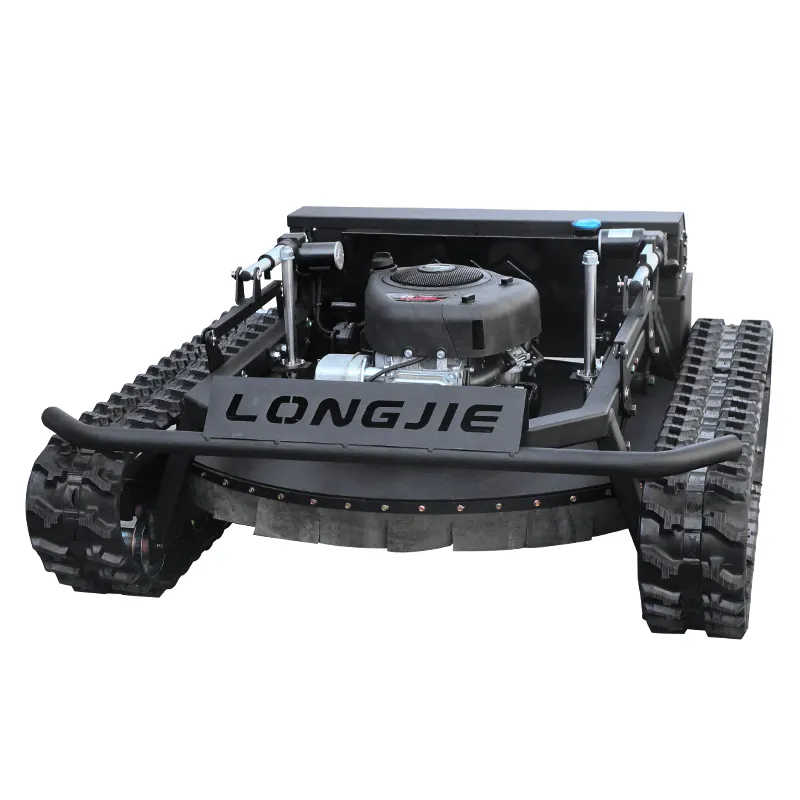
On a crawler lawn mower, fresh clippings, wet soil, vines, string, wire, and small stones can collect along the inside of the tracks. After each work session, look first at the drive sprocket area, front idler, lower rollers, return path, and guards. Remove loose material with a brush, plastic scraper, or another tool that keeps your hands clear of pinch points. Wear suitable gloves and eye protection; hidden wire or sharp debris can cut through packed grass.
Avoid treating every buildup with high-pressure water. Direct water can push contamination into areas that are protected by seals, bearings, or electrical components. Follow the manual’s cleaning method. If low-pressure rinsing is allowed, clean gently and let the undercarriage dry before storage. On clay or wet grass, check again after the mower has cooled because compacted material is often easier to see once it has stopped moving.
Cleaning is also an inspection opportunity. A track that looks clean can reveal a fresh cut, missing chunk, exposed reinforcement, loose fastener, or leaking component that was hidden by debris. Record anything unusual before the next job rather than relying on memory.
Inspect the Tracks Before Each Use
Walk around the crawler lawn mower before starting it; this brief check is one of the simplest ways to catch a track problem early. View both tracks from the outside and, where access is safe, the inside path as well. Look for cuts, cracking, frayed edges, missing lugs, uneven wear, embedded objects, or damage around the drive-lug area. Inspect the sprocket and rollers for packed material, abnormal wear, loose hardware, and signs of leakage.
Pay attention to differences between the left and right side. One track that is visibly dirtier, more worn, or running at a different position can be a useful early warning. It does not automatically identify the cause, but it is a reason to stop and check the manual, tensioning system, rollers, alignment, and operating conditions.
- Before work: verify that the track path is clear and guards are secure.
- During work: pause if steering changes, traction feels irregular, or you hear repeated clicking, grinding, or rubbing.
- After work: remove debris, check for fresh damage, and note repairs or questions for the next service interval.
Check Tension, but Use the Model-Specific Procedure
On a crawler lawn mower, correct tension matters because a loose track may derail or strike surrounding parts, while an over-tightened track can add load to the track, rollers, bearings, and drive components. The right setting is not universal. Track construction, machine weight, suspension arrangement, and the manufacturer’s measurement method all affect the specification.
Use the crawler lawn mower manual to identify the approved measurement point, support condition, required track position, and adjustment sequence. Many machines require a defined amount of sag or deflection measured under a stated condition. Do not copy a measurement from another brand, a video, or a similar-looking machine. If the specification is unavailable, or if adjustment requires releasing grease or working with a pressurised tensioner, ask an authorised service technician for the correct procedure.
After an approved adjustment, operate the mower briefly in a clear area and recheck the result according to the manual. If the track repeatedly loosens, walks sideways, or cannot be adjusted within specification, stop using the machine until the underlying issue is assessed. Tension adjustment is not a cure for damaged rollers, worn sprockets, a bent component, or debris in the track path.
Use Operating Habits That Reduce Unnecessary Wear
Crawler lawn mower track life is influenced by where and how the mower turns. Sharp pivots on abrasive pavement, curbs, rocks, exposed roots, and hard debris can load the rubber and drive-lug areas differently from straight travel on suitable ground. Where the job allows, plan turns smoothly, avoid spinning in place, and clear obstacles rather than forcing a crawler lawn mower over them.
Terrain still matters after the purchase decision. Wet slopes, ruts, side-hill travel, and dense vegetation can change what you need to inspect. Remote control does not remove the need for a clear travel route, operator visibility, safe separation from people, and attention to the mower’s published operating limits. If the ground is unstable or the machine begins to behave unexpectedly, stop and reassess rather than using track speed to push through the condition.
Protect Tracks During Storage
Before extended storage, remove vegetation and soil from the crawler lawn mower, allow the machine to dry, and inspect the tracks one more time. Park on a clean, stable surface in accordance with the manual. Whenever practical, protect rubber tracks from prolonged direct sunlight, standing water, fuel, oil, solvents, and other chemicals that may affect the material. Do not apply dressings, lubricants, or cleaners unless the manufacturer explicitly approves them for the track material.
Long storage periods are a good time to create a simple record: date cleaned, visible condition, tension check completed, parts replaced, and any issue awaiting service. The note helps the next operator tell an old mark from a new issue and gives a supplier or technician a clearer starting point if repair is needed.
Know When to Stop and Call for Service
Stop operating the crawler lawn mower and consult the manual or qualified service support if you find exposed cords or reinforcement, deep cuts, missing sections of track, repeated derailing, a seized or leaking roller, damaged sprocket teeth, abnormal vibration, or a tensioner that will not hold its setting. Continuing to mow can turn a contained maintenance item into damage to surrounding components.
For buyers building a maintenance plan, ask the supplier for the correct track inspection interval, tension specification, approved cleaning method, wear limits, replacement-part identification, and service access procedure for the exact crawler lawn mower configuration. Shandong Maide En Intelligent Technology can help organise product and operating-condition questions for remote-control mowing equipment, while the final service plan should follow the documentation supplied for the selected model.
Frequently Asked Questions
How often should I clean crawler lawn mower tracks?
Inspect crawler lawn mower tracks after every mowing session and remove debris whenever it is present. The amount of cleaning depends on grass type, soil moisture, terrain, and the material caught in the undercarriage. Follow the model manual for any deeper cleaning interval.
Can I adjust track tension without a manual?
No. Use the crawler lawn mower tension procedure and measurement specified for the exact machine. A wrong adjustment can contribute to derailment, premature wear, or damage to the undercarriage.
What is the first sign that a track needs attention?
Fresh debris buildup, unusual noise, changed steering feel, visible damage, repeated side-walking, or irregular tension are all reasons to stop, clean, and inspect before continuing.