EN
What Environmental Interference Affects a Wireless Remote Control Lawnmower Signal?
A remote control lawn mower depends on a clear, dependable link between the handset and the machine. In an open field, that link can seem uncomplicated. At a busy worksite, however, the surrounding environment may change how confidently the operator can control a remote control lawn mower. Radio activity, physical obstructions, weather, power sources, and a weak transmitter battery can all create symptoms that look alike: delayed response, reduced range, irregular steering, or a lost-link warning.
As a practical technical question, signal reliability should be treated as a site condition rather than a promise that one machine will work identically everywhere. This article explains what can interfere with a wireless remote control lawnmower signal, how to separate likely causes, and what to check before operating a remote control lawn mower.
Start with the Difference Between Interference and a Blocked Signal
Not every control issue is radio-frequency interference. A remote control lawn mower can also lose a usable signal path when terrain, buildings, metal structures, vehicles, dense vegetation, or the operator’s own position block or weaken the transmission. The practical question is not simply whether the controller is on; it is whether the controller, receiver, antennas, and work area form a reliable operating path.
Radio-frequency interference is unwanted energy in or near the band used by the control system. Common potential sources can include other wireless transmissions, digital electronics, switched-mode power supplies, industrial equipment, vehicles, and nearby power infrastructure. The relevance of any source depends on the radio band, receiver design, and operating environment of the individual remote control lawn mower. Confirm the equipment documentation rather than assuming that a nearby device is the cause.
Environmental Conditions That Can Affect a Remote Control Lawn Mower
1. Nearby wireless activity
Wi-Fi networks, Bluetooth devices, cordless equipment, video transmitters, and other radio systems may increase activity in some shared frequency environments. This does not mean every nearby wireless device will interrupt a remote control lawn mower; modern systems may use pairing, channel management, or other protections. Still, a site survey is sensible when a problem appears only in one location or at one time of day.
2. Electrical and industrial noise
Power lines, generators, electric fences, pumps, welders, large motors, and poorly maintained electrical equipment can introduce electromagnetic noise. If a remote control lawn mower behaves normally away from a particular powered asset but not near it, document the location and pause work until the cause can be checked. Do not try to prove a source by operating closer to a hazard.
3. Terrain, structures, and reflective surfaces
Hills, retaining walls, shipping containers, parked machinery, buildings, and large metal surfaces can obstruct a direct path or create reflections. A signal may be adequate at one point and less stable after the operator moves behind an obstacle. This is especially important when a remote control lawn mower works around banks, orchards, roadsides, or irregular boundaries where the machine can disappear from direct view.
4. Vegetation and moisture
Dense brush, tall wet grass, hedges, and tree canopies can change the path between handset and receiver. Rain, dew, and surface moisture may also affect the broader operating conditions, though the exact impact depends on the system and enclosure design. Do not interpret a weather-related issue as a reason to bypass stated operating limits for a remote control lawn mower.
5. Low power and hardware condition
A partially discharged controller battery, loose antenna connection, damaged cable, contaminated connector, or incorrectly positioned antenna can imitate environmental interference. Before blaming the site, inspect the basic control hardware according to the manufacturer’s instructions. This simple distinction prevents a remote control lawn mower troubleshooting session from becoming guesswork.
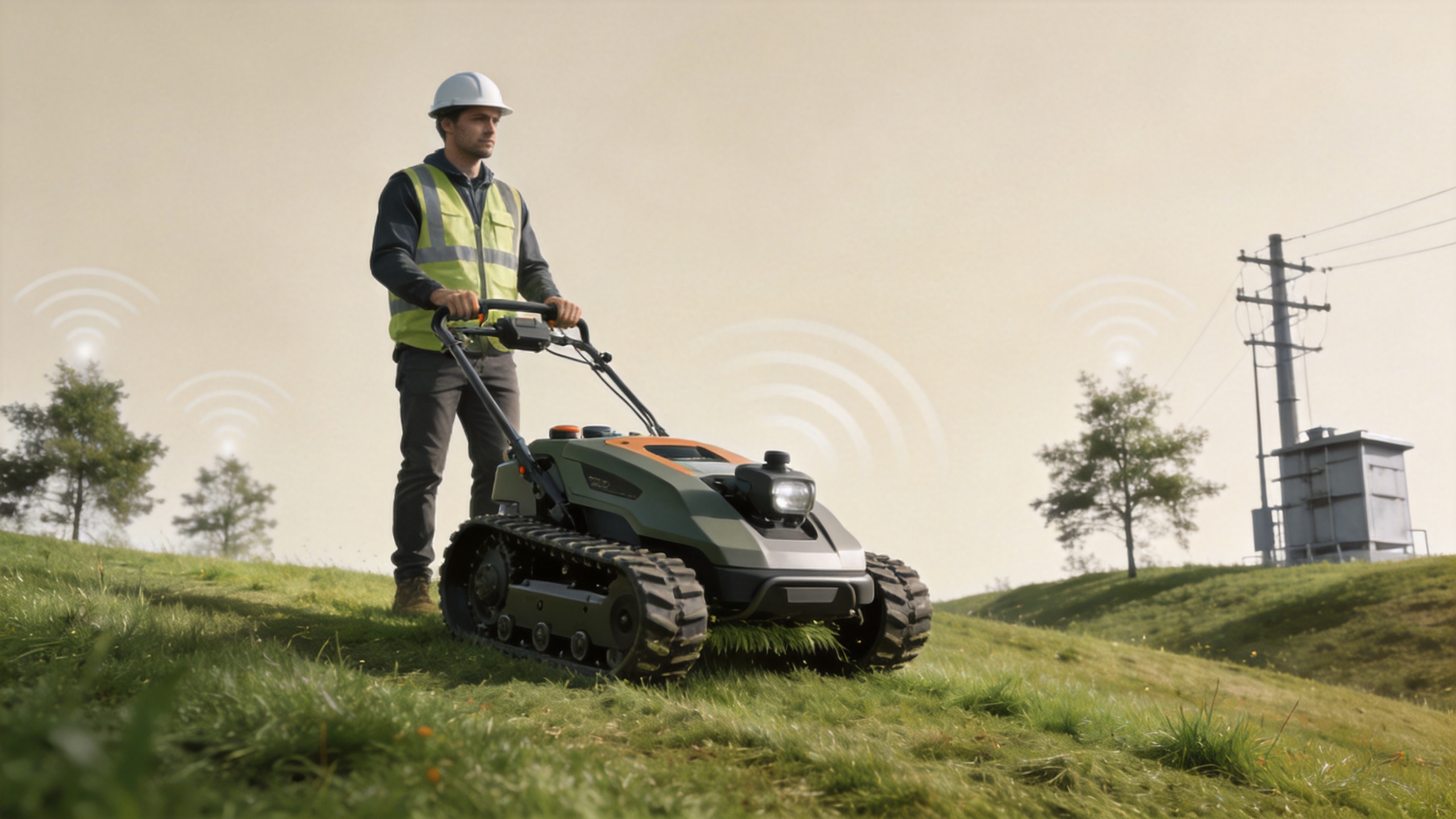
A Field Method for Diagnosing Signal Problems
Instead of comparing isolated specifications, break the task into preparation, operation, and review. That approach gives an operator or site manager a repeatable way to assess a remote control lawn mower.
- Stop in a safe condition. If steering, speed response, or the control display becomes unexpected, use the approved stop procedure and keep people clear. Signal uncertainty is a safety issue before it is an efficiency issue.
- Record the symptom. Note the machine location, controller location, distance, time, weather, nearby powered equipment, and whether the issue was delay, loss of command, or reduced range.
- Check the simple causes first. Inspect controller charge, visible antenna condition, connector seating, and any alerts listed for the remote control lawn mower.
- Change one condition at a time. Move to a known clear area, turn off permitted nearby equipment, or alter the operator position while maintaining safe separation. A controlled comparison is more useful than repeatedly driving through the same questionable area.
- Escalate with evidence. If the condition remains, provide the record and relevant site details to the equipment supplier or qualified service contact. They can advise based on the confirmed system, not a generic assumption.
How to Reduce Avoidable Signal Risks Before Mowing
Plan the route so the operator can maintain visibility and avoid working behind substantial obstructions whenever possible. Identify power infrastructure, active generators, temporary site equipment, and areas with concentrated wireless activity. Establish an exclusion zone, brief the operator on the stop procedure, and inspect the planned path before starting the remote control lawn mower.
For recurring work, keep a short site log. A pattern—such as a control issue occurring only near a pump station, metal storage area, or a specific field boundary—can guide a more useful discussion with technical support. This is more credible than calling every irregular response “interference.” A remote control lawn mower should be evaluated in the actual terrain, vegetation, operating distance, and management rules that will apply on site.
Questions to Confirm with a Supplier or Technical Team
- What radio band and approved operating range apply to this remote control lawn mower?
- What lost-link behavior and emergency-stop steps are specified?
- How should antennas, batteries, and control connectors be inspected?
- Which environmental limits, if any, are listed for rain, dense vegetation, slopes, or nearby electrical infrastructure?
- What information should be recorded if the remote control lawn mower shows delayed or inconsistent response?
Conclusion
Environmental interference can affect a wireless remote control lawnmower signal, but it is only one possible explanation for inconsistent control. Nearby radio activity and electrical noise matter, while terrain, obstructions, moisture, battery condition, and hardware setup can matter just as much. The safest approach is to stop, inspect, compare conditions carefully, and use the equipment’s approved guidance. When the actual site conditions are clearly documented, a remote control lawn mower can be assessed with practical evidence rather than assumptions.