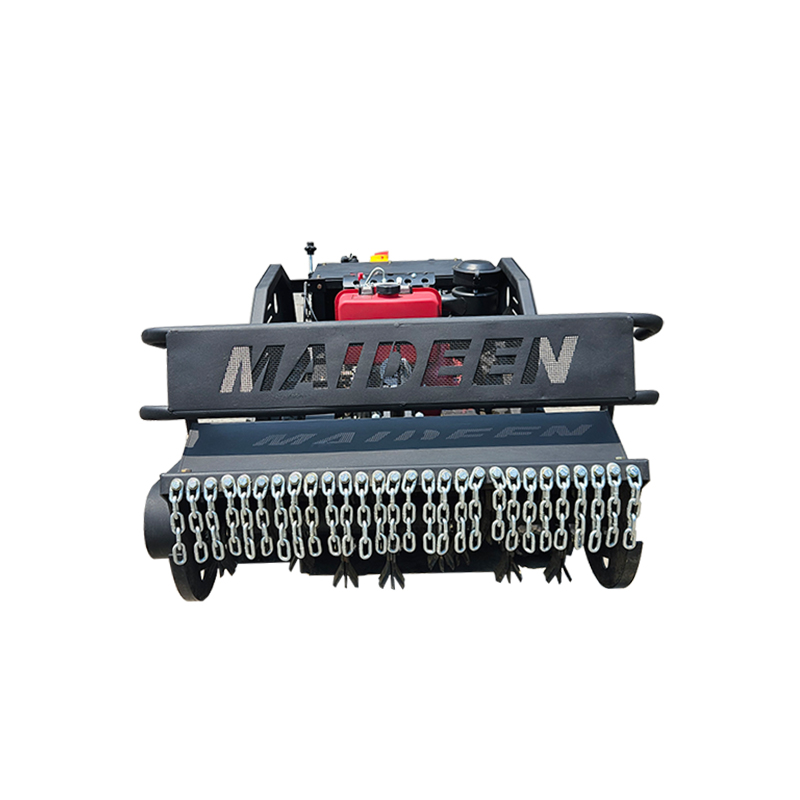
EN
EN
What Intelligent Adjustment Can RC smart mower Do Automatically
An rc lawn mower can make a mowing job easier to manage, but “intelligent adjustment” does not mean the machine can safely make every decision alone. Depending on its design and installed options, an rc lawn mower may respond to control inputs, manage traction, follow a stored path, warn about a fault, or stop under certain conditions. The useful question is not whether a machine is smart in general. It is which adjustment is automatic, what input it relies on, and where the operator must still decide.
From a remote-mower technical perspective, automatic functions should be read as layers. One layer helps the machine react to an operating condition. Another may assist with repeatable routes. A third protects the machine or operator when a control or safety condition changes. Before comparing features, map those layers to the ground, vegetation, boundaries, and work rules at the actual site.
Start by separating remote control from automatic adjustment
An rc lawn mower is normally directed by an operator using a remote controller. That is different from a mower that independently chooses where to travel or what to cut. Remote steering, speed selection, and blade engagement remain operator-controlled on many machines. Intelligent adjustment usually adds assistance around those decisions rather than replacing them.
For example, a rc smart mower may offer adjustable travel speed, steering sensitivity, or cutting height through controls that are easier to set than mechanical levers. Some systems may also use sensors or software to make a limited response after the operator has selected a mode. The feature list and operator manual are the source of truth. Do not assume that a function shown on one rc lawn mower is standard on another.
1. Travel speed and drive response
One common adjustment is drive response. An rc lawn mower may let the operator select a lower speed for tight turns, rough ground, dense grass, or approaches to a boundary, then select a higher working speed where the area is open and conditions are stable. In some designs, electronic control can smooth acceleration or reduce abrupt changes in direction. That can make the machine more predictable, but it does not remove the need to watch traction and clearance.
Think of this as a controlled adjustment, not an automatic promise of stable travel. Wet grass, loose soil, hidden depressions, and side slopes can change what is appropriate. Before using a speed mode, confirm the manufacturer’s stated operating limits and conduct a slow site check. If a machine loses traction or begins to move unexpectedly, stop operation according to its documented procedure.
2. Cutting-height settings and grass-condition planning
A rc lawn mower may provide a cutting-height adjustment that can be changed from the machine, the controller, or a configured control system. On a rc smart mower, the interface may make the change more repeatable; it does not prove that the mower is sensing grass height and selecting the right setting by itself. Automatic height sensing, if offered, is a specific function that should be verified in product documentation.
For practical planning, first identify the grass type, current height, density, moisture, and desired finish. Then choose a conservative setting and make a small test pass where safe. If the grass is tall or uneven, several passes may be more appropriate than forcing a low cut in one pass. Blade condition, deck clearance, and discharge direction also need inspection before work begins.
3. Steering assistance and repeatable route guidance
Some higher-specification equipment may include guidance tools such as route memories, line-following assistance, or satellite-based positioning. A retrieved industry example describes RTK-corrected guidance with repeated straight or curved patterns, but that is an example of a configuration, not a universal rc lawn mower capability. A route-assist function can help an operator repeat lanes in a large, open area. It cannot establish that every boundary, ditch, person, animal, or obstacle is safe to cross or approach.
Before enabling route guidance on an rc smart mower, walk the route, identify exclusion areas, and verify the accuracy conditions specified for the system. Tree cover, slopes, signal conditions, terrain changes, and new obstacles can affect a planned path. An operator should remain positioned to see the machine and retain immediate stop capability.
4. Traction, slope, and stability responses
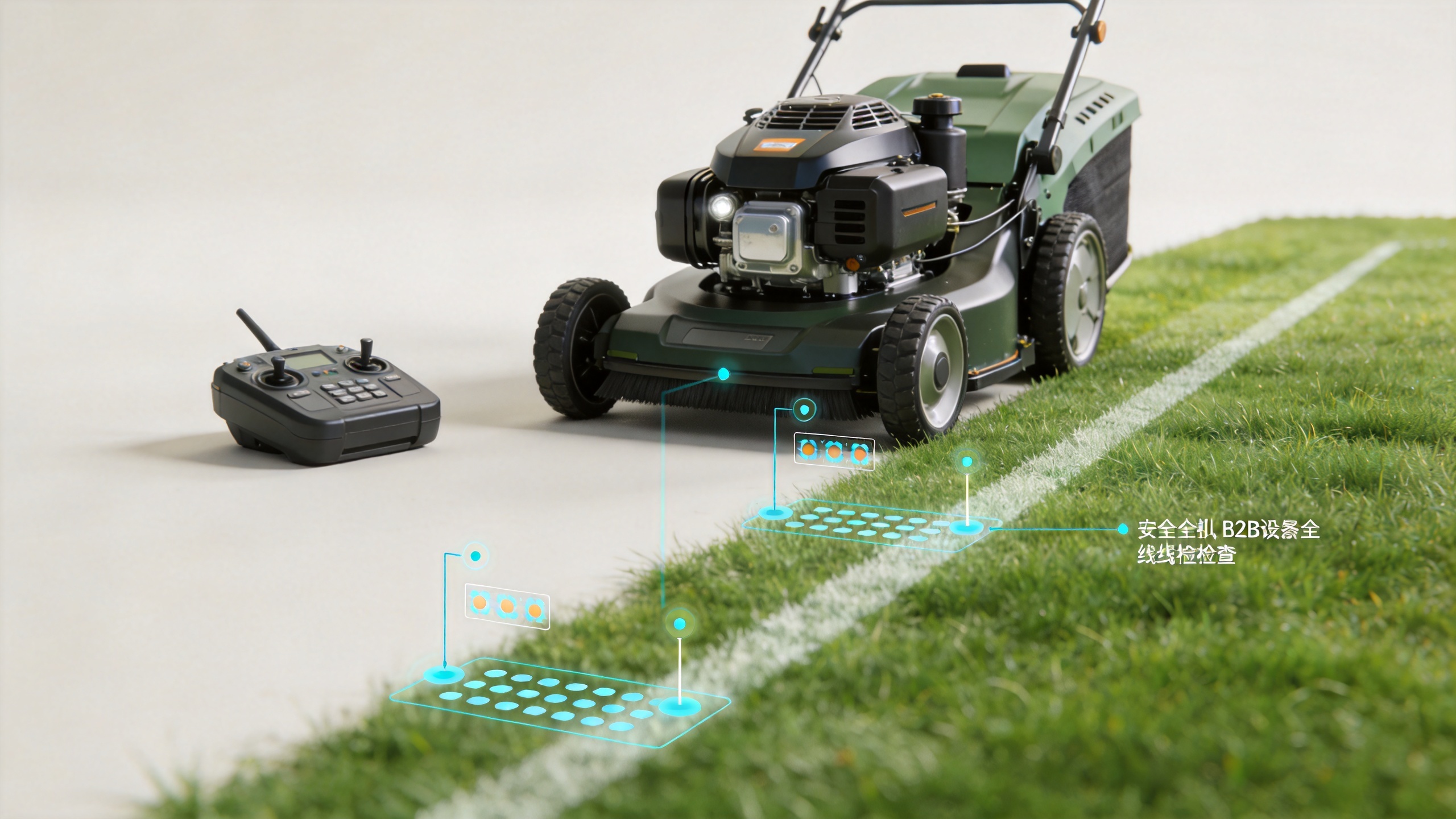
Electronic drive control may help an rc lawn mower apply power more smoothly or coordinate drive motors or tracks. Those functions can support controlled movement, particularly during starts, turns, or changes in surface resistance. They should not be described as a guarantee that a mower cannot slide, tip, or become stuck.
Terrain evaluation comes first. Check slope angle, soil firmness, wet areas, ruts, rocks, and the space at the top and bottom of a slope. Follow the applicable manual for permitted slope direction, operating angle, load conditions, and weather restrictions. Keep people clear of the work zone. If the site is beyond the documented boundary, choose another method rather than expecting intelligent control to compensate.
5. Protective stops, alerts, and fault information
A well-specified rc lawn mower may include an emergency stop, warning indicators, loss-of-signal behavior, or other protective responses. One retrieved safety-feature example describes a controller-related shutdown function; another user-guide result describes a particular model’s stop response. These examples show why buyers should ask what triggers a stop and how the machine behaves after it stops. They do not establish a universal response time or safety package.
For every rc smart mower, verify the emergency-stop location, the controller’s range and warning behavior, the restart procedure, and the inspection steps after a fault. Train operators on those procedures before mowing. Safety features are most useful when paired with clear site rules, an exclusion zone, and a pre-start communication plan.
What still requires the operator’s judgment?
Even an advanced rc lawn mower needs an informed operator to decide whether conditions are suitable. The operator must assess terrain, vegetation, bystanders, weather, fuel or battery readiness, route changes, and local safety requirements. In other words, automation can make repeated adjustments easier, but it cannot turn an unknown worksite into a verified one.
- Confirm the intended task, cutting height, and operating mode before starting.
- Inspect the route for rocks, wire, holes, drop-offs, trees, and soft ground.
- Verify the documented slope limit and signal or guidance requirements.
- Test stop controls and keep a clear response path.
- Pause and reassess when grass, weather, traction, or visibility changes.
A buyer’s verification checklist for intelligent functions
When evaluating an rc lawn mower, ask the supplier to identify each automatic function in writing: its sensor or input, activation condition, operating limit, alert behavior, manual override, and maintenance requirement. Request the relevant manual, configuration list, and demonstration conditions. This is more useful than accepting broad claims such as “fully intelligent” or “automatic mowing.”
Shandong Maide En Intelligent Technology Co., Ltd. presents remote-control lawnmowers as a core equipment topic and can structure an early discussion around terrain, vegetation, route, and operating requirements. For an OEM or project inquiry, describe the site and desired controls first; feature availability, configuration, and suitability should then be confirmed against the applicable product materials.
Conclusion
An rc lawn mower can automatically assist with selected adjustments such as drive response, configured cutting settings, route guidance, alerts, or protective stops. The exact set depends on the model and configuration. A sound approach is to treat a rc smart mower as a tool that supports a planned operating process: verify the function, confirm site conditions, retain operator control, and follow the documented safety instructions.