EN
EN
Why Wireless Remote Control Mower Has Flexible Operation Range
A remote control lawn mower can feel flexible because the operator is not tied to the machine’s walking path. That flexibility, however, is not simply a number printed beside a transmitter specification. The useful operating range of a remote control lawn mower depends on the radio link, line of sight, terrain, the operator’s ability to assess hazards, and the work plan for the site.
From a remote-mower technical perspective, it helps to separate two ideas. One is the maximum communication distance that a particular machine may achieve in an open test area. The other is the distance at which an operator can still control a remote control lawn mower deliberately, observe the cutting path, and respond to changing conditions. The second distance is usually the more important one for real mowing work.
Flexible range starts with wireless control, but does not end there
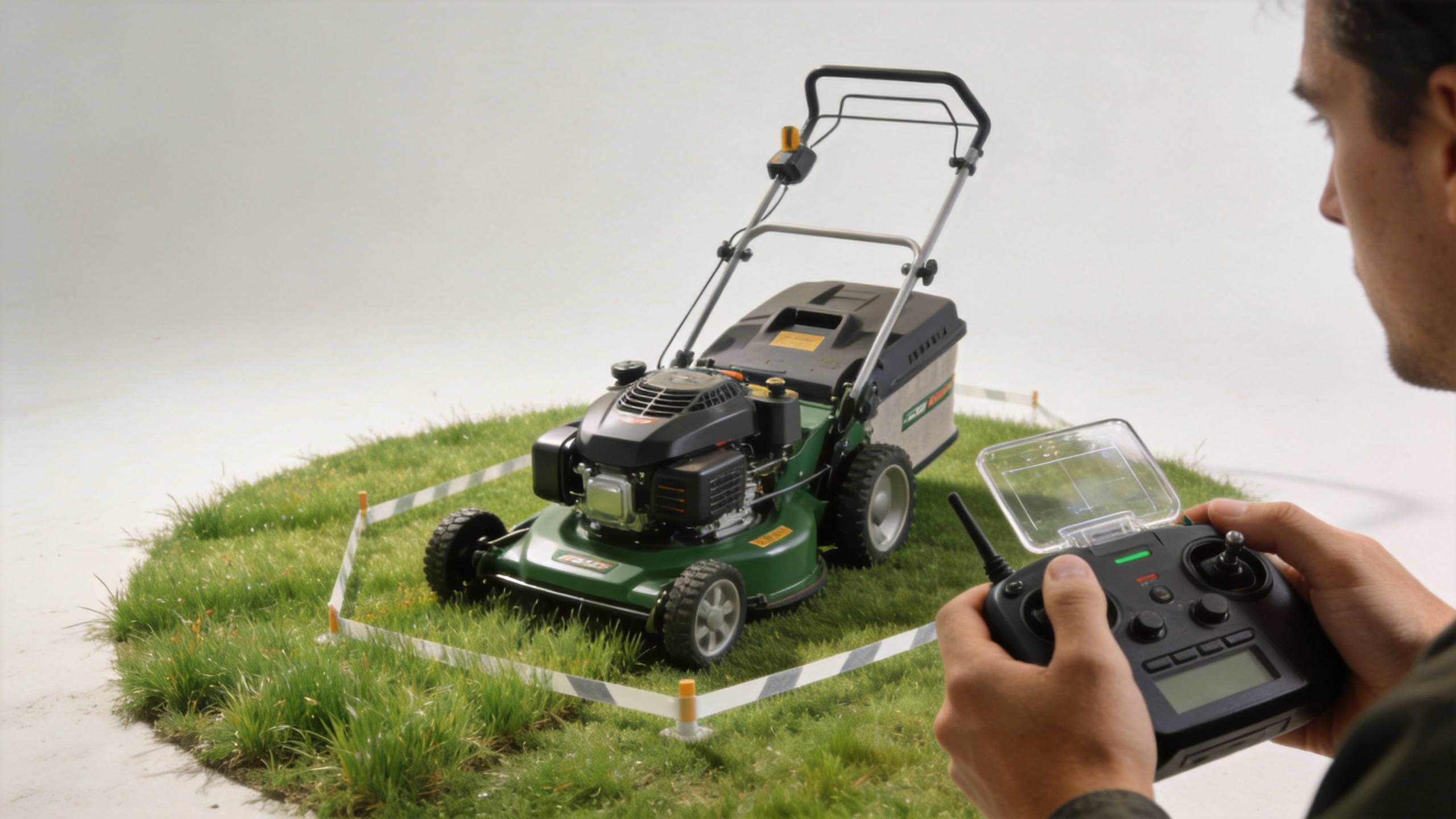
A remote control lawn mower uses a handheld transmitter and receiver to send steering, travel, and cutting commands without a physical cable. This arrangement can let an operator stand away from tall grass, debris, uneven ground, or a slope while directing the machine. In an open area, the communication link may extend well beyond the distance needed for an individual mowing pass.
Published examples in the market illustrate how model-specific these figures can be: some commercial materials cite ranges around 900 feet or up to 1,000 feet in open, unobstructed conditions. Those examples are not a specification for every remote control lawn mower, and they should not be used as a purchasing shortcut. The operating manual, the supplied controller, regional radio requirements, and the final machine configuration determine what is actually applicable.
In other words, the flexible range of a wireless remote control mower comes from being able to choose a safe standing position and approach the job in sections. It does not mean that a machine should be driven to the edge of its signal or visual limits.
Why line of sight changes the usable distance
Radio waves do not move through every worksite in the same way. Trees, parked equipment, buildings, banks, metal structures, and changes in elevation can obstruct, reflect, or weaken a signal. General radio guidance also recognizes that unwanted RF signals can interfere with wireless communication. For a remote control lawn mower, this means an open-field range claim may not match an orchard row, a roadside embankment, or a property with multiple blind corners.
A practical rule is to assess the planned route before starting the remote control lawn mower. Stand at the intended operating points and consider whether the machine, its path, and likely obstacles remain visible. If the route includes dips, tall vegetation, or hard turns behind structures, divide it into shorter work zones instead of treating the site as one continuous radio path.
- Keep a clear visual relationship with the remote control lawn mower whenever the operating instructions require it.
- Check whether changing elevation hides the cutting deck, travel direction, or people entering the area.
- Expect conditions to change after rain, seasonal growth, or the arrival of vehicles and equipment.
- Do not rely on a claimed maximum range to compensate for a poor operating position.
Terrain makes flexible operation a planning question
The ability to stand apart from the machine is particularly valuable on ground that is awkward to walk or where vegetation makes close following uncomfortable. Yet terrain also limits how far an operator should be from a remote control lawn mower. On a slope, for example, the operator needs enough visibility to judge travel direction, ground changes, obstacles, and the machine’s distance from boundaries. The right position may be closer than the radio system can technically support.
Rather than asking only, “How far can this remote control lawn mower go?”, ask what the terrain requires. A regular field with clear edges may allow longer, planned passes. A site with tree trunks, drainage channels, stones, or changing ground cover calls for shorter segments and more frequent checks. This is the shift from parameter-first thinking to task-first planning: put the communication range back into the actual mowing conditions.
Controller condition and machine condition both matter
A flexible working range requires more than a capable transmitter. Before operating a remote control lawn mower, verify the controller power level, machine power condition, antenna condition if applicable, emergency-stop function, and any signal-loss behavior described in the manual. A low-power warning, damaged control hardware, or unfamiliar pairing status is a reason to stop and resolve the issue before extending the work area.
Do not assume that every remote control lawn mower behaves the same way when a signal becomes weak or is lost. Fail-safe responses can vary by model and configuration. Confirm the documented behavior with the supplier and perform any approved pre-operation tests in a clear, controlled area. This step is especially important before work near slopes, road edges, water, pedestrians, or valuable landscaping.
Flexible does not mean unsupervised
The main benefit of a remote control lawn mower is that it can give the operator options for where to stand and how to organize a route. It is not a reason to leave the machine unattended. A safe working distance is affected by what the operator can see, how quickly the machine can be stopped, the presence of other people, and the specific instructions for the equipment.
Think of the remote control lawn mower as part of a controlled work zone. Mark boundaries where needed, keep bystanders away, clear obvious debris, and plan where the operator will move as the machine progresses. If the signal path or view becomes uncertain, pause the remote control lawn mower, reposition, and reassess rather than continuing through a blind section.
A site checklist for choosing a practical operating range
Before deciding how to use a remote control lawn mower across a property, work through a short checklist:
- Map the work area. Note slopes, tree lines, ditches, structures, gates, and areas where the machine could disappear from view.
- Identify safe operating points. Choose positions that offer a stable footing, a clear view, and a direct route away from hazards.
- Break the job into zones. A remote control lawn mower can be highly productive when each zone has a clear start, stop, and review point.
- Confirm the exact configuration. Ask for the model’s operating instructions, stated control-range conditions, signal-loss response, and any recommended pre-use checks.
- Review after conditions change. Tall growth, weather, parked equipment, or site traffic can change the practical range during the same season.
What to confirm before selecting a remote mower
When comparing a remote control lawn mower, range should be one question among several, not the only one. Request configuration-specific documentation and describe the actual mowing site: grass type, slope, obstacle density, access routes, expected work frequency, and who will operate the machine. Shandong Maide En Intelligent Technology can use those conditions as a starting point for a remote-mower selection discussion, while final suitability should be confirmed against the proposed product documentation and operating requirements.
That approach keeps the conversation practical. A remote control lawn mower has flexible operation range when its wireless capability, site layout, visibility, and safety plan work together. The most suitable working distance is the one that preserves control and observation for the task at hand, not necessarily the farthest distance the radio can reach.