EN
What Is the Core Advantage of a Crawler Remote Control Lawn Mower on Slopes?
The core advantage of a crawler remote control lawn mower on a slope is not simply that it can climb. It is that tracked mobility and remote operation can separate the operator from the most exposed part of the task while giving the machine a broader, more stable contact area than a wheeled layout. For grounds teams, orchard managers, and contractors, that can change how a difficult mowing zone is evaluated. A crawler remote control lawn mower still needs the right slope rating, surface condition, route plan, and operator controls; it is not a license to mow every incline.
That distinction matters. Steep grass is rarely a single-variable problem. Loose soil, morning dew, hidden holes, wet leaves, ditches, fence lines, and a heavy cut can all affect stability. A suitable use case for a crawler remote control lawn mower is a site where the equipment’s verified limits and the work plan align—not one where the word “crawler” is used as a substitute for assessment.
Why tracks matter on uneven ground
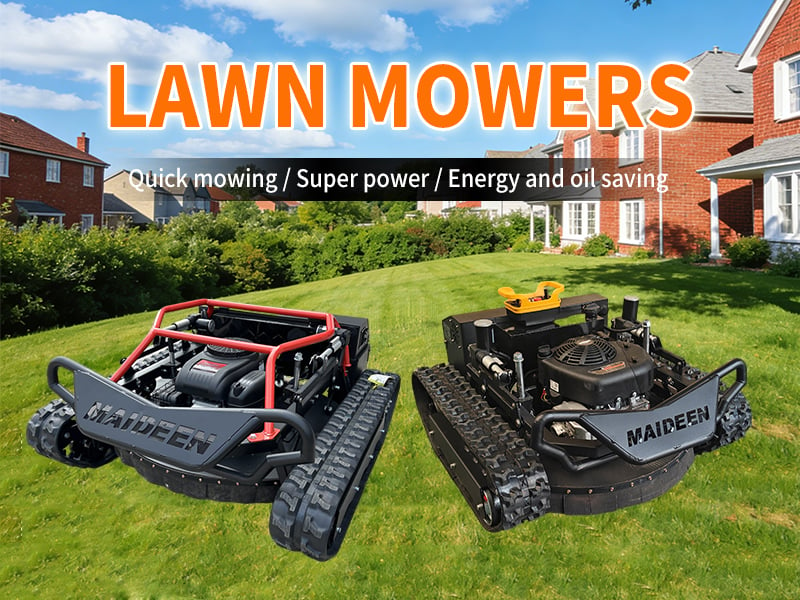
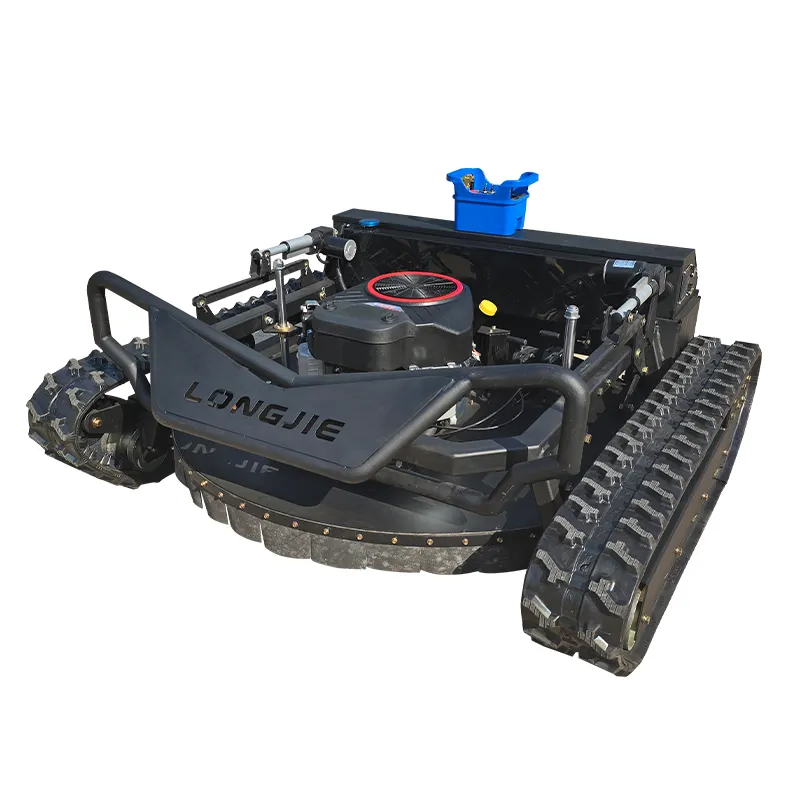
A crawler remote control lawn mower distributes its load through tracks instead of concentrating it at a few tire contact patches. In practical terms, the wider contact area may help reduce localized ground pressure and provide more continuous grip on turf, rough grass, or compacted soil. Tracks can also bridge small surface irregularities differently from wheels, which may support smoother progress where shallow ruts or loose material would interrupt a conventional mower.
However, traction and slope safety are not the same thing. A crawler remote control lawn mower can lose stability because of center of gravity, side loading, a sudden change in surface, or an obstacle even when its tracks still grip. Turning across a slope, carrying attachments, cutting wet vegetation, and stopping near an edge can change the risk picture. Buyers should ask for the actual machine’s approved slope limit and the conditions attached to that limit, rather than comparing track appearance alone.
The remote-control advantage: operator separation
The second major benefit of a crawler remote control lawn mower is distance. Remote operation can allow the operator to stand away from the immediate mowing path instead of riding on, walking behind, or standing directly beside the machine on the slope. This can reduce exposure to a potential slide, rollover path, flying debris zone, or unstable footing. It also gives the operator a better choice of vantage point when the route is visible.
Distance is useful only when visibility and control discipline are preserved. The operator of a crawler remote control lawn mower should be positioned with a clear view of the machine, its downhill path, nearby people, and stop area. Blind crests, tall vegetation, parked equipment, and structures can interrupt that view. If the view is lost, the proper response is to stop and reassess, not to continue on assumption.
What slope work should be verified before purchase?
A useful procurement conversation starts with field facts. Measure representative slope sections rather than estimating by eye. Record whether the work travels uphill, downhill, or across the face of the slope. Note soil type, drainage, grass height, surface changes, access width, and the location of drop-offs or water. These details help determine whether a crawler remote control lawn mower is appropriate and what safety features or operating procedure need confirmation.
| Check | Why it matters | What to confirm |
|---|---|---|
| Approved slope rating | It defines a model-specific operating boundary. | Manufacturer documentation, direction of travel, and surface assumptions. |
| Track and chassis layout | It affects contact area and stability behavior. | Track width, center of gravity, and permitted attachments. |
| Remote-control safeguards | Remote operation should support controlled stops. | Emergency stop, signal-loss response, range, and start-up procedure. |
| Site edges and obstacles | Traction does not protect against a ditch or drop-off. | Exclusion zones, turning space, and a safe recovery route. |
As a conservative reference for conventional riding mowers, OSHA advises following the manufacturer’s slope limits and avoiding slopes over 15 degrees when no other information is available. That is not a crawler remote control lawn mower rating. It is a reminder that slope work needs documented limits and a site-specific decision. OSHA also emphasizes evaluating terrain near water hazards and creating a safety zone; in some circumstances, two mower widths may be sufficient, but the site must be assessed rather than copied from a rule of thumb.
Where the crawler remote control lawn mower creates practical value
The value is clearest where crews repeatedly maintain embankments, orchard rows, solar-farm margins, retention areas, or rough landscape zones that would otherwise place people close to unstable ground. A crawler remote control lawn mower may let a team approach these zones with a more deliberate workflow: inspect first, mark obstacles, set an exclusion area, choose a safe operator position, work in controlled passes, and stop when conditions change.
That workflow can also improve purchasing conversations. Instead of asking only, “How steep can it go?”, ask how the machine responds to signal interruption, whether a particular cut height or attachment changes its slope capability, how it is recovered after a stop, and what inspection checks are required before each shift. A crawler remote control lawn mower should be treated as part of a system that includes trained people, verified specifications, and a planned route.
Common mistakes to avoid
- Equating tracks with immunity from rollover. A crawler remote control lawn mower may offer useful traction, but unsuitable terrain can still create a loss-of-control event.
- Using one maximum slope number as a universal answer. Surface moisture, travel direction, vegetation load, and turns can reduce the usable limit.
- Operating without a clear sightline. Remote control does not replace supervision, exclusion zones, or an emergency-stop plan.
- Ignoring the bottom and sides of the slope. A safe route needs space for stopping and must avoid ditches, water, traffic, and bystanders.
Bottom line
The central advantage of a crawler remote control lawn mower on slopes is the combination of tracked ground contact and the ability to move the operator away from the immediate hazard zone. That advantage becomes meaningful only after the site, machine documentation, operating direction, visibility, and safeguards have been checked together. When evaluating a crawler remote control lawn mower, request a model-specific slope specification, review the operating manual, and compare the result against a measured field survey before committing to a mowing plan.