EN
What Kinds Of Landscapes Can All terrain crawler lawn mower Handle
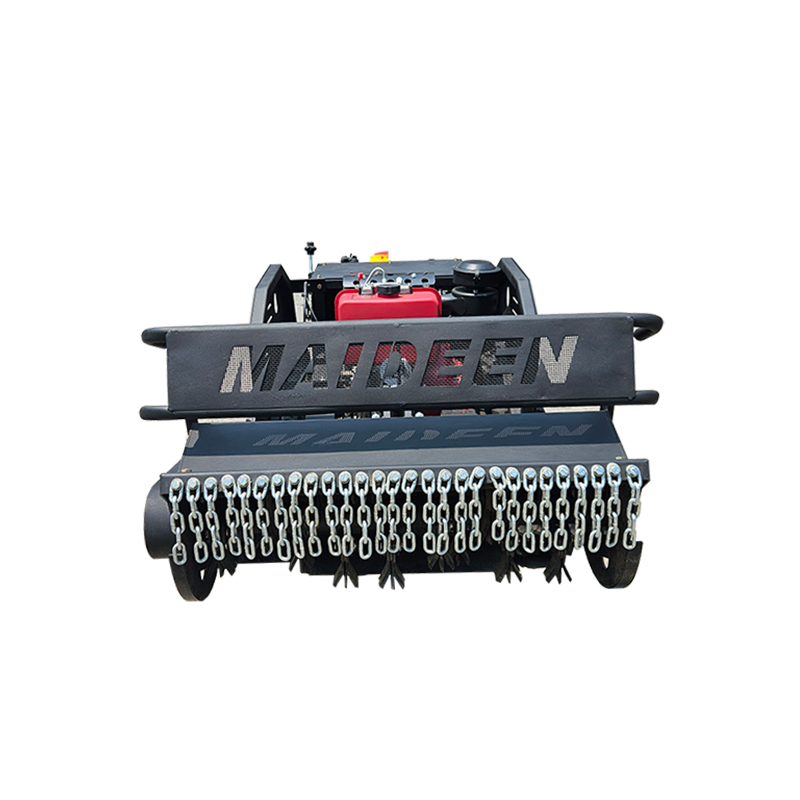
A tracked remote-control mower is often considered when a conventional walk-behind or ride-on machine has trouble with rough grass, uneven ground, or a site that is awkward to reach. Tracks can spread ground contact and may help a machine travel over some soft or irregular surfaces. They do not, however, turn every difficult property into a routine mowing job. The useful question is not whether the equipment is “all terrain,” but whether a particular model, operator, and work plan are suitable for the measured conditions of one site.
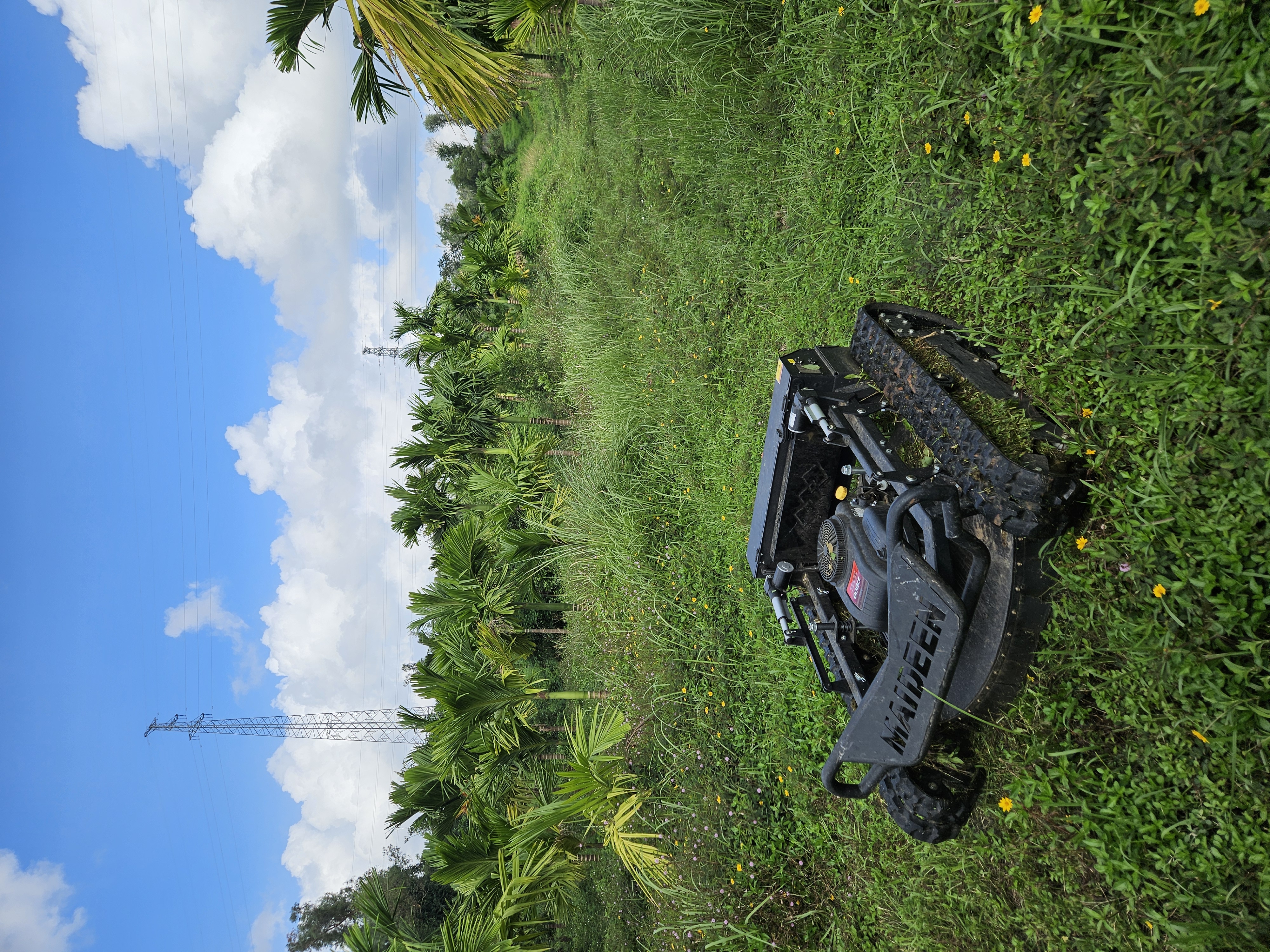
An all terrain crawler lawn mower can be a practical option for managed slopes, orchard rows, field edges, rough grassland, roadsides, and selected embankments. Suitability depends on more than the tracks. Before choosing equipment, assess slope angle, surface firmness, vegetation, obstacles, access, weather, and the machine maker’s operating limits.
Landscapes a crawler lawn mower may handle well
Open rough grassland and field margins
This type of machine is commonly considered for open land where grass is taller or less uniform than a residential lawn. Field margins, utility areas, vacant lots, and managed wasteland can be reasonable use cases when the ground is firm enough and hidden debris has been removed. The operator should first walk the route and identify rocks, wire, stumps, drainage covers, and discarded material. The mower still needs a cutting system and travel speed suited to the vegetation; dense, wet growth can change the load substantially.
Orchards, groves, and agricultural rows
Orchards can suit a tracked mower when row spacing, turning areas, trunk protection, and ground clearance have been checked. Tracks may be helpful on rutted lanes or ground that is not perfectly level, but they do not remove the risk of contacting low branches, irrigation equipment, roots, or posts. For an all terrain crawler lawn mower, confirm the actual machine width, turning behavior, and clearance with the supplier before planning work between trees. Use a route that avoids tight turns beside trunks and keep people outside the work area.
Roadsides, fence lines, and broad verges
Tracked remote-control equipment can be useful on broad roadsides or fence-line vegetation where an operator needs distance from the cutting zone. These locations demand careful traffic control, visibility, and debris management. Do not assume remote operation makes a roadside safe by itself. The machine should only work where the site can be isolated, the slope and shoulder are stable, and the operator has clear sight of the machine and approaching hazards.
Sloped ground and embankments
Slopes are a key reason buyers investigate a crawler lawn mower, yet they require the most disciplined evaluation. Measure the slope rather than estimating it by eye. Follow the model-specific maximum slope in the operating manual, and reduce the working limit when grass is wet, soil is loose, the surface is rutted, or the route includes turns. OSHA’s riding-mower guidance similarly emphasizes following manufacturer angle limits and using a measured assessment rather than a visual guess. It is a useful reminder, not a crawler-mower specification.
An all terrain crawler lawn mower may be appropriate for a maintained embankment with stable soil, controlled vegetation, a clear route, and a model rated for that angle. It is not automatically appropriate for a crumbling bank, an unprotected drop-off, a slope beside water, or a surface where traction changes unexpectedly. Start with a short, controlled test area and stop if the machine slips, pitches, digs in, or loses predictable steering.
Ground conditions that need extra caution
Tracks can help a machine cross some uneven ground, but they can also compact soft soil or lose purchase on mud, leaf litter, loose gravel, snow, or a greasy clay surface. It should not be sent into standing water, deep ruts, concealed holes, or ground that cannot support its weight. In wet weather, reassess the same site; a route that worked yesterday may not be safe today.
Water edges deserve special attention. OSHA guidance for riding mowers advises evaluating terrain near ponds, creeks, reservoirs, and similar hazards, then establishing a safety zone. Its example says two mower widths may sometimes be sufficient, but the appropriate distance depends on the edge condition, slope, machine dimensions, local rules, and site supervision. Treat any water edge or ditch as an exclusion area until the risk assessment defines a safe route.
What an all terrain crawler lawn mower cannot solve
The phrase all terrain crawler lawn mower should not be read as a promise that one machine can mow every surface. A tracked mower does not eliminate rollover risk, thrown-object risk, poor visibility, or the need for trained supervision. It also cannot safely correct unstable soil, unmarked underground hazards, overgrown debris, narrow access, or a missing escape route.
Steepness is only one variable. Equipment that is acceptable on a dry, even slope may not be suitable on the same angle after rain. Likewise, a unit with adequate traction may still be unsuitable when vegetation hides rocks or when a boundary forces a sharp turn. Buyers should ask for model-specific documentation on permitted slope, operating orientation, wet-ground limits, cutting capacity, emergency stopping, maintenance, and remote-control range.
A practical site-assessment checklist
- Measure the slope: Record the steepest sections with an inclinometer or another reliable method, then compare them with the equipment manual.
- Check surface support: Look for mud, loose fill, erosion, ruts, hidden holes, and surfaces that change after rain.
- Map obstacles: Mark trees, rocks, posts, irrigation lines, ditches, water edges, overhead limits, and pedestrian routes.
- Inspect vegetation: Note height, density, woody stems, debris, and whether cut material may obstruct travel.
- Plan access and recovery: Confirm loading, unloading, turning space, parking, and a safe response if the machine stops.
- Set operating controls: Define exclusion zones, communication, weather stop rules, an emergency-stop check, and the operator’s viewing position.
How to select the right crawler lawn mower for the site
Begin with the site, not a headline claim. Share measured slope, photos, ground type, vegetation, route width, obstacle locations, and the expected mowing schedule with the equipment supplier. Ask which configuration is intended for those conditions and request the supporting operating documentation. If a supplier cannot confirm a condition, keep it outside the proposed operating plan.
For buyers comparing an all terrain crawler lawn mower, the most valuable result is a documented match between machine limits and real terrain. Shandong Maide En Intelligent Technology Co., Ltd can support an initial discussion around remote-control mowing requirements, but the final selection should be based on confirmed model data and a site-specific safety review. That approach makes tracked equipment a considered tool for difficult landscaping work rather than a shortcut around field assessment.
Frequently asked questions
Can a crawler lawn mower work on every steep slope?
No. The equipment must stay within the manufacturer’s stated slope limit, and that limit may need to be reduced for wet grass, loose soil, obstacles, turns, or poor visibility.
Is an all terrain crawler lawn mower suitable for wet ground?
Not automatically. An all terrain crawler lawn mower may have better ground contact than some wheeled equipment, but mud, standing water, soft edges, and changing traction still require a site-specific decision.
What information should I provide before requesting a recommendation?
Provide the steepest measured slope, ground condition, grass type and height, route width, access points, obstacles, weather pattern, and photos or a site plan. This gives a supplier a better basis for discussing machine suitability.