EN
What Maintenance Cycle For Garden lawn mower In Home Yard
A home-yard lawn mower lasts longer when maintenance follows the work it actually does. This lawn mower routine is designed for ordinary home-yard use. Rather than waiting for a problem, use a simple cycle: check the mower before each use, clean it after each use, inspect it monthly during the mowing season, and complete deeper service before storage. This approach works for many walk-behind and ride-on machines, but the owner’s manual remains the authority for your exact model, engine, battery, and blade system.
For a garden lawn mower, maintenance is not only about keeping the engine running. A clean deck, a sound blade, clear safety controls, and an appropriate storage routine all affect cut quality and safe operation. If your yard has slopes, tree roots, wet spots, or frequent turns, those conditions may justify more frequent inspection.
Start with the right maintenance cycle
A useful maintenance cycle has four levels. The first is a short pre-mow check. The second is a clean-up routine after mowing. The third is a monthly inspection while the mower is in regular use. The fourth is seasonal service and storage preparation. This is more useful than treating every task as a once-a-year job because grass conditions, mowing frequency, and mower design vary.
| When | Focus | Typical tasks |
|---|---|---|
| Before each use | Safety and readiness | Check the area, guards, controls, fasteners, tires or wheels, fuel or battery condition, and visible leaks. |
| After each use | Cleaning and observation | Remove grass buildup, inspect the blade area with power disabled, and note vibration, noise, or uneven cutting. |
| Monthly in season | Condition check | Inspect blade condition, air intake or filter condition where applicable, cables, drive components, and hardware. |
| Seasonal or manual-specified hours | Service and storage | Follow the manual for oil, filters, spark plug, lubrication, battery care, and fuel-storage procedures. |
Before every mow: take five minutes for a safety check
Before starting a lawn mower, walk the area and remove stones, branches, wire, toys, and other objects that can be thrown or damage the blade. Look for soft ground, hidden holes, and edges near fences, trees, or drainage areas. A clear lawn does not eliminate risk, but it reduces avoidable surprises.
Then inspect the lawn mower with the power source off. Confirm that guards, the grass bag or discharge cover, handles, and controls are secure. For a gasoline machine, check for obvious fuel or oil leaks and confirm the oil level only as directed by the manual. For a cordless garden lawn mower, inspect the battery case and contacts for damage, keep the contacts dry, and use the approved charger. Do not service a battery pack that is swollen, cracked, or unusually hot.
It is tempting to judge readiness by whether the mower starts. A better test is whether it is safe and prepared to cut: blade area clear, wheels stable, controls responsive, and the route free of obstacles. If something feels loose or sounds different, stop and identify the cause before mowing.
After each use: clean the deck and notice changes
Grass clippings hold moisture against the underside of the deck. After the mower has stopped and the ignition key, spark plug lead, or battery has been handled according to the manual, remove loose clippings with a brush or the manufacturer-approved method. Do not reach into the deck while there is any possibility of blade movement.
Cleaning a lawn mower after each use is also a quick inspection opportunity. Look for packed grass around the discharge path, cracks in plastic covers, loose fasteners, bent wheel brackets, and signs of blade contact with debris. If the mower begins leaving strips, tearing grass instead of cutting it cleanly, vibrating more than usual, or pulling to one side, record the change and inspect it before the next session.
For a home-yard lawn mower, this short routine often prevents a small buildup or loose part from becoming a longer repair. It also makes the monthly inspection faster because the mower is already clean enough to examine.
Monthly during mowing season: inspect wear items
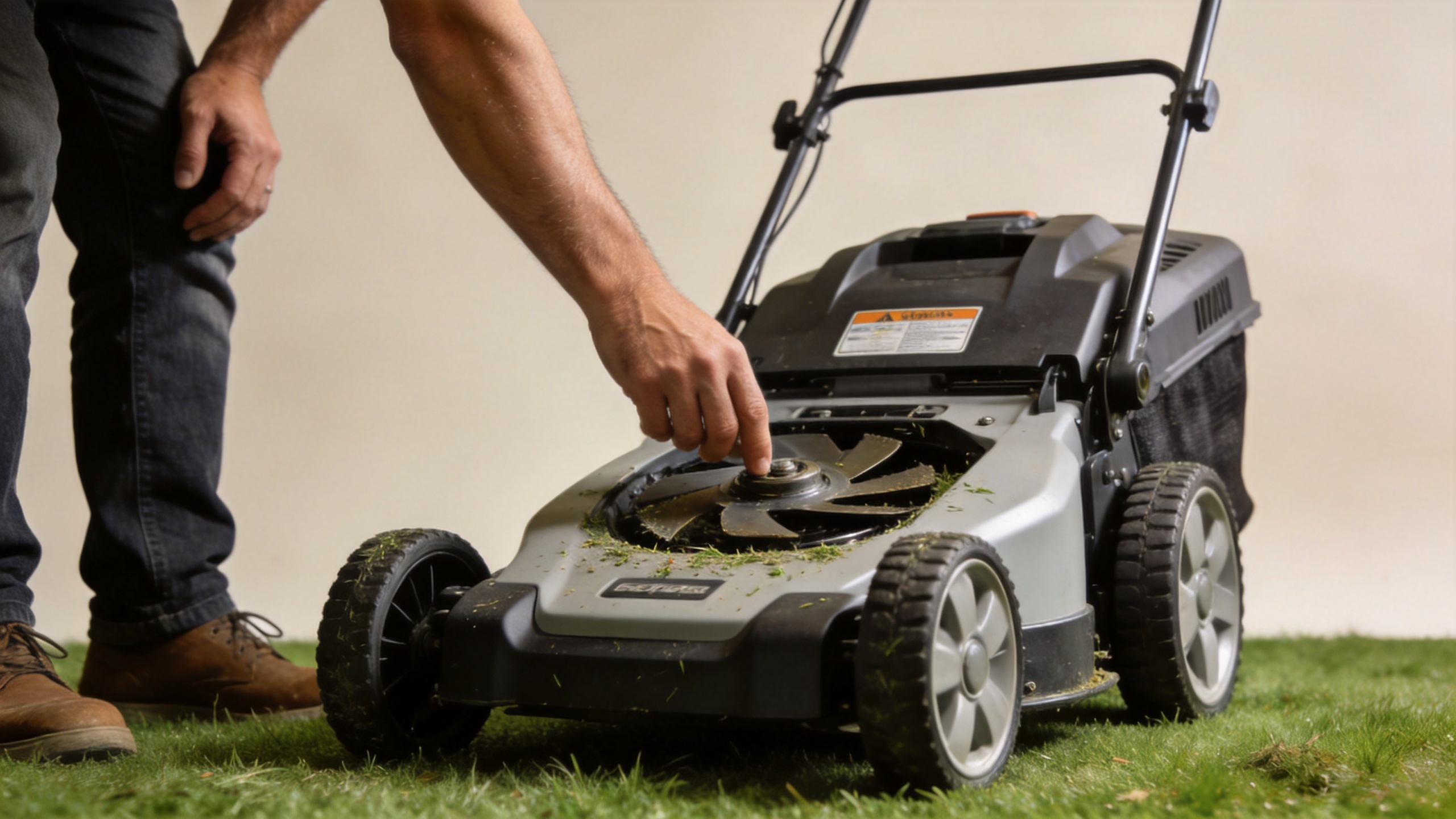
Once a month during active use, set aside more time for a lawn mower inspection. Check the blade for nicks, bends, cracks, and dull cutting edges. Blade removal, sharpening, balancing, and torque procedures should follow the mower manual or be completed by a qualified service provider. A damaged blade should not be straightened and reused unless the manufacturer specifically permits that process.
Also inspect wheels, tire condition where applicable, handle hardware, control cables, drive belts, and the grass bag or discharge components. On gasoline models, look at the air-filter area and cooling fins as described in the manual. On electric models, inspect the power cord, battery latch, charger lead, and ventilation openings. Keep in mind that a mower used on dusty ground, tall grass, or a sloped yard may need attention sooner than one used on a small, dry, level lawn.
Maintenance schedules published by mower brands commonly separate oil, filter, and air-intake tasks rather than treating them as one generic tune-up. That is a useful principle for homeowners: use the manual’s hour or season intervals for model-specific service, and use your own monthly checks to spot visible wear between those intervals.
Seasonal service: prepare before the busiest period and before storage
At the start of the season, review the lawn mower manual’s maintenance table and complete any due service. Depending on the mower, this may include oil service, air-filter service, spark-plug inspection or replacement, lubrication, blade service, and battery checks. These tasks are not interchangeable between gasoline, corded electric, and battery-powered machines, so do not copy a gasoline schedule onto a battery mower.
At the end of the season, clean the machine thoroughly, inspect it for damage, and store it in a dry location. Fuel handling requires particular care: follow the manufacturer’s storage direction for your fuel type and expected storage period. For a battery-powered mower, remove the battery if the manual directs it, store it away from heat and moisture, and avoid leaving it on a charger for long periods unless the charger instructions allow it.
Do not overlook the blade just because the mowing season is ending. A clean, inspected deck and a documented blade condition give you a clearer starting point next season. If the mower will be unused for months, schedule professional service before storage or before the next mowing period rather than discovering a problem on the first high-growth weekend.
Adjust the cycle for your yard, not just the calendar
Two home yards can need different lawn mower maintenance attention even when they are similar in size. A lawn with frequent leaves, sandy soil, wet grass, or hidden roots can load the deck and blade differently from a smooth, dry lawn. Likewise, repeated mowing of taller grass can create more buildup and make a dull blade noticeable sooner.
Use a simple log with the date, mowing conditions, run time if available, and any observations. You do not need a complicated record. A note such as “wet grass buildup,” “new vibration,” or “blade left ragged tips” makes the next inspection more focused. This maintenance feedback is especially useful when several people use the same lawn mower.
A practical home-yard checklist
- Every mow: clear debris, inspect guards and controls, and look for leaks or battery damage.
- After mowing: safely remove grass buildup and listen for new noises on the next start.
- Each month: inspect blade condition, wheels, fasteners, cables, drive parts, and the relevant air-intake or electrical areas.
- At manual-specified intervals: complete oil, filter, plug, lubrication, battery, and blade service exactly as directed for the model.
- Before storage: clean, inspect, manage fuel or battery storage correctly, and keep the mower dry.
When to stop using the mower and get help
Stop using the lawn mower if you find a cracked or badly bent blade, damaged guard, fuel leak, frayed cord, damaged battery, uncontrolled vibration, smoke, repeated stalling, or a safety control that does not operate as intended. A routine maintenance article cannot replace the safety instructions for a specific machine. When the condition is unclear, use an authorized service provider or a qualified technician.
Final takeaway
A practical maintenance cycle for a home-yard garden lawn mower is simple and repeatable. A well-observed lawn mower routine makes seasonal service easier to plan: inspect before mowing, clean after mowing, check wear items monthly, and follow the manual for seasonal and hour-based service. Start with the conditions in your own yard, keep safety controls and the cutting area clean, and treat changes in sound, vibration, or cut quality as useful signals rather than inconveniences. That measured routine supports more reliable mowing without making unverified claims about any particular mower model.