EN
What Makes An RC Lawnmower A Smart Investment For Landscapers
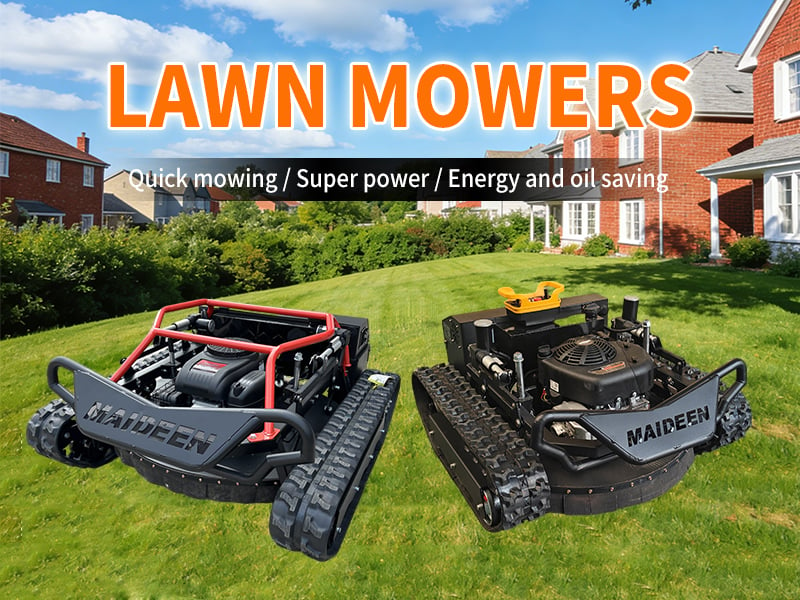
For a landscaping business, an RC lawnmower is not automatically a smart investment just because it has remote control. The real case starts with the work: recurring rough-ground routes, slope exposure, high grass, hard-to-reach boundaries, and crews spending too much time walking behind conventional equipment. When those conditions are present, an RC lawnmower can change how a team plans mowing, assigns operators, and manages safety distance. When they are not, the extra capability may add cost without solving a meaningful bottleneck.
A useful buying decision therefore looks beyond the purchase price. It connects the machine to a specific task, the people who will use it, and the maintenance support needed to keep it working through the season. For many commercial buyers, that is a better test of value than a headline claim about speed or power.
Start With the Landscaping Task, Not the Machine
The strongest investment case for an RC lawnmower usually comes from places where conventional mowing creates repeated friction. Think of maintained slopes, orchard rows, retention areas, roadside edges, large grounds with uneven surfaces, or properties with obstacles that force frequent stops and turns. A remote-control format may let an operator work from a more suitable position while the machine handles the cutting pass, provided the site and the equipment are matched correctly.
That last point matters. An RC lawnmower should be assessed against slope angle, surface condition, grass height and density, wet-weather limitations, access routes, turning space, and visibility. A machine that appears capable in a demonstration may be a poor fit for a site with hidden ditches, loose soil, narrow gates, or changing ground conditions. In other words, task matching comes before feature matching.
Safety is part of this assessment, not a sales add-on. OSHA rollover guidance emphasizes staying within the mower manufacturer’s stated slope limits. Its published incident discussion also illustrates why operations on steep ground require a deliberate equipment and procedure choice. Remote operation may help create working distance in certain situations, but it does not remove the need for exclusion zones, obstacle checks, trained operators, and site-specific rules.
Where the Investment Can Create Operational Value
An RC lawnmower can be worthwhile when it helps a landscaping company organize a difficult mowing task more predictably. The benefit is rarely a single metric. It is usually a combination of labor allocation, safer positioning, route consistency, and the ability to address terrain that otherwise needs slower or more manual work.
- Better use of crew time: If one trained operator can supervise a defined remote mowing task while the rest of the crew prepares edges, clears debris, or completes a separate activity, the job plan may become more balanced. This should be tested on a real workflow rather than assumed from a product video.
- More deliberate risk control: On suitable terrain, remote operation can allow the operator to stand away from the immediate cutting path. That potential only has value when visibility, signal reliability, emergency-stop procedures, and a controlled work area have been verified.
- Improved repeatability on recurring routes: Properties that need the same areas maintained week after week can be easier to plan when the crew has identified access points, turning areas, and safe operating boundaries in advance.
- A broader service conversation: A contractor may be able to evaluate difficult grounds that are inefficient for its existing setup. The right conclusion is not that every new site becomes profitable; it is that the team has another option to assess against labor, risk, and travel time.
From a procurement viewpoint, the question is simple: which part of the current job consumes disproportionate time, creates an avoidable exposure, or repeatedly interrupts the crew? If the RC lawnmower directly addresses that constraint, the investment case becomes more credible.
Calculate Total Ownership, Not Just the Initial Quote
A smart investment is a controlled cost decision. Begin with the machine and the configuration required for your terrain, then add transport, operator training, daily inspection time, spare or wear parts, scheduled service, storage, and downtime planning. A lower initial quote can be less attractive if it leaves essential support or parts planning unresolved. Conversely, a higher-cost option may be reasonable if it fits a recurring, well-defined task and the operating plan supports it.
Do not promise a payback period before collecting the inputs. Instead, compare two working methods for a representative property: the current approach and the proposed RC lawnmower workflow. Record crew roles, setup time, mowing time, trimming or follow-up work, safety preparation, fuel or charging needs, and expected maintenance. Repeat this across the kinds of sites that make up your actual portfolio. The decision becomes much clearer when the comparison reflects your routes rather than an average landscape.
Questions to Ask Before You Buy
Before treating an RC lawnmower as a long-term asset, turn the purchase conversation into a verification checklist:
- What terrain and vegetation conditions will the mower face most often, and what are the documented operating limits for the proposed configuration?
- Who will operate it, what training will they receive, and what is the process for checking the site before each shift?
- How will the crew establish exclusion zones, retain visibility, communicate during operation, and respond to an interruption or emergency stop?
- What transport, access, loading, storage, and maintenance arrangements are needed for this machine?
- Which wear parts, service instructions, and technical support options are available for the intended market?
- Which job types will be used to measure whether the investment is delivering value over the first season?
This framework also helps distinguish a capable supplier from a vague sales pitch. A remote lawn mower manufacturer should be able to discuss the information required to evaluate terrain, vegetation, operating conditions, configuration, and support. If a request involves branding, controls, or other custom details, treat feasibility as something to confirm in writing rather than an automatic promise.
Make Safety and Maintenance Part of the Business Case
It is tempting to discuss an RC lawnmower only in terms of productivity. That misses the decisions that protect its value. Before operation, the crew should inspect boundaries, slopes, obstacles, bystanders, surface conditions, and the route itself. During operation, the operator needs a clear view, an agreed safe position, and a defined response if conditions change. Afterward, cleaning, inspection, and maintenance should be planned rather than postponed until a failure disrupts the schedule.
Maintenance planning is especially important for commercial use. Ask what routine checks are expected, how replacement parts are identified, what documentation accompanies the equipment, and how technical questions are handled. These are practical ownership questions, not secondary details. An RC lawnmower that cannot be maintained in line with the business’s season and service capacity may not remain a smart investment.
When an RC Lawnmower Is the Right Choice
An RC lawnmower is most likely to make sense when a landscaping company has recurring work on terrain or in conditions where conventional methods strain labor planning, require closer exposure to risk, or create inconsistent workflow. It is less compelling for a buyer who has only flat, simple, infrequent mowing tasks and no defined operating challenge to solve.
The most reliable next step is to prepare a short site brief for a remote lawn mower manufacturer: expected terrain, vegetation, area layout, access, work frequency, safety controls, and service expectations. With those facts on the table, you can compare configurations, request appropriate documentation, and decide whether the machine supports a practical operating plan. That is what turns an RC lawnmower from an interesting piece of equipment into a defensible landscaping investment.