EN
Why Remote Lawn Mowers Are Safer For Hillside Mowing
Hillside mowing is not simply flat-ground mowing with an incline added. Loose soil, hidden holes, wet grass, changing traction, and thrown debris can turn a routine job into a high-consequence task. A remote lawn mower can improve the safety setup because it lets the operator work away from the machine’s immediate travel path. That separation is valuable, but it is not a substitute for a site assessment, a clear operating area, or the limits in the machine’s own manual.
From a remote-mower technical perspective, the first question is not “How steep is the hill?” alone. The better question is whether the slope, surface, vegetation, obstacles, weather, and planned travel route create a controllable job. A remote lawn mower can help reduce direct exposure when those conditions have been checked first.
Why hillside mowing creates a different safety problem
On a slope, the operator and mower are both affected by gravity. A conventional walk-behind or ride-on workflow may keep a person close to a machine that could slide, lose traction, strike debris, or become difficult to control. Uneven ground makes that risk less predictable: one dry-looking patch can conceal soft soil, a rut, a rock, or a drainage edge.
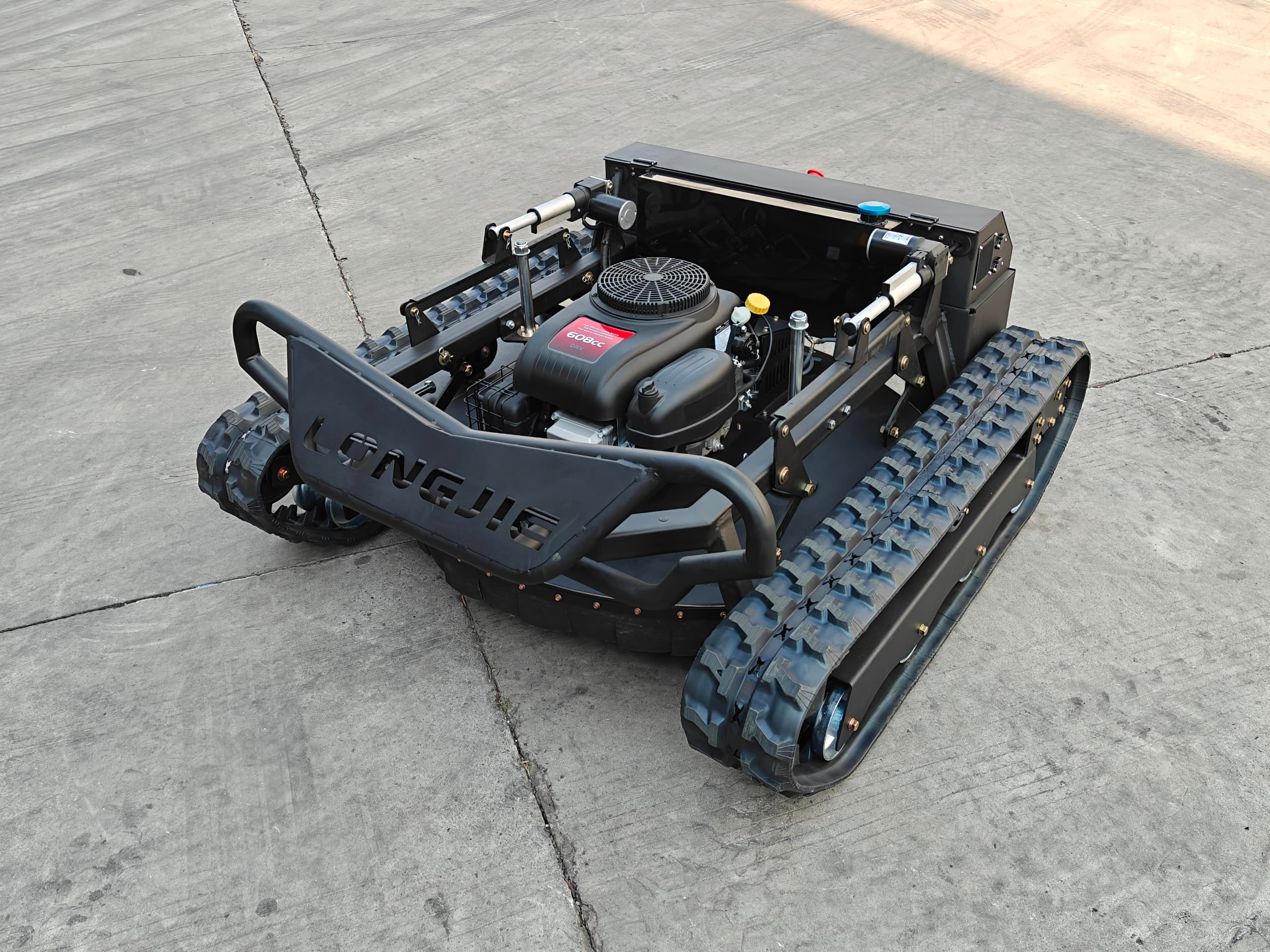
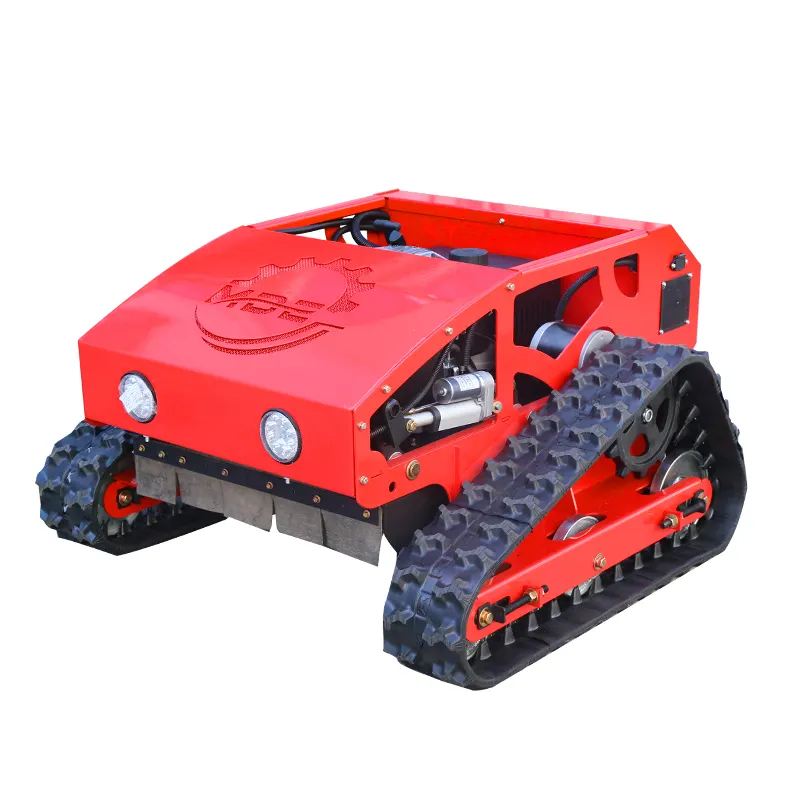
A remote lawn mower changes the operator’s position. Rather than standing immediately behind or beside the cutting deck, the operator may be able to choose a safer viewing point outside the most exposed portion of the slope. This is the central safety advantage of a remote lawn mower: distance can reduce exposure to a moving machine and the area around it. It does not make a hill automatically suitable for mowing.
That distinction matters. Remote operation cannot repair failed guards, make a slippery surface stable, or replace training. Safety guidance for mowing consistently points back to pre-start inspection, functional protective devices, debris removal, and keeping other people out of the work area. Those controls remain essential with a remote lawn mower.
How remote operation can reduce operator exposure
It creates separation from the immediate hazard zone
When planning a route, an operator can avoid walking close to a moving deck, tracks, or wheels. A remote lawn mower may allow the person controlling the job to stand on firmer ground or at a safer lateral position while observing the mower. This can be particularly useful where walking behind a mower would put someone below the machine on a slope.
However, separation only works when the operator retains a clear line of sight. Do not use a remote lawn mower from behind a building, over a crest, or anywhere that hides obstacles, people, or the mower’s actual route. If sight lines are poor, pause and reposition rather than trying to operate through guesswork.
It supports deliberate stop-and-check decisions
Remote control can make it easier to stop before entering an uncertain area, inspect the route, and restart only when conditions are clear. This is useful around drainage channels, fence lines, tree roots, utility covers, and transitions between dry and wet ground. Treat every change in surface as a reason to reassess—not as a challenge for the remote lawn mower to overcome.
An emergency-stop function is one item worth verifying in the actual equipment documentation and demonstration. It should be accessible, understood by the operator, and tested according to the manufacturer’s instructions before work begins. Avoid assuming that a feature is present simply because a similar remote lawn mower has it.

What a remote lawn mower cannot solve
The most common mistake is to view remote control as a blanket safety guarantee. It is not. A remote lawn mower still has operating limits for slope, surface condition, vegetation height, obstacles, and turning. Those limits vary by model and must come from the specific manual, specification sheet, and on-site evaluation.
- Traction risk: Wet grass, loose gravel, mud, and loose leaves can change grip quickly.
- Rollover or slide risk: A route may be unsafe even if the average slope appears manageable.
- Thrown-object risk: Stones, wire, branches, and litter can still be ejected by a cutting system.
- Visibility risk: Tall grass or terrain breaks can hide people, animals, and obstacles.
- Maintenance risk: Worn blades, damaged guards, and poor-control response undermine any safety benefit.
In other words, a remote lawn mower adds a control option; it does not remove the need for exclusion zones, personal protective equipment, or a trained operator. If the slope feels doubtful after inspection, the safer choice may be to change the work method, split the job into smaller sections, or postpone it.
Pre-start checklist for hillside mowing
Before deploying a remote lawn mower, walk the area on foot only where it is safe to do so and turn a vague mowing request into a simple work plan. A practical checklist includes:
- Check the surface for ruts, holes, soft ground, rocks, wire, branches, and hidden edges.
- Confirm weather and ground conditions; do not treat yesterday’s dry route as today’s safe route.
- Mark a clear exclusion zone and keep bystanders, pets, vehicles, and vulnerable property out of it.
- Inspect guards, controls, cutting components, and any emergency-stop system according to the manufacturer’s instructions.
- Plan where the operator will stand so the remote lawn mower remains visible throughout the pass.
- Start conservatively, stop when conditions change, and avoid making sharp route changes on uncertain terrain.
This sequence is more useful than comparing isolated specifications. A remote lawn mower should be evaluated against the actual hillside task: the ground condition, grass density, access route, operating frequency, and the team’s ability to follow a repeatable safety process.
How to evaluate a CE approved remote lawn mower responsibly
If compliance documentation is important to your project, ask for records for the exact model and configuration under consideration. The phrase CE approved remote lawn mower is often used loosely in buying conversations, so request the declaration and supporting documentation rather than relying on a label or marketing wording alone. Confirm which equipment, components, and intended operating conditions the supplied documents actually cover.
A CE approved remote lawn mower should still be evaluated alongside the worksite plan. Compliance paperwork does not tell you whether a particular wet hillside, obstacle pattern, or operator position is appropriate. Ask the supplier to clarify operating limits, control range guidance, shutdown procedures, maintenance requirements, and the information needed for operator training.
A safer hillside process starts before the engine starts
The safety value of a remote lawn mower comes from combining distance with disciplined preparation. Use remote operation to keep the operator out of the immediate machine zone, but keep the machine in view, maintain a controlled perimeter, and respect the verified operating limits for the model. For hillside work, the right decision is rarely based on one feature. It is based on a site-specific plan that makes stopping, reassessing, and choosing a different method acceptable when the ground says no.