EN
What Metrics Show High performance lawn mower Advantage
“High performance” can sound like a broad promise. For a buyer comparing a lawn mower for commercial grounds, agricultural edges, orchards, or demanding landscape work, it is more useful to ask which results can be measured and repeated. A high performance lawn mower should be assessed against the work it must do, not against one headline number.
From a B2B purchasing perspective, the evaluation starts with the site: grass height and density, ground firmness, slope, obstacles, planned mowing frequency, operator process, and maintenance support. A larger engine, wider deck, or additional control feature may be relevant, but none proves that a lawn mower will deliver the required result in a specific setting.
Start With a Metric Set, Not a Single Specification
A practical lawn mower evaluation uses several linked metrics. Equipment-performance research commonly separates cutting efficiency, power consumption, durability and wear, ease of use, and safety. That is a useful comparison frame because it prevents a strong result in one area from hiding a weak result elsewhere.
Before comparing models, define the baseline work condition: area to be maintained, typical vegetation, target cutting height, route complexity, and acceptable finish quality. Then record the same metrics under comparable conditions. This makes the discussion more useful than asking whether a high performance lawn mower is simply “more powerful.”
1. Area Output and Productive Time
Area output measures how much ground a lawn mower can cover in a given working period. On its own, theoretical coverage can be misleading. The more decision-ready metric is completed area per hour after allowing for turns, overlap, obstacle avoidance, refueling or charging, unloading, cleaning, and any second pass required for missed grass.
Track at least three figures during a trial:
- Gross area per hour: the full area covered during the work window.
- Net cutting time: time when the cutting system is actually working.
- Rework rate: area needing a second pass or manual correction.
A high nominal travel speed does not automatically make a high performance lawn mower more productive. If dense grass forces repeated passes or the route requires frequent slowdowns, finished output may be lower than expected. Compare completed work, not only speed on a smooth demonstration surface.
2. Cut Quality and Height Consistency
Cut quality is one of the clearest ways to see whether a lawn mower is matching the task. Inspect several representative strips rather than one convenient section. Look for missed stems, uneven height, torn leaf tips, clumping, scalping, and consistency at turns and near boundaries.
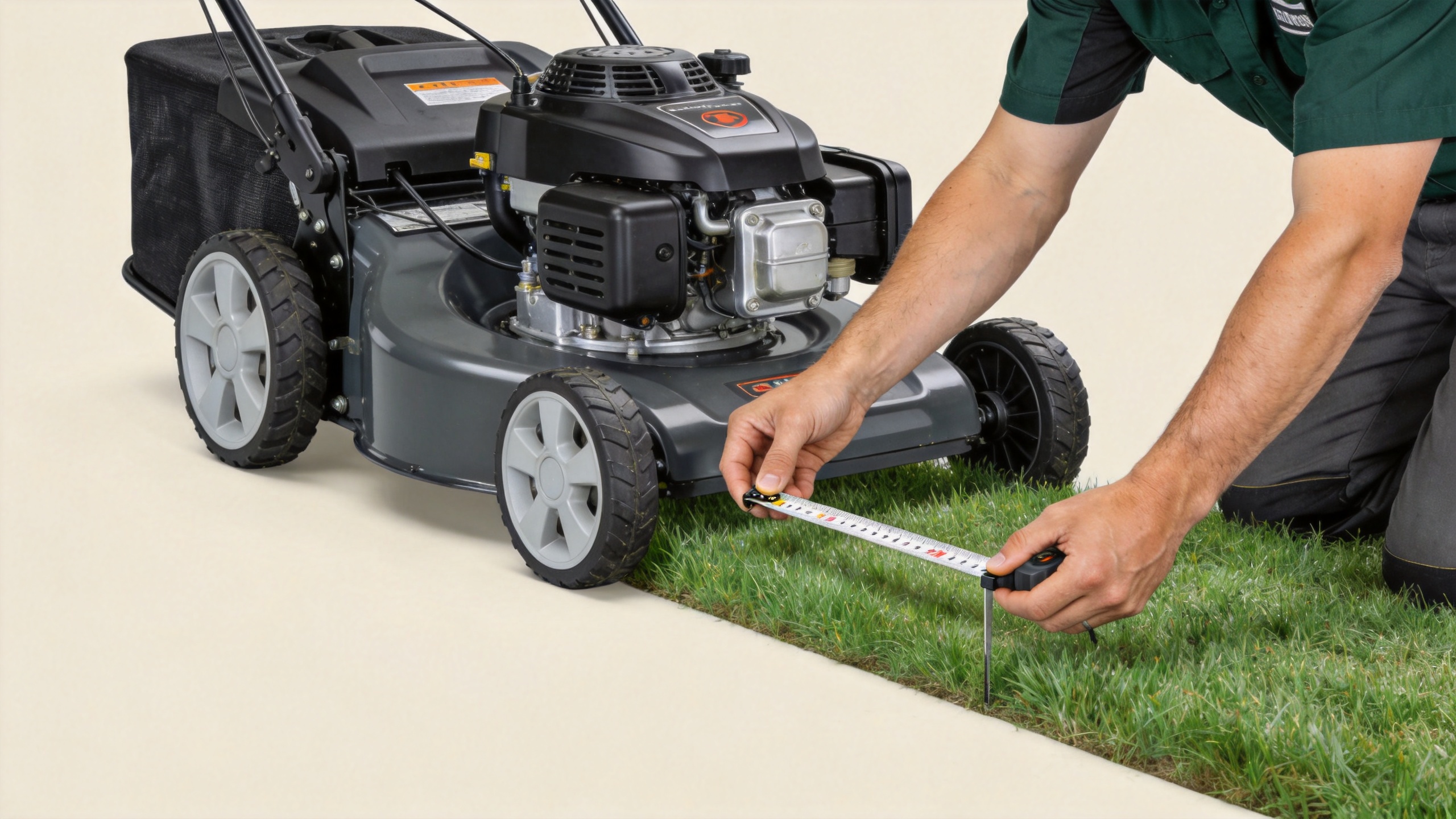
Measure cutting height before and after a trial at several points. The target is not a universal number; it is repeatability around the chosen setting. Blade condition, deck cleanliness, airflow, forward speed, grass moisture, and terrain all influence the result. In other words, blade speed is not a complete performance claim. Ask how the machine maintains cut consistency when grass density and surface conditions change.
3. Power Use Per Completed Job
Power should be evaluated as work completed per unit of fuel, electricity, or battery capacity, not merely as a rated output figure. For each comparable mowing job, record the energy used, productive cutting time, total elapsed time, and area finished. This helps show whether a high performance lawn mower is turning available power into useful output.
For battery equipment, include the time and workflow needed for battery changes or charging. For engine-driven equipment, include idling and refueling where relevant. A configuration that looks efficient in light grass may behave differently in wet, tall, or mixed vegetation. Performance evidence should identify the conditions of the test rather than imply the result applies everywhere.
4. Capacity Under Real Vegetation and Terrain
A lawn mower must handle the vegetation and terrain actually found on site. Record the maximum grass height, density range, moisture condition, and slope or surface irregularity that the trial represents. Then note when the operator had to reduce speed, raise the cutting height, change the route, or stop for clearing.
This is where buyers can distinguish a useful capability from a marketing phrase. Instead of accepting “heavy-duty” or “high performance,” ask for documented operating conditions and a demonstration that resembles the intended job. Where slopes, ditches, trees, or visibility constraints exist, site rules and the equipment instructions must take priority over productivity goals.
5. Reliability, Wear, and Maintenance Burden
Durability is rarely proven in a short demonstration, but it can be evaluated through evidence and process. Review the maintenance schedule, blade and belt inspection points, cleaning requirements, access to wear parts, and records from comparable operating conditions when available. During a trial, note vibration, belt behavior, fastener checks, heat warnings, and how easily the cutting deck can be cleaned and inspected.
A strong lawn mower evaluation also includes downtime. Track unplanned stops, adjustment time, routine-service time, and the availability of required consumables. The initial purchase price is only one part of performance value; recurring maintenance effort and the ability to return the machine to service matter over the operating cycle.
6. Operator Control and Safety Evidence
Ease of use should be made observable. Consider startup procedure, control clarity, steering response, visibility, adjustment access, fatigue during a normal work period, and the number of actions needed to stop or change the machine safely. These observations should be collected from trained users following the applicable manual and site procedures.
Safety is not an optional add-on to performance. For walk-behind mowers, the United States has a dedicated federal safety standard, while other mower types and markets may have different requirements. Buyers should ask the supplier which documentation, warnings, guarding, emergency-stop arrangements, training materials, and market-specific compliance information apply to the selected configuration. Verify these items for the destination market rather than treating a general statement as proof.
Use a Simple Comparison Scorecard
For a procurement trial, create a scorecard with the same weights for every candidate lawn mower. Include completed area per hour, rework rate, cut-height consistency, energy used per completed area, performance in representative vegetation, maintenance time, unplanned downtime, operator-control observations, and required safety documentation. Attach the date, site conditions, operator, and any configuration changes to each result.
There is no universal target score. A high performance lawn mower is the one that produces an acceptable finish, predictable output, manageable operating cost, and appropriate safety control under the conditions that matter to your team. Before requesting a quotation, provide the supplier with the site dimensions, terrain, vegetation profile, expected work frequency, access limits, and the evidence you want to review. That turns a broad performance claim into a clear, verifiable decision process.