EN
Why Modern Lawn Mowers Integrate Wireless Control Technology
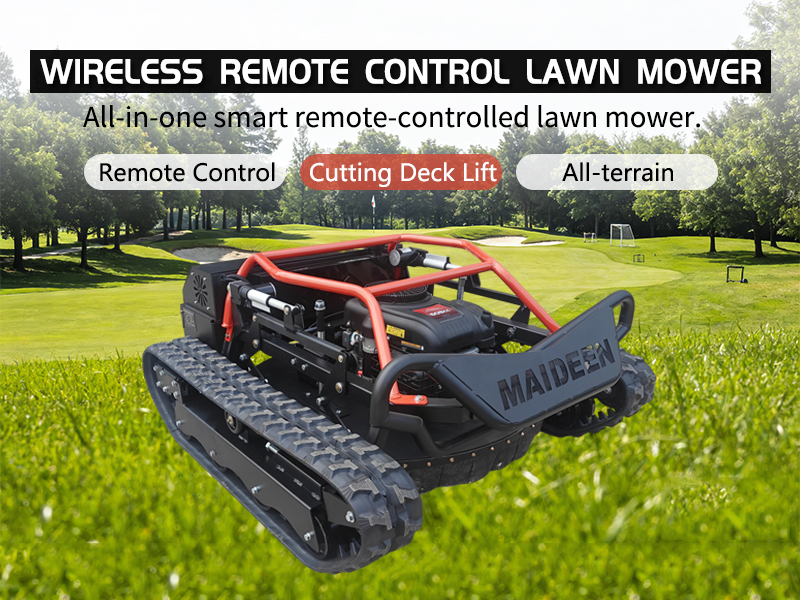
A remote control lawn mower is not simply a conventional mower with a handset added to it. In a modern work setting, wireless control changes where the operator stands, how a mowing route is observed, and which safety checks need to happen before the blades engage. That is why a modern lawn mower may integrate wireless control technology: it can support a more deliberate operating workflow where terrain, visibility, exclusion areas, and machine response are considered together.
From a remote-mower technical perspective, it helps to separate the wireless-control system from the cutting system. The cutting deck, drive arrangement, power source, and traction still have to suit the job. Wireless control adds a communication layer between the operator and the machine. Its value depends on whether that layer helps the crew keep a clearer, safer operating position while retaining reliable control and a sensible process for stopping work when conditions change.
What Wireless Control Changes in a Mowing Workflow
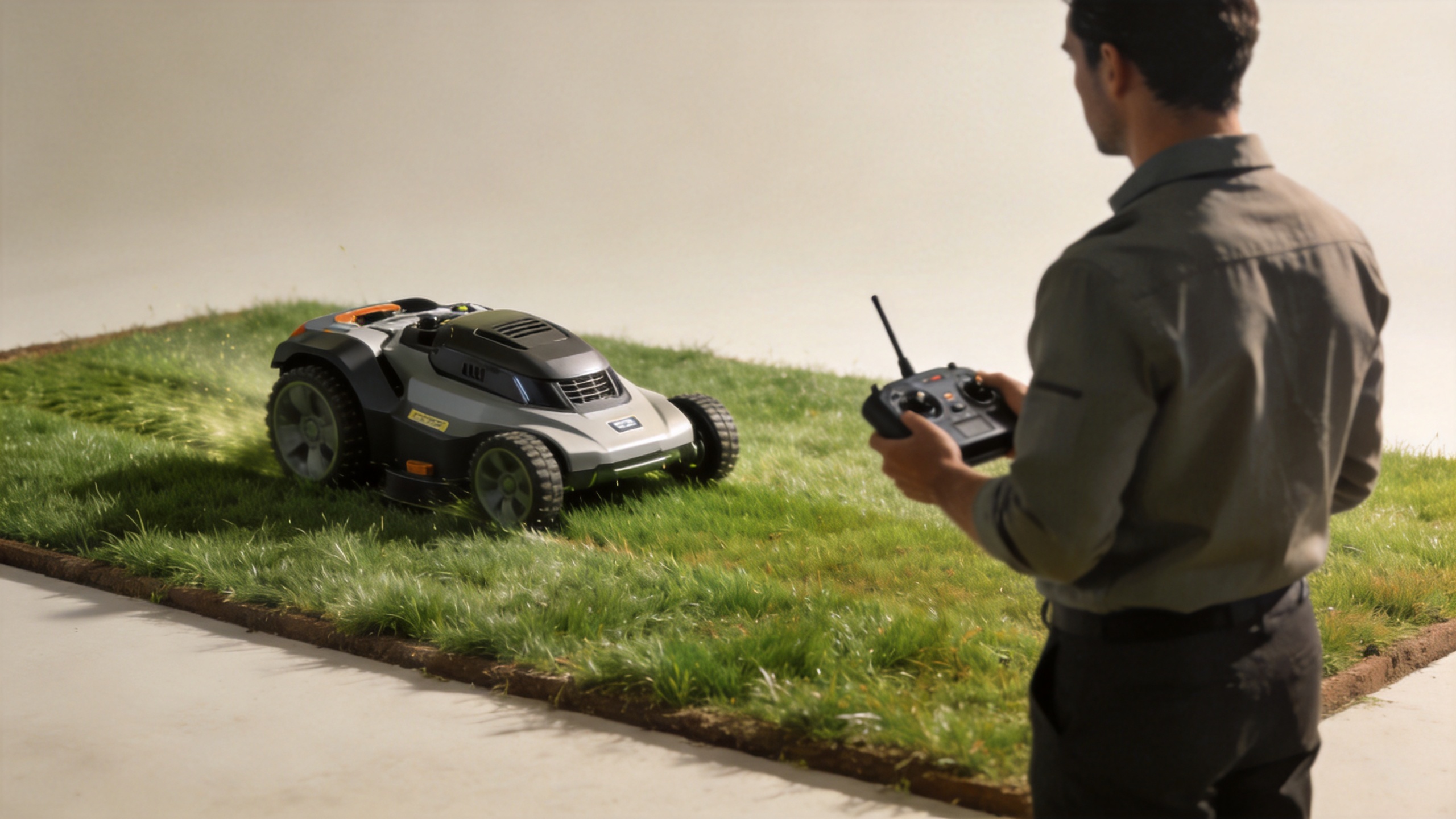
With a walk-behind machine, the operator generally travels with the mower. A remote control lawn mower lets the operator choose a viewing position instead. In suitable applications, that can make it easier to observe a boundary, a rough patch, or a section where standing directly beside the machine would be undesirable. It does not mean the operator can stop paying attention. In fact, the control link makes visibility and route planning more important, not less.
Wireless control is commonly integrated to support three practical workflow changes:
- Separation of operator and machine: The operator can work from a planned location rather than following directly behind the mower.
- More deliberate route management: The operator can divide a site into passes, turning areas, and no-go zones before starting.
- Clearer stop-and-check moments: Remote operation encourages crews to verify the machine, control response, and work area before each section.
This matters when a modern lawn mower is intended for changing ground conditions, edges, vegetation density, or recurring commercial work. The feature is useful only when it is matched to the site and the people operating it.
Why a Remote Control Lawn Mower Needs More Than a Wireless Signal
A radio link alone is not a complete operating solution. Buyers should ask how the remote control lawn mower behaves when the link is interrupted, how emergency stopping is handled, and what operating range is specified for the actual site. They should also request the applicable operating instructions and confirm that local safety requirements are addressed before use.
Here is the practical distinction: a wireless system can reduce the need for an operator to stand beside the machine, but it cannot remove the need to assess slopes, wet grass, loose material, people, animals, obstacles, or blind spots. Before any remote mowing task, check the work area, the machine, the controller response, the emergency controls, weather conditions, and a clearly managed exclusion area. Those are operating fundamentals, not optional add-ons.
It is tempting to treat a longer control distance as automatically better. A more useful question is whether the operator can maintain a clear line of sight and make safe decisions at that distance. Near fences, trees, ditches, or frequent turns, a shorter, well-observed route may be more appropriate than trying to cover a larger area from one position.
Technology Integration Supports Site-Specific Decisions
Modern mowing work is rarely defined by lawn area alone. A small site can be demanding when it has narrow access, uneven ground, frequent obstacles, or a complex boundary. Conversely, an open area may allow a simple pass pattern. For this reason, wireless-control technology is more usefully understood as a way to adapt the operating position and workflow to the task rather than as a promise that one machine suits every site.
When evaluating a modern lawn mower, break the decision into site questions:
- Can the operator see the full intended route, including turns and boundary areas?
- What changes when grass is wet, tall, dense, or mixed with surface debris?
- Where will people, vehicles, animals, and bystanders be kept during operation?
- What is the machine's documented response to a stop command, lost signal, or unexpected obstruction?
- Who will perform pre-use checks, cleaning, maintenance, and post-work inspection?
These questions make the advantages of a remote control lawn mower concrete. They also prevent a common mistake: assuming that a remote function replaces site management. It does not. It gives the operator another control method that needs to be used within a planned system.
Where Wireless Control Can Be Especially Relevant
Wireless control is often considered where crews want greater flexibility in their working position. Examples can include areas with pronounced boundaries, vegetation that calls for careful observation, or sites where direct walking alongside the machine would make route management less convenient. The exact suitability still depends on documented machine capability, traction, cutting conditions, operator training, and local rules.
For orchard rows, roadside edges, landscaped grounds, or irregular plots, the important issue is not the label on the machine. The important issue is whether the operator can see the route, maintain an exclusion area, and stop safely if terrain or vegetation changes. A remote control lawn mower should be evaluated under those conditions rather than only on a flat demonstration area.
A Buyer Checklist for Wireless-Control Features
Before selecting a remote control lawn mower, ask a supplier for evidence that turns a broad technology claim into a usable operating plan:
- Current operating instructions for the controller, emergency stop, start-up sequence, and shutdown procedure.
- Documented operating range and any line-of-sight, interference, weather, or terrain limitations.
- Guidance for checking the remote link and the machine before each work period.
- Clear requirements for exclusion zones, slope assessment, operator training, and protective practices.
- Maintenance information for controls, drive components, cutting parts, and replaceable items.
- A configuration discussion based on the actual site, vegetation, work frequency, and access route.
For OEM or project-based procurement, requirements should be written down before assuming that a particular control layout or feature is available. Shandong Maide En Intelligent Technology Co., Ltd. presents remote lawnmowers as part of a wider agricultural-machinery focus; the right next step is to share the site conditions and request a configuration discussion supported by current product documentation.
Wireless Control Is a Tool for Better Oversight, Not Less Oversight
The core reason a modern lawn mower integrates wireless control technology is not to make mowing hands-off. It is to give the operator a different way to position themselves, observe the work, and manage the route. When the site is assessed, the control link is tested, and the safety process is followed, that flexibility can be valuable.
Start with the task: map the route, identify visibility limits and exclusion areas, confirm the operating instructions, and then compare the wireless-control arrangement against the real job. That approach keeps the remote control lawn mower discussion practical, evidence-aware, and focused on conditions that can actually be verified.