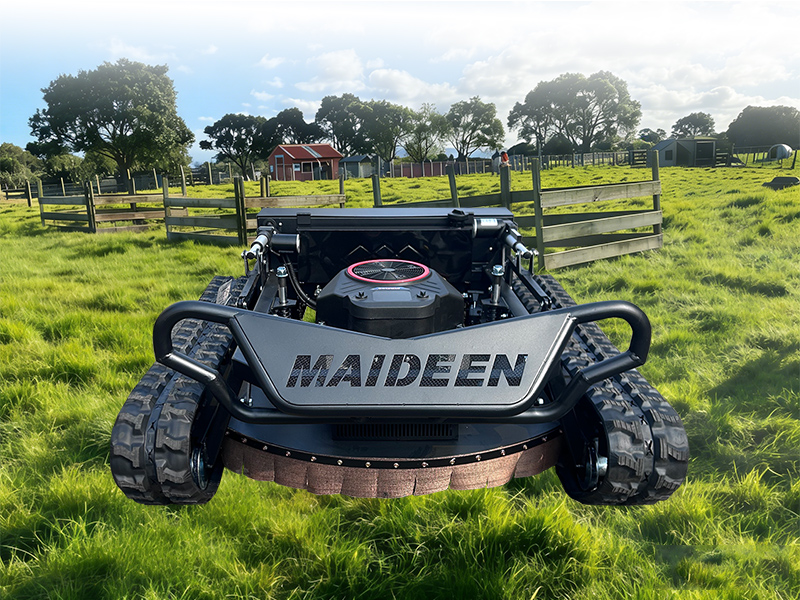
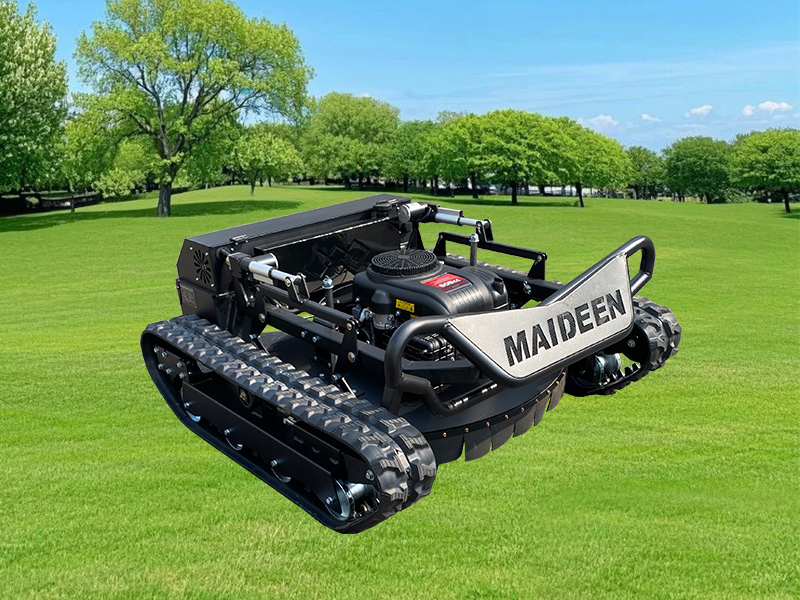
EN
What Operation Rules Should Follow When Using Slope lawn mower
A slope lawn mower can make difficult grass areas more manageable, but a hillside changes the operating rules for every lawn mower. Before any work starts, the operator needs to judge the ground, the machine, the route, and the people who may enter the area. This guide is not a substitute for the mower manual, local rules, or operator training. It is a practical checklist for turning general safety advice into a controlled work routine.
From an operator’s point of view, a safe plan starts with the site rather than with engine power or cutting speed. A slope lawn mower may be suitable only when the manufacturer’s instructions, the condition of the ground, and the operator’s line of sight all support the task. If one of those conditions changes, pause and reassess.
1. Confirm That the Slope Is Within the Mower’s Approved Range
The first rule is simple: use the slope limit stated for that specific lawn mower. A general number from another machine, a demonstration, or a previous job is not a substitute for the product manual. Equipment type, center of gravity, traction system, tire condition, and attachments can all change the approved operating range.
If the documentation is unavailable, do not guess. Measure the site with an appropriate slope indicator and choose a more conservative method until the equipment limit is confirmed. Industry safety guidance commonly treats slopes over 15 degrees as a point requiring extra caution when no manufacturer limit is available, but that is not a universal rating for every mower. A steep, wet, rutted, or loose surface can become unsuitable well before a nominal limit is reached.
- Check the full route, not only the steepest visible section.
- Identify transitions at the top and bottom where traction or balance can change.
- Mark drop-offs, ditches, retaining walls, ponds, rocks, and hidden holes.
- Stop the job if soil is wet, grass is slippery, visibility is poor, or the surface is unstable.
2. Inspect the Site Before Starting the Lawn Mower
Preparation is not a formality on a hillside. Walk the area first while the machine is off. Look for branches, wire, irrigation parts, loose stones, animal holes, and objects concealed by tall grass. A small obstacle can change steering or traction at exactly the wrong moment.
Set a clear exclusion zone. Keep bystanders, children, pets, and vehicles away from the work area, particularly below the slope where debris or a moving machine could travel. Near fences, trees, waterways, or road edges, plan a larger buffer and a place to turn only where footing and clearance are known. The useful question is not merely, “Can the mower fit?” but, “Can it travel, turn, and stop here with room to spare?”
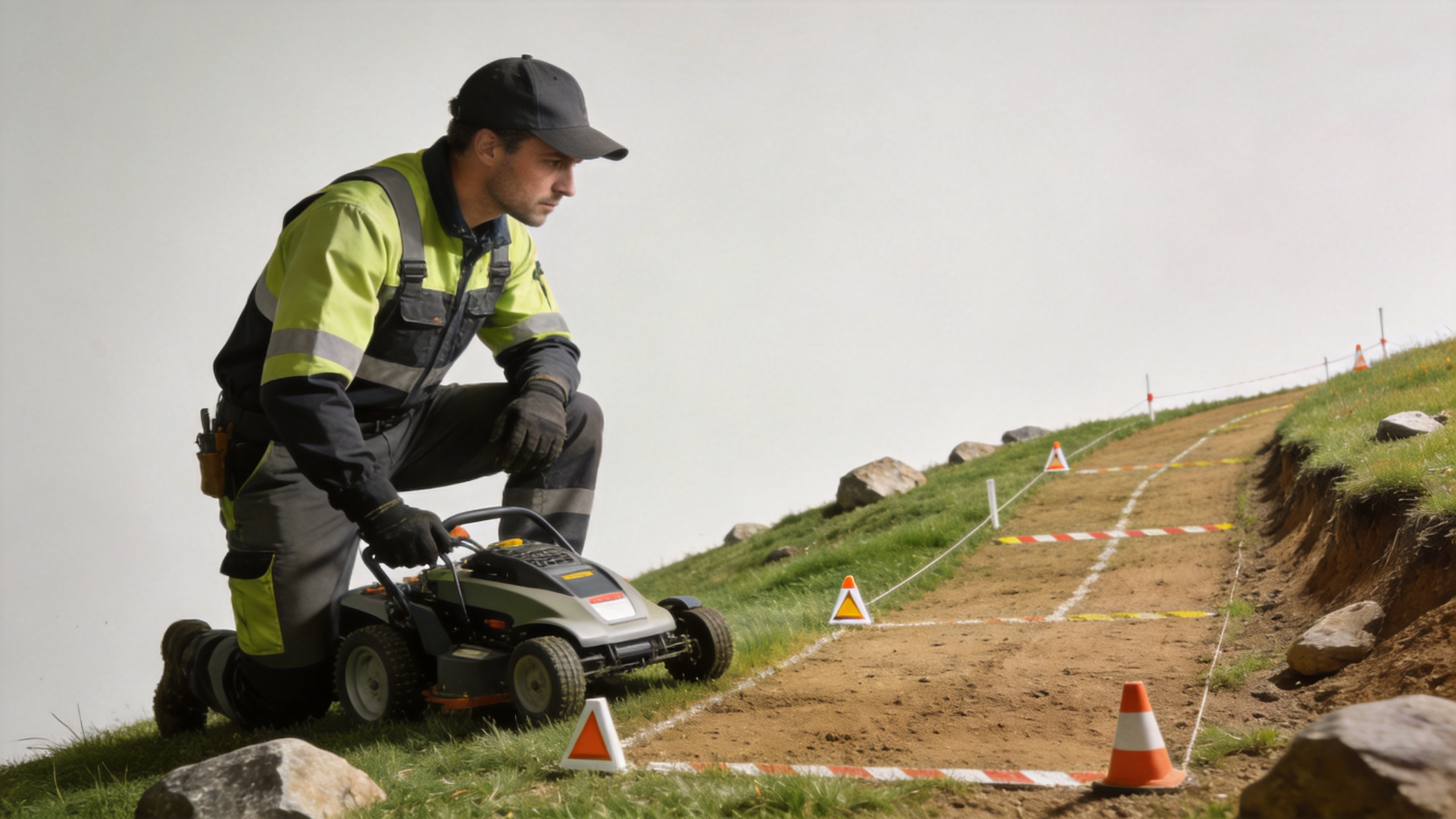
3. Complete a Machine Check Before Moving Onto the Slope
Inspect the lawn mower according to its manual before each slope session. Check guards, controls, brakes, steering response, blade condition, tire or track condition, and any safety interlocks. For a remote-controlled slope lawn mower, also verify the controller, battery charge, signal reliability, emergency-stop function, and the operator’s planned viewing position.
Do not add unapproved attachments or carry loose items while working on a slope. Extra weight, an overloaded collection system, or an accessory that shifts the machine’s balance can alter stability. If a pre-start check finds a leak, damaged guard, weak control response, or questionable tire condition, remove the equipment from service until the issue is addressed.
4. Plan the Travel Direction and Route
For riding equipment, safety guidance generally favors traveling up and down a slope rather than traversing across it, because side-to-side travel can increase rollover risk. However, the controlling rule remains the manufacturer’s instructions for the machine you are using. Follow the approved direction, route, speed, and turning limits for that model.
Choose a route with deliberate passes and safe turn areas. Begin with the least demanding section to confirm traction and control. Keep movements smooth: avoid abrupt acceleration, braking, steering, or direction changes. Slow down before the machine reaches a change in grade, a turn, tall grass, or a rough patch. A slope lawn mower should not be rushed to recover time.
Do not turn downhill into an unknown area or make tight turns close to a ditch, boundary, or drop-off. If the planned route needs repeated sharp turns or crosses an unstable edge, change the work method instead of forcing the mower through it.
5. Maintain Control During Mowing
During operation, stay focused on traction, line of travel, and the surface immediately ahead. Grass height, moisture, clippings, and loose soil can change from one pass to the next. Avoid mowing when rain, dew, frost, or poor light makes the ground hard to read. Keep a safe, stable posture if operating on foot, and do not place yourself downhill of a moving machine.
For remote operation, maintain an unobstructed view and a safe standing position. Do not operate from a location where trees, terrain, or glare prevent you from seeing the machine’s path. Remote control does not remove the need for active site management; it makes route planning and communication even more important.
If traction drops, the mower slides, the engine behavior changes, an alarm activates, or an obstacle appears, stop according to the machine’s emergency procedure. Do not attempt an improvised correction on a steep slope. Secure the area and seek the method specified in the manual or by a trained supervisor.
6. Use a Clear Stop-Work Rule
A good slope-work plan defines when the operator must stop. Stop work when the ground becomes wet or soft, the machine exceeds its approved angle, visibility is lost, a person enters the exclusion zone, or the route can no longer be completed without unsafe turns. These are operational limits, not signs of poor productivity.
Where a standard lawn mower cannot safely complete the task, use a method designed for the terrain or arrange qualified support. Do not treat a successful pass as evidence that the entire slope is safe; conditions can vary within a few meters.
7. Shut Down and Review the Work Area
When the job is complete, move to a level, approved parking location if the manual allows. Set the brake, disengage cutting components, turn off the machine, remove the key or secure the controller, and wait until all moving parts have stopped. Do not leave a mower unattended on a slope.
Finish with a short review: note slippery spots, difficult turns, hidden obstacles, and any machine behavior that should affect the next route plan. This simple record helps the next slope lawn mower session begin with better information rather than assumptions.
Final Checklist for a Slope Lawn Mower
- Confirm the manufacturer-approved slope limit and operating direction.
- Walk the site and mark hazards, boundaries, and safe turn areas.
- Inspect the lawn mower, controls, brakes, tires or tracks, and emergency-stop system.
- Set an exclusion zone and keep people clear of the work area.
- Use smooth, deliberate movements at a conservative speed.
- Stop immediately when traction, visibility, ground condition, or control is uncertain.
- Park securely on an approved surface and review the work before leaving.
For buyers and site managers, the key takeaway is that slope operation is a complete work system, not just a machine feature. Before selecting or deploying a lawn mower, document the slope, ground condition, vegetation, boundaries, operator training, and required safety controls. That preparation supports a safer decision and a more realistic discussion with an equipment supplier.