EN
What Power Options Does Radio controlled grass cutter Have
A radio controlled lawn mower is not defined by one power source. It is defined by the way an operator controls the machine from a safer working position while the mower supplies enough energy for travel, cutting, and onboard controls. That distinction matters when comparing a compact electric unit for maintained grounds with a crawler-style machine intended for taller grass or repeated work away from a charging point.
As a technical explainer for remote mowing equipment, I would start with the task rather than a headline specification. A radio controlled grass cutter may use a battery-electric system, a gasoline engine, or a hybrid arrangement. Each can be appropriate, but the right answer depends on terrain, vegetation, daily working time, access to charging or fuel, and the service resources available after purchase.
First, Separate the Three Power Jobs
It is easy to ask whether a radio controlled lawn mower is “electric or petrol,” yet a machine can have more than one energy path. There are usually three jobs to consider:
- Traction: moving wheels or tracks across the site.
- Cutting: turning the blade, flail, or other cutting assembly through grass and light vegetation within the machine’s approved use.
- Controls: powering the receiver, actuators, safety circuits, and the remote-control system.
A battery-electric radio controlled grass cutter may use stored electrical energy for all three. An engine-driven machine may use fuel for the cutting system while retaining a battery and electrical system for starting, steering, tracks, and remote control. A hybrid layout can divide those jobs rather than relying on a single source. So, before comparing brochures, ask the supplier which source powers traction, which source drives the cutting head, and how long the control system remains available during normal use.
Battery-Electric Radio Controlled Lawn Mower Options
Battery-electric models store energy in a rechargeable battery pack and use electric motors for propulsion and, depending on the design, cutting. They are often considered where lower operating noise, no on-site fuel handling, and straightforward routine maintenance are useful priorities. For regularly maintained lawns, landscaped facilities, orchards with planned charging access, or work close to occupied areas, this can be a practical direction.
However, battery capacity alone does not decide suitability. A radio controlled lawn mower uses more energy when climbing, working through dense or wet grass, turning frequently, or moving across soft ground. One hour of light maintenance mowing and one hour in heavy vegetation are not comparable duty cycles. Ask for the manufacturer’s runtime basis: the site conditions, cutting load, travel pattern, battery configuration, and whether the stated figure includes reserve capacity.
Questions to ask about electric power
- Is the quoted runtime based on mowing, travel, or a mixed task cycle?
- What charger, supply voltage, and charging location are required?
- Can the battery be exchanged safely, and who is permitted to service it?
- How does the machine reduce power or warn the operator when battery charge is low?
- What cleaning and storage conditions are specified for the battery and electrical connectors?
Those questions keep the selection grounded. A quieter radio controlled grass cutter may be attractive, but it must also fit the actual work window and recharge plan.
Gasoline Engine Power for Longer or Heavier Work
Gasoline-powered remote mowers use an internal-combustion engine as a main energy source. They are commonly considered for large properties, remote sites, tall growth, and work patterns where refuelling is easier to arrange than recharging. Engine output should not be read as a standalone promise of cutting result. The cutting system, vegetation type, ground conditions, blade or flail configuration, and operating practice all influence the result.
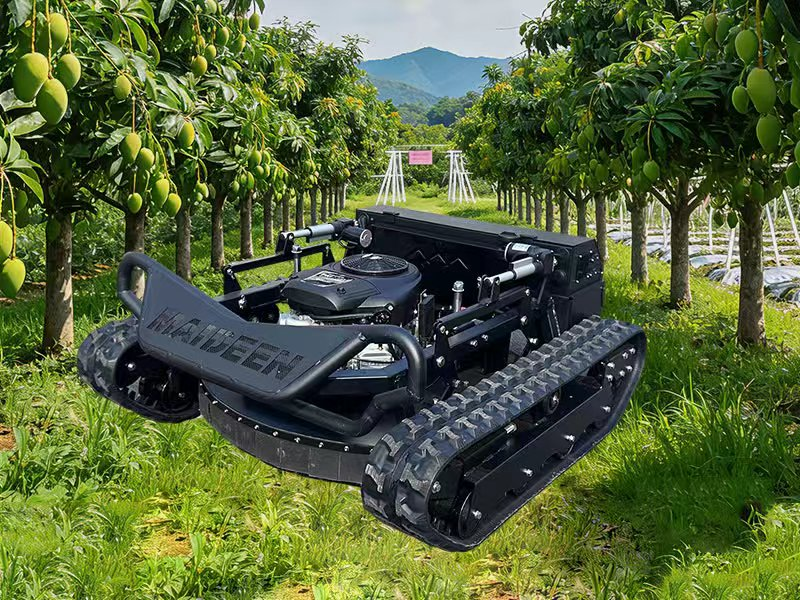
For a radio controlled lawn mower used on a slope or uneven ground, traction and stability can be just as important as engine power. Tracks or specialized wheel systems may improve how a machine moves in certain conditions, but they do not remove the need to follow the manufacturer’s slope limits, inspection procedure, and safe-distance instructions. Before selecting an engine-driven radio controlled grass cutter, confirm fuel type, start method, daily checks, ventilation requirements, refuelling process, and the service schedule for the engine and cutting assembly.
Engine machines also require a realistic maintenance plan. Fuel quality, filters, oil checks where applicable, cooling areas, belts or drive components, and seasonal storage should be discussed before purchase. The question is not simply “Which engine is larger?” It is “Can our team inspect and maintain this configuration consistently at the sites where it will work?”
Hybrid and Gas-Electric Layouts
A hybrid radio controlled lawn mower combines more than one power approach. A common concept is an engine that supports demanding cutting work while electric components manage propulsion, steering, or remote-control functions. This layout can make sense when a site needs the endurance associated with fuel-based work while retaining responsive electrically controlled movement.
Hybrid does not automatically mean simpler. It means the buyer should verify two systems instead of assuming one system replaces the other. Clarify how the machine starts, how its battery is charged, what happens if the electrical side reports a fault, whether travel and cutting can be isolated, and which safety stop actions interrupt each function. The right hybrid configuration is the one whose operating routine your team can understand and maintain.
Use the Site to Choose the Power Option
Rather than choosing by technology label alone, create a short job profile for every intended site. Start with slope, soil firmness, grass height, density, obstacles, access roads, expected weather, and the hours available for mowing. Then add the operator’s position, communication range needed, refuelling or charging access, and the required response if the machine meets an obstacle or loses control signal.
| Site question | Why it affects the decision |
|---|---|
| How much work must be completed between stops? | It helps compare usable electric runtime with planned fuel and inspection breaks. |
| What vegetation is being cut? | Grass condition and density affect the load on the cutting system more than a broad equipment label does. |
| Where can the machine be charged or refuelled? | Infrastructure can make one power option more workable than another. |
| Who performs routine maintenance? | Battery, engine, and hybrid systems need different daily checks and service capability. |
| What safety boundary is required? | Remote operation should be paired with clear visibility, emergency-stop verification, and manufacturer-approved operating limits. |
Do Not Treat Remote Control as a Safety Substitute
Remote control can help an operator keep distance from noise, moving parts, debris, or difficult ground, but it does not remove operating risk. Before putting any radio controlled lawn mower into service, confirm its emergency-stop function, signal-loss behavior, permitted operating distance, guarding, inspection points, and shutdown procedure. The manual and the supplier’s current configuration sheet should control the final decision.
A useful pre-purchase demonstration is not just a quick cutting pass. Ask to see startup, steering response, a planned stop, the emergency stop, restart conditions, and the daily inspection routine. If your primary concern is steep terrain, include the site’s actual slope and surface conditions in the discussion rather than assuming a generic crawler design fits every hill.
A Practical Buying Checklist
- Define the work: area, vegetation, terrain, mowing frequency, and operator location.
- Map the energy plan: charging availability, fuel handling, downtime, and daily work window.
- Separate traction, cutting, and control power when reviewing each radio controlled grass cutter.
- Request configuration-specific documentation instead of relying on a general power claim.
- Confirm emergency stop, signal-loss behavior, maintenance requirements, and training needs.
- Compare the total operating routine, not only the purchase specification.
Final Takeaway
Battery-electric, gasoline-engine, and hybrid designs are all possible answers to the power question for a radio controlled lawn mower. Battery power can suit planned, regularly maintained work with dependable charging. Engine power can fit longer or heavier field tasks when fuel and maintenance are practical. Hybrid systems can allocate energy across cutting, traction, and control, but require a clear understanding of both systems.
The most suitable radio controlled grass cutter is therefore not selected by a single power label. It is selected by matching the real site, vegetation, work cycle, charging or refuelling access, safety process, and service capability to a supplier-confirmed configuration.