EN
What Scenarios Require Custom Lawn Mowers Instead of Standard Models?
A standard mower is often the sensible answer. It is easier to compare, quicker to source, and usually suitable when the site, mowing schedule, and operator routine are predictable. The case for custom lawn mowers starts when the work itself stops being predictable. A mixed estate, a steep embankment, an orchard lane, a drainage edge, or a contractor’s multi-site route can expose gaps that an off-the-shelf specification may not have been designed to address.
The practical question is not whether customization sounds impressive. It is whether a change to the mower’s configuration solves a documented operating problem without creating a new service, safety, or cost problem. For procurement teams and site managers, a practical starting point is a written description of the work rather than a list of features.
Start with the misconception: bigger or more features do not automatically mean a better mower
Many buyers begin by comparing engine output, deck width, or a familiar category of lawn mowers. Those details matter, but they do not answer whether the machine can enter the site, follow the intended route, manage the vegetation, or be operated within its stated limits. A standard model is usually enough when the ground is relatively even, access is straightforward, grass conditions are routine, and the same task repeats with little variation.
Customization becomes worth evaluating when one of those assumptions fails consistently. The goal is not to turn every purchase into an engineering project. It is to specify only the changes that make the job safer, more workable, or easier to manage over time.
1. Slopes and uneven ground change the decision
Terrain is one of the clearest reasons to move beyond a standard configuration. Ruts, side slopes, wet patches, loose soil, banks, and sudden changes in grade affect traction, stability, route planning, and operator exposure. OSHA advises using riding mowers within the slope limits provided by the manufacturer. Where instructions do not give a limit, its rollover guidance advises evaluating site conditions and avoiding slopes above 15 degrees unless other reliable information is available. That is a safety boundary, not a universal rating for every machine.
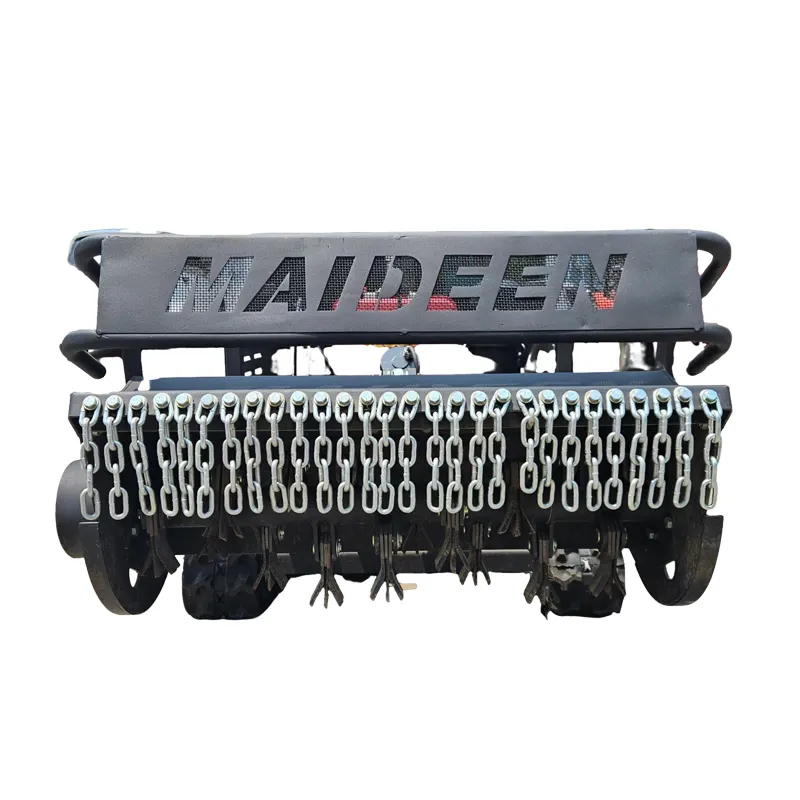
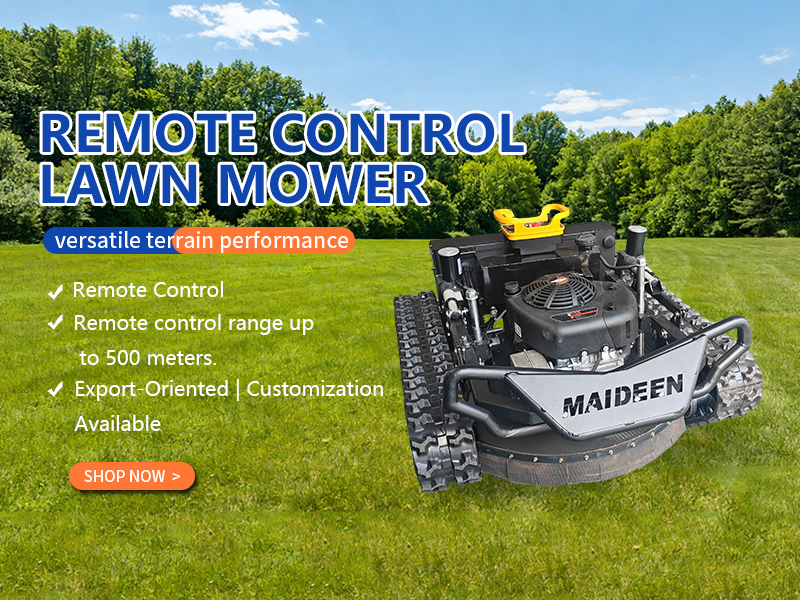
In this situation, custom lawn mowers may be considered for requirements such as a particular track or wheel arrangement, a remote-control operating concept, guarding suited to the route, or a work-specific balance between deck size and maneuverability. Each request should be evaluated against documented machine limits and local safety procedures. A custom configuration is not a substitute for training, inspection, or a site-specific risk assessment.
2. Access restrictions make dimensions and maneuverability operational requirements
Some sites have narrow gates, tree-lined paths, bridges, orchard rows, storage corridors, or loading constraints that decide what can be used before cutting begins. If a standard mower cannot pass through the tightest point, its advertised productivity is irrelevant. The same applies when a machine can enter but cannot turn safely at the end of a route.
Before requesting a custom build, measure the narrowest access point, turning areas, transport vehicle limits, and storage space. Then identify whether a different overall width, control layout, deck arrangement, or transport provision is genuinely needed. This is more useful than asking for a “compact” mower without defining the restriction it must overcome.
3. Vegetation is outside the normal duty cycle
Routine turf is not the same as tall seasonal growth, dense weeds, mixed grass, scattered woody debris, or an area that is cut only a few times each year. Standard lawn mowers may still be appropriate, but the buyer needs to check the manufacturer’s intended use and maintenance requirements rather than assume that a familiar deck will handle every condition.
A custom request can be justified when the vegetation pattern repeatedly causes blockage, poor cut consistency, excessive downtime, or an unsuitable route. The specification should state the typical and worst-case growth condition, mowing frequency, debris exposure, and desired finish. It should not claim a cutting capacity that has not been confirmed by the supplier’s technical documentation or a representative demonstration.
4. Remote operation is being considered for a defined exposure problem
Remote operation is not automatically required because a site is large. It may be relevant when the work places an operator near unstable ground, roadside edges, banks, or other conditions that deserve closer control of operator position. For a remote-control mower discussion, define the line of sight, communication environment, exclusion zone, emergency-stop process, route visibility, and who is responsible for supervising the work.
Shandong Maide En Intelligent Technology Co., Ltd. presents remote-control lawnmowers as part of its agricultural-machinery focus and can use site conditions as a starting point for a configuration discussion. A buyer should still request machine-specific information, operating limits, service arrangements, and evidence relevant to the proposed configuration before approving a purchase.
5. A fleet or workflow needs one repeatable configuration
For a contractor, municipality, farm, or property group, the issue may be less about one difficult lawn and more about repeatability. Different crews can lose time when controls, transport arrangements, attachments, or service parts vary from machine to machine. In that case, custom lawn mowers may make sense when the customization standardizes a proven work process across several units.
The business case should include the current workflow: travel time between sites, loading steps, daily inspection points, operator handovers, expected maintenance access, and spare-parts planning. If the proposed change improves only appearance but complicates maintenance, it may not be the right change.
When a standard model is still the better choice
Choose a standard model when the site fits its published use, the work is routine, parts availability is more important than a unique feature, and the team cannot clearly state what needs to change. Standard lawn mowers also make sense when the main issue can be solved through better route planning, mowing frequency, operator training, or selecting a different existing category.
Customization should answer a recurring, evidence-based problem. If the problem appears only once, renting specialized equipment or changing the work plan may be more sensible than specifying a custom machine.
A practical brief for custom lawn mower discussions
A clear brief helps a supplier determine whether the request is feasible and whether a standard platform can already meet the need. Prepare the following before asking for a quotation:
- Site photos, route map, access widths, turning areas, and storage constraints.
- Measured slopes, surface condition, drainage features, obstacles, and exclusion zones.
- Typical and worst-case vegetation, cutting frequency, and seasonal changes.
- Required work hours, loading method, transport limits, and maintenance access.
- Operator experience, supervision plan, applicable safety requirements, and requested documentation.
- A distinction between must-have requirements and preferences.
Make the decision from the work, not the catalog
Custom lawn mowers are justified when ordinary lawn mowers repeatedly fail to match a real site condition, vegetation pattern, access constraint, safety exposure, or repeatable fleet workflow. They are not justified simply because a custom option exists. Define the job, confirm the manufacturer’s limits, and ask for machine-specific evidence before deciding. That approach keeps the conversation focused on a configuration that can be evaluated, serviced, and used responsibly.