EN
How Do Industrial lawn mowers Handle Continuous Heavy Duty Tasks
Industrial lawn mowers are not merely residential machines asked to work longer. A crew maintaining campuses, orchards, rights-of-way, sports grounds, or large estates needs a system that matches the mower, the ground, the operator, and the service routine. The machine matters, but continuous heavy-duty mowing is normally supported by planned passes, sensible operating loads, regular inspection stops, and clear safety limits.
For an operations manager, a more useful question than “Can this mower run all day?” is “Can our lawn mowers keep producing a consistent cut while operators monitor heat, debris, traction, fuel or charge, and changing site conditions?” That distinction prevents long runtime from being treated as a single specification rather than a managed work process.
Continuous mowing begins with matching the machine to the task
Heavy-duty mowing loads the cutting deck, drive system, engine or electric powertrain, tires, and operator. That load shifts with grass height, moisture, density, terrain, travel speed, cutting width, and the volume of material discharged or collected. Industrial lawn mowers handle sustained work more effectively when the plan recognizes those variables instead of applying one travel speed across the whole site.
Before assigning a route, divide the property into open turf, dense growth, edges, slopes, wet spots, restricted-access areas, and locations near ditches or obstacles. This gives the operator a reason to slow down, alter the cutting pattern, or use a different tool where appropriate. It also makes daily output more predictable because the crew does not discover every difficult condition after the mower is already under load.
- Open areas: plan long, repeatable passes with safe turning space.
- Tall or dense grass: reduce ground speed and consider staged cutting instead of an aggressive single pass.
- Wet, uneven, or sloped ground: treat traction and stability as limits, not productivity challenges.
- Edge zones: allow additional time for obstacle checks and controlled maneuvering.
How industrial lawn mowers manage heat, debris, and cutting load
During a long shift, a mower’s ability to maintain pace depends on keeping airflow and moving components clear. Grass buildup around a deck or discharge area can reduce cut quality and increase the effort required to move material. Dull or damaged blades can leave an uneven finish and place additional strain on the cutting system. Operators should not clear a deck while the machine is running; stop the machine, isolate the power source according to the manufacturer’s instructions, and wait for moving parts to stop before inspection or maintenance.
Rather than waiting for a visible problem, crews can schedule brief condition checks between zones or at refueling, charging, and handover points. A practical check covers grass accumulation, blade condition, unusual vibration, leaks, tire condition, guards, and controls. The exact interval should come from the equipment manual and the work environment, not from a generic claim about runtime.
For industrial lawn mowers, consistent cutting is often supported by sensible overlap between passes and a ground speed that suits the turf. If clippings are not moving cleanly, the operator may slow down, change the pass direction, raise the first-cut height, or make a second finishing pass. Excess speed can turn a manageable workload into repeated stoppages.
Operator workflow is part of heavy-duty capacity
Continuous work does not mean unattended work. A well-run mowing operation includes pre-start checks, monitored operating periods, and end-of-shift reporting. The operator should understand the planned route, exclusion areas, weather changes, pedestrian activity, and the shutdown procedure. Supervisors should make it easy to report vibration, a loss of cut quality, a warning indicator, or an unexpected traction issue before it develops into a longer interruption.
For riding lawn mowers, recognized safety guidance emphasizes functioning operator-presence controls and interlocks. It also advises operators to follow the manufacturer’s slope limits. Where a manufacturer limit is unavailable, OSHA guidance uses avoiding slopes above 15 degrees as a conservative reference. Site policy and the machine manual should control the final decision; a productive route is not a reason to override local conditions or safety instructions.
| Work stage | What to verify | Why it supports continuous work |
|---|---|---|
| Pre-start | Guards, controls, tires/tracks, fluid or charge status, route hazards | Finds issues before the schedule begins. |
| Between zones | Deck buildup, cut quality, vibration, temperature warnings, traction | Prevents a small condition from creating a longer stoppage. |
| Refuel or recharge | Leaks, fasteners, blades, discharge path, operator condition | Uses natural pauses for a controlled inspection. |
| End of shift | Cleaning, damage notes, service needs, next-day route changes | Protects the next operating cycle. |
Maintenance protects availability, not just appearance
A maintenance routine should follow the manufacturer’s service instructions and reflect the severity of the work. Dust, long grass, wet clippings, repeated turning, and rough terrain may justify more frequent checks than light residential use. Keep a simple record of operating hours, inspections, blade work, lubrication, filters, belts, and reported symptoms. That record gives the maintenance team evidence for planning service before a failure stops the crew.
Pay particular attention to parts that affect safe control and cut quality: blades, blade fasteners, deck components, belts or drive elements, safety switches, tires or tracks, brakes, and steering or remote-control functions where fitted. Do not regard a component as ready merely because the mower starts. A machine can run while still needing attention to vibration, tracking, guarding, or discharge performance.
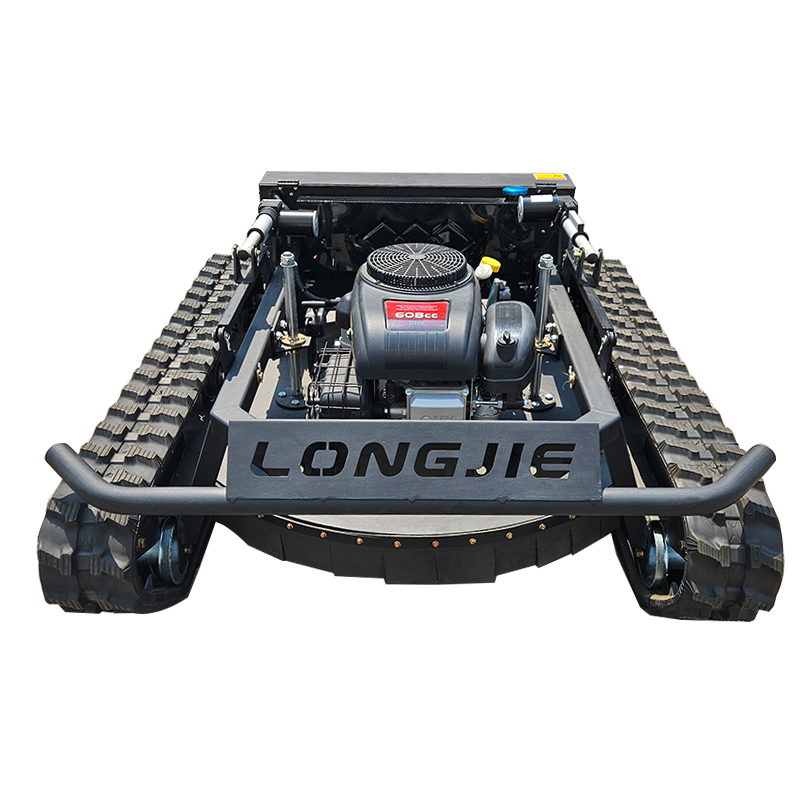
Shandong Maide En Intelligent Technology Co., Ltd. presents remote-control lawn mower solutions alongside agricultural machinery. For a heavy-duty application, purchasers should provide site information—grass type and height, slope, ground condition, access width, operating hours, and safety requirements—so the supplier can help confirm an appropriate configuration and operating plan. Product capability, optional equipment, and compliance requirements need verification against current documentation before purchase.
Common misconceptions about long-duty lawn mowers
“Higher speed gives the strongest daily output.”
Not necessarily. A speed that overwhelms the deck or reduces traction may increase rework, cleanup, and downtime. Effective output is the area completed safely at an acceptable cut quality, including planned inspection time.
“A heavy machine can handle every slope or surface.”
Weight does not replace stability analysis. Ground moisture, slope angle, drop-offs, hidden obstacles, and turning direction can change the risk quickly. Follow the manufacturer’s limits and stop when the terrain is unsuitable.
“Maintenance can wait until the mowing season ends.”
Long-running operations rely on frequent observation. Cleaning, inspection, and accurate reporting during the season make it easier to schedule service without turning a small concern into an unexpected outage.
A practical heavy-duty mowing checklist
- Survey the route for surface changes, slopes, drop-offs, people, and obstacles.
- Confirm the mower configuration and safe operating limits for the planned task.
- Complete the manufacturer-recommended pre-start inspection.
- Set a cutting approach that reflects grass height, moisture, and desired finish.
- Use planned pauses to inspect buildup, controls, vibration, and cut quality.
- Stop and isolate the machine before clearing obstructions or performing adjustments.
- Record defects and service needs before the mower returns to storage or the next shift.
Final takeaway
Industrial lawn mowers handle continuous heavy-duty tasks through a combination of appropriate equipment selection and disciplined operations. When teams match the mower to the site, control cutting load, inspect at planned intervals, respect terrain limits, and maintain accurate service records, they can pursue reliable throughput without turning safety or machine condition into an afterthought. For large-site planning, use the mower manual and verified supplier information as the starting point for a route, inspection schedule, and configuration review.