EN
Why A Remote Grass Cutter Is Essential For Steep Slopes
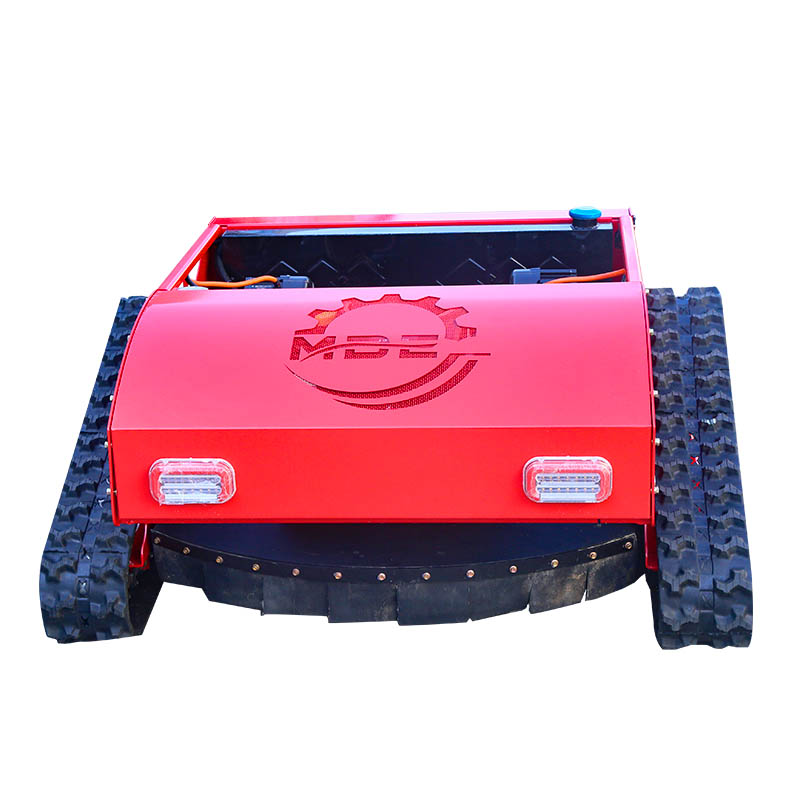
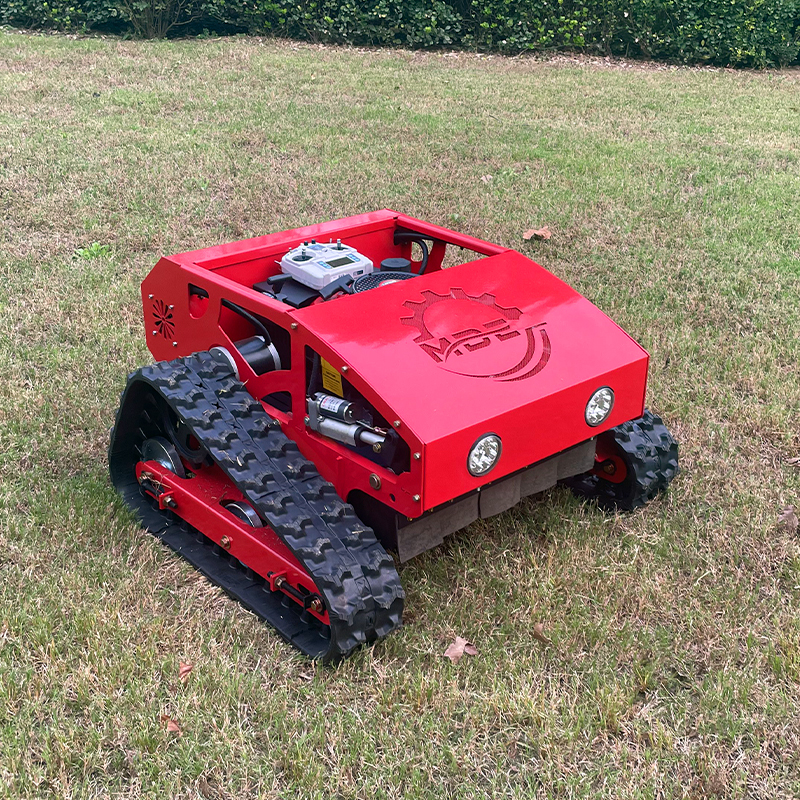
Steep ground changes a routine mowing job into a planning and safety problem. A remote grass cutter can keep the operator away from the immediate rollover, slip, flying-debris, and footing hazards that make hillside work difficult. That separation is meaningful, but it is not a license to mow without judgment. The right remote grass cutter must still be matched to the slope, vegetation, surface condition, route, and the manufacturer’s instructions.
From an operator’s point of view, the most useful question is not “Which mower has the most features?” It is “Can this remote grass cutter be controlled safely on this particular area today?” Grass height, wet soil, hidden ruts, drop-offs, tree lines, and sightlines can all change the answer. A remote system is essential on many steep sites because it gives the team a safer working position while preserving direct, deliberate control of the mowing route.
Steep slopes expose the limits of conventional mowing
On level turf, a walk-behind or riding mower may be practical. On a steep bank, the same approach can put a person directly in the path of a slide or rollover. OSHA guidance on riding mowers stresses following the manufacturer’s slope limit and, where no limit is provided, avoiding slopes above 15 degrees. That guidance is not a performance rating for every remote grass cutter; it is a useful reminder that slope angles and machine limits must be treated seriously.
A remote grass cutter addresses a different part of the risk: it lets the operator stand away from the machine rather than balancing beside it or sitting on it. This is especially valuable around drainage channels, retaining edges, roadsides, solar sites, orchards, and uneven grounds where a small change in traction can have larger consequences. The machine still needs adequate stability and grip, but the operator is no longer positioned in the most exposed place.
Remote control improves distance, not safety by itself
The central advantage of a remote grass cutter is controlled separation. An operator can select a vantage point with a clearer view of the slope, monitor the travel path, and remain outside the immediate operating zone. That is different from autonomous mowing. A remote control grass cutter depends on an attentive person who can stop, steer, reassess, and respond when the terrain changes.
Before starting a remote grass cutter, confirm that the controller’s operating range, line-of-sight requirements, emergency-stop function, and any tilt or stability alerts are suitable for the job. These are configuration items to verify in the selected model’s documents, not features to assume. Remote operation does not remove the need for exclusion zones, bystander control, personal protective equipment, or local site rules.
Why terrain-first planning matters
A remote grass cutter should be chosen after a site walk, not after a quick look at acreage. Similar-sized areas can require very different equipment when one has a uniform incline and the other includes wet patches, loose stones, ditches, roots, or tight turns. Start by recording the steepest section, surface changes, grass height, vegetation density, obstacles, access points, and the space available to turn or retreat.
Then divide the work into preparation, mowing, and review. For a remote grass cutter, preparation includes clearing debris, defining a safe operating boundary, checking batteries or fuel as applicable, and deciding where the operator will stand. During mowing, the operator should watch traction, visibility, and the route rather than focusing only on coverage speed. Afterward, inspect the cut area and note where the route, cutting pattern, or site preparation should change next time.
Traction, center of gravity, and vegetation all affect the result
It is tempting to reduce steep-slope suitability to a single advertised angle. In reality, a remote grass cutter interacts with ground conditions that can vary within a few meters. Damp grass, mud, leaf cover, loose gravel, or compacted ruts can alter grip. Tall grass and dense weeds can hide obstacles and affect cutting load. A machine that appears stable during a demonstration on dry, open ground should not automatically be assumed suitable for a wet, obstructed bank.
Ask the supplier for the specific slope limit, recommended operating conditions, traction design, machine dimensions, machine weight, and instructions for the intended configuration. If a remote grass cutter uses tracks, wheels, or a particular cutting arrangement, request documentation showing how that setup is meant to be used. Do not convert a general product claim into an unverified promise about your own slope.
A practical pre-mow checklist for a remote grass cutter
- Measure and map the slope: compare the steepest sections with the manufacturer’s stated limit for the exact remote grass cutter configuration.
- Check the surface: identify wet areas, soft shoulders, rocks, holes, hidden wire, drainage openings, and sudden changes in grade.
- Set the operating position: choose a stable location with usable line of sight and a planned path away from the machine if conditions deteriorate.
- Create an exclusion zone: keep people, animals, traffic, and vulnerable property clear of the operating area and discharge direction.
- Test controls safely: verify steering, stopping, and any emergency-stop procedure before the remote grass cutter enters the steepest section.
- Plan the route: decide turns, boundaries, and stopping points before mowing instead of improvising close to a ditch, fence, or drop-off.
Efficiency comes from repeatable control
A remote grass cutter can make recurring slope maintenance more manageable because one trained operator can work from a safer location while maintaining a deliberate route. The real gain is not simply faster cutting. It is the ability to organize difficult terrain into a repeatable process: inspect, prepare, mow within the confirmed limit, stop when conditions change, and review the area afterward.
Efficiency still has boundaries. Trying to shorten a job by skipping inspection, working with poor visibility, or exceeding a machine limit can create downtime and danger. A remote control grass cutter is most useful when its operating method is built into the site’s safety procedure, rather than treated as a substitute for one.
What to verify before specifying a remote grass cutter
For procurement, create a written comparison sheet before requesting a quotation. Include the maximum and typical slope conditions, grass type and height, expected mowing frequency, ground moisture patterns, required cutting width, access limitations, operator position, maintenance expectations, and any required documentation. Ask whether the supplier can provide configuration details, operating instructions, parts information, and a demonstration that reflects the intended conditions.
Shandong Maide En Intelligent Technology Co., Ltd. presents remote control lawnmowers as part of its agricultural and landscaping machinery range. For any proposed remote grass cutter, the final choice should be based on confirmed product documentation and a review of the real worksite—not a generic claim that one machine fits every slope.
Make safety the reason for the decision
On steep slopes, distance between the operator and the cutting machine can be a decisive safety advantage. That is why a remote grass cutter is often essential where conventional mowing would expose people to unacceptable footing or rollover risk. A sound outcome comes from pairing that distance with documented limits, a visible route, trained operation, and a site-specific checklist.
Before buying a remote grass cutter, gather photos, slope measurements, vegetation details, and access constraints. With those facts in hand, you can ask focused questions, compare configurations fairly, and determine whether a remote control grass cutter is appropriate for the task.