EN
How To Get Started With An RC Lawnmower
An RC lawnmower can make difficult grass-cutting work easier to plan, especially where operators need to stay clear of slopes, rough ground, dense growth, or areas with obstacles. But a good first day with an RC lawnmower does not begin by testing its maximum capability. It begins with a site check, a careful read of the manufacturer manual, and a low-risk practice area.
As a technical explainer for remote mowing equipment, I suggest separating the decision into three questions: what must be cut, what conditions exist under the machine, and how will the operator keep a safe working boundary? That approach is more useful than choosing an RC lawnmower from power or appearance alone.
Start by defining the job for your RC lawnmower
Before starting an RC lawnmower, walk the site and describe the actual job. Note the grass height, growth density, total work area, slope changes, soil firmness, drainage, trees, rocks, stumps, fences, ditches, and places where people may pass. A machine that suits a clear, dry bank may not suit an uneven area with hidden holes or wet vegetation.
It is tempting to let acreage decide everything. More accurately, slope, obstacles, surface grip, and the frequency of cutting can change the right RC lawnmower setup just as much. Break the task into preparation, mowing, and post-work inspection. This makes it easier to identify what needs a safety check before the blades ever engage.
- Preparation: identify hazards, set a work boundary, and check the machine.
- Mowing: choose a conservative route and maintain an unobstructed view.
- Verification: inspect the finished area and clean or service the RC lawnmower as the manual requires.
Read the manual before comparing performance
Every RC lawnmower has its own controls, warnings, maintenance intervals, slope rating, stopping behavior, and intended operating conditions. Treat the manufacturer documentation as the controlling instruction. Do not replace it with a generic slope number, a video demonstration, or a specification from another model.
For context, general mower-safety guidance often warns that slopes can create rollover and loss-of-control hazards. That is a reason to verify the slope limit, traction conditions, and route for the specific RC lawnmower you intend to use. A published limit is not a promise that every part of a site is safe in every weather condition. Wet grass, loose soil, concealed debris, and sudden changes in grade can alter the operating decision.
Build a pre-operation checklist
A short routine helps a new operator use an RC lawnmower consistently. Start with a visual inspection while the machine is powered down. Check for loose fasteners, damage, grass buildup, fluid leaks where applicable, worn tracks or tires, and anything caught around the cutting area. Use only the fuel, battery, guards, and attachments approved for that model.
Then test the remote controls in an open, level area without bystanders. Confirm the machine responds predictably to forward, reverse, steering, blade engagement if applicable, and the emergency-stop function. You should know exactly what stop action is expected before using an RC lawnmower near a slope or obstacle. If the response is delayed, unclear, or inconsistent, stop and resolve the issue instead of continuing.
- Wear the personal protective equipment specified by the manufacturer and site rules.
- Clear rocks, wire, branches, and other objects that could be thrown or entangle the mower.
- Keep people, pets, and vehicles outside the work zone.
- Confirm sufficient charge or fuel for the planned pass and a controlled shutdown.
- Check the emergency stop before cutting begins.
Choose a safe operator position
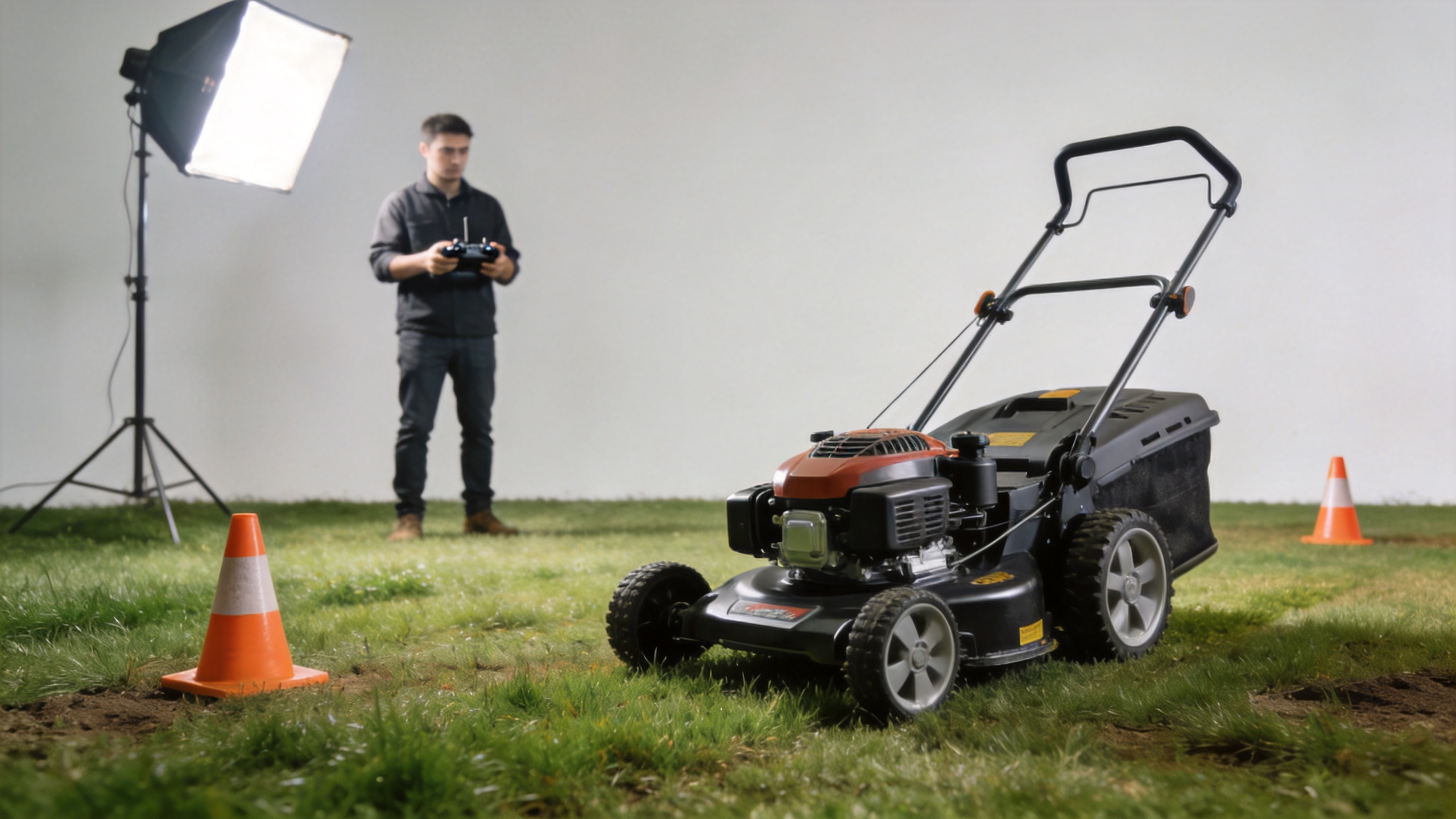
Remote control lets an operator avoid standing on the machine, but distance alone does not make an RC lawnmower safe. Select a position with a clear view of the route, stable footing, and a practical path away from the work area. Avoid standing directly downhill from the RC lawnmower, in a likely slide or rollover path, in front of a discharge direction, or between the machine and a fixed object.
Keep the first operating session conservative. Use a small, dry, open section of grass. Practice stopping, turning, and changing direction at low speed. This is not wasted time; it is how an operator learns control response, visibility limits, and the amount of room needed for a turn. If a corner or bank requires a rushed correction, redesign the route rather than forcing the machine through it.
Make the first mowing pass deliberately simple
For the first pass, choose an area with known ground conditions and a clear exit route. Start the RC lawnmower only after the work zone is clear. Follow the manual’s startup sequence, keep the remote in a stable position, and move at a speed that lets you identify changes in traction or vegetation before they become a problem.
Work in planned sections rather than chasing every missed patch immediately. A repeatable pattern reduces overlap, helps preserve visibility, and makes it easier to pause for inspection. On challenging terrain, divide the area into smaller zones and reassess between them. The practical goal is controlled coverage, not the fastest possible completion time.
Stop the RC lawnmower and investigate if you notice slipping, unusual noise, vibration, reduced control response, overheating indications, thrown debris, or poor visibility. Do not reach into a cutting area or attempt to clear material while the machine could start. Use the approved shutdown and isolation procedure first.
Plan for slopes, wet ground, and obstacles
An RC lawnmower is often considered for slope work, but slopes need the most planning. Measure or verify the grade using a suitable method, compare it with the exact manufacturer limit, and inspect the entire route—not just the steepest visible section. Check for soft edges, drainage channels, exposed roots, loose gravel, and wet grass. If conditions are uncertain, postpone the task or use a safer approved method.
Obstacles also matter. Mark hidden hazards where possible and leave clearance around trees, walls, ditches, and parked equipment. Do not assume a remote mower can safely pass wherever a person can walk. The machine’s width, turning behavior, cutting deck, and line of sight all affect the needed clearance.
Maintain the machine after each session
Good results from an RC lawnmower depend on the next inspection as much as the first setup. After shutdown, remove grass buildup using the approved method, inspect cutting components and guards, and look for damage from debris or uneven ground. Recharge or refuel according to the manual, store the remote and machine securely, and record anything that needs attention before the next job.
For businesses evaluating an OEM custom remote lawn mower, this same start-up framework helps make discussions more specific. Share the terrain profile, vegetation type, target work pattern, safety requirements, maintenance expectations, and required documentation. Those details are more useful than asking for a generic “ideal” RC lawnmower.
Final checklist for getting started
The safest way to begin with an RC lawnmower is to work from conditions outward: inspect the site, verify the specific machine instructions, test controls in a low-risk area, establish an operator position, and use a simple first route. When terrain, weather, visibility, or control response falls outside the documented operating conditions, stop and reassess. A careful start protects people, equipment, and the quality of the work.