EN
Why Radio Controlled Lawn Mowers Improve Work Efficiency
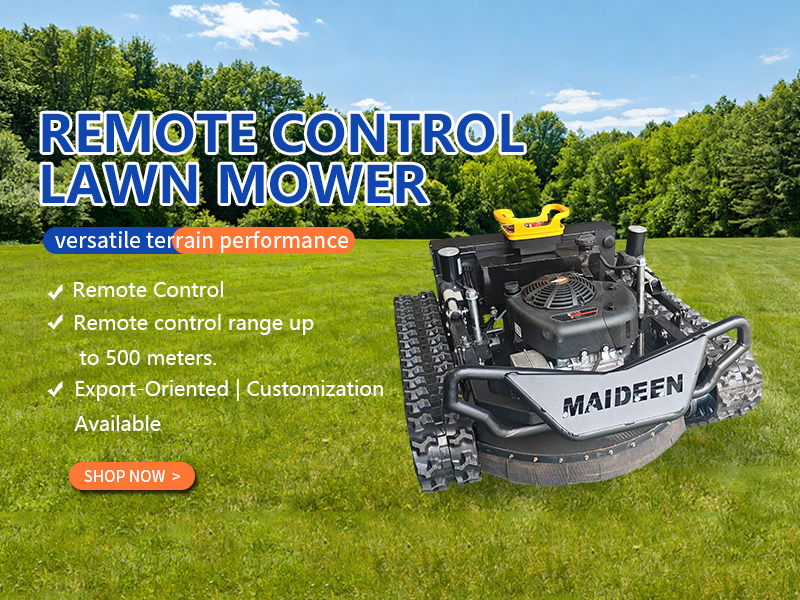
For grounds teams, efficiency is not simply a question of how fast a machine travels. It is the ability to complete planned vegetation work with fewer interruptions, less repositioning, and a safer operating routine. A radio controlled lawn mower can support that goal when its controls, traction, cutting system, and worksite conditions suit the job. The practical value comes from changing the workflow, not from assuming that every remote machine will automatically save time.
From a technical-explainer perspective, it helps to separate remote control, power delivery, and safety boundaries. A reliable starting point is not a brochure specification. It is a field review of slope, surface condition, vegetation density, obstacles, access points, and the frequency of cutting. Once those conditions are clear, a team can judge whether a radio controlled lawn mower removes a real bottleneck.
Efficiency starts with a better division of work
Conventional mowing on uneven ground often combines several tasks in one person: walking the route, guiding the machine, watching edges, moving around obstacles, and returning to a safe position. That can create repeated stops and awkward repositioning. With a radio controlled lawn mower, the operator can guide the cutting path from an appropriate observation point while the machine works within its intended operating area.
This does not mean the operator is disengaged. Remote work still requires visibility, a clear exclusion zone, and a planned stop procedure. But putting the operator in a position with better sightlines can make it easier to watch edges, drainage channels, trees, and changes in vegetation. On a recurring site, that can reduce the time lost to walking back and forth simply to maintain control.
Where a radio controlled lawn mower can remove workflow friction
1. Difficult terrain becomes easier to organize
Slopes, orchard rows, roadside verges, banks, and irregular grass areas ask for more than cutting capacity. They demand a workable route. A radio controlled lawn mower may allow an operator to stay on firmer or flatter ground while directing the machine through an approved working zone. That can simplify supervision and reduce unnecessary movement around a site.
One detail is easy to miss: terrain alone does not decide suitability. Ground moisture, loose material, side slopes, hidden holes, and the machine's approved limits matter just as much. If traction, visibility, or control communication deteriorates, the efficient decision is to stop, reassess, and change the plan rather than force the route.
2. Repetitive cutting can be planned as a sequence
A useful way to evaluate a radio controlled lawn mower is to split the job into preparation, mowing, and verification. Preparation includes walking the boundary, removing obvious debris, identifying no-go areas, and choosing an operator position. Mowing then follows a route that minimizes duplicate passes. Verification covers edge quality, missed strips, machine condition, and whether the next service interval needs attention.
That sequence matters more than treating a remote machine as a shortcut. When the same site is maintained regularly, teams can refine entry points, turning zones, and the order of sections. That makes daily work more predictable and makes it easier to compare planned time with actual time without relying on broad promises about productivity.
3. One operator can focus on control and site awareness
Walking behind equipment can divide attention between footing, machine guidance, and surroundings. A radio controlled lawn mower can change that allocation of attention. From a safe, approved observation position, the operator can concentrate on the route, people entering the area, obstacles, and changing surface conditions. This can be especially useful where the terrain itself makes close-following uncomfortable or inefficient.
However, remote operation is not unattended operation. The operator needs training on the specific control system, emergency stop process, operating range, and limits stated by the manufacturer. Bystanders should be kept outside the work area. A remote electric lawn mower also needs a deliberate check of charge planning, cable or charging arrangements where applicable, and the return path before the task begins.
What determines whether the time savings are real?
The gains from a radio controlled lawn mower depend on the total workflow. A machine that cuts effectively but is difficult to transport, clean, recharge, refuel, or maintain may merely move the delay to another part of the day. Before comparing models, document the conditions that create lost time now: steep approaches, repeated walking, dense growth, frequent turning, site access, debris handling, or downtime for checks.
| Field question | Why it affects efficiency |
|---|---|
| Where can the operator stand with a clear view? | Good sightlines support controlled routing and faster decisions around obstacles. |
| How do slope, moisture, and ground texture change during the route? | These conditions affect traction and may require a slower plan or a stop-work decision. |
| How dense and tall is the vegetation? | Vegetation influences pass planning, cutting quality checks, and the chance of rework. |
| What happens before and after each mowing session? | Transport, inspection, cleaning, charging or refueling, and maintenance determine total labor time. |
Build a safer, more efficient operating routine
Before deploying a radio controlled lawn mower, use a short site checklist. Confirm the machine is appropriate for the ground and task; inspect the planned area; mark edges, drop-offs, and obstacles; establish an exclusion zone; test controls and emergency stopping; and decide where the operator will stand. During the job, keep the machine in view and do not continue through unstable ground merely to preserve the schedule.
After the cut, inspect the working area and the machine. A quick review of accumulated grass, blade condition, tracks or wheels, controls, and power status helps prevent a small issue from becoming the next day's delay. This is where a remote electric lawn mower should be assessed as part of a complete routine: available charging time and battery condition are operational inputs, not afterthoughts.
Choose for the worksite, not the headline feature
A radio controlled lawn mower can improve work efficiency when it lets a trained operator manage difficult vegetation work from a better position and supports a repeatable route. The strongest case usually appears where terrain, repeated walking, or supervision needs are the true sources of wasted effort. It is less compelling when access, ground conditions, maintenance capacity, or safety controls do not support consistent use.
Before purchasing, turn the site into a clear set of questions: What terrain will be cut? How often? What vegetation and obstacles are typical? Where will the operator maintain visibility? What inspection, maintenance, and power routine is realistic? With those answers, a radio controlled lawn mower becomes a considered workflow tool rather than a feature-led purchase.