EN
Why Regular Use Of An Orchard Weeder Boosts Fruit Yield
In a fruit orchard, weed control is not just a housekeeping task. The vegetation under and near each tree can compete for water, nutrients, and light at the same time the crop is trying to set and size fruit. An orchard weeder gives growers a practical way to manage that competition on a repeatable schedule. It does not guarantee a particular yield increase, because cultivar, weather, irrigation, nutrition, tree age, and crop load still matter. Used at the right time and with the right settings, however, it can support the conditions that help productive trees direct more resources toward fruit.
As an agricultural and grounds-equipment planning perspective, the important point is simple: a clean tree row is not the goal by itself. The goal is to manage orchard-floor vegetation in a way that protects roots, preserves suitable soil cover, and reduces pressure during the crop stages when trees are most sensitive to competition.
How an Orchard Weeder Supports the Fruit-Yield Process
Weeds can draw from the same shallow soil zone that feeder roots use. UC IPM notes that orchard weeds compete with trees for nutrients, water, and light, and that this competition can be particularly damaging to young trees. In a mature block, the effect is rarely one single, easy-to-measure number; it is a chain of management effects. Less unwanted vegetation around the tree row can make irrigation and nutrient inputs more available to the crop, improve access for scouting, and reduce the chance that weeds set seed and expand the next control problem.
A regular orchard weeder pass is most useful when it interrupts young weeds before they become dense or deeply rooted. Waiting until vegetation is tall often raises the workload, can leave residue around trunks, and may force the operator to use more aggressive settings than the soil or trees need. Repeated, timely control is usually easier to integrate with an orchard program than occasional rescue work.
Why Timing Matters More Than a Single Heavy Pass
Think of mechanical weed management as a sequence rather than a one-time event. A pre-season inspection identifies perennial patches, wet spots, exposed irrigation lines, young-tree guards, and areas where slope changes the soil-risk picture. During the season, a follow-up pass can target small regrowth before it competes heavily. After a pass, the operator should inspect the tree row, confirm that trunks and irrigation components are intact, and note where the next pass needs a different speed or tool position.
This approach matters because complete bare-ground control is not appropriate everywhere. On slopes, an entirely bare orchard floor can increase erosion risk. Row middles may need managed cover or mowing while the in-row zone receives more targeted treatment. The most suitable plan separates these zones instead of treating every square metre in exactly the same way.
What an Orchard Weeder Actually Changes in the Field
1. It reduces early-season competition
Early weed growth is easy to overlook because it can appear harmless beneath a developing canopy. Yet small plants can still take moisture and nutrients from the active root zone. A properly adjusted orchard weeder lets a crew address this growth while it is still manageable. The expected outcome is not a promise of extra bins per acre; it is a more favorable resource environment for the trees.
2. It makes orchard-floor conditions easier to monitor
When vegetation is controlled predictably, crews can see drip lines, rodent activity, fallen fruit, trunk injuries, and water distribution more clearly. That visibility helps managers correct problems sooner. It also creates a better record for deciding whether a change in irrigation, mulching, mowing, or weed-control timing is needed next season.
3. It supports a lower-pressure integrated program
Mechanical methods can be combined with cultural practices, mulch, targeted mowing, and other approved orchard-management tools. Penn State Extension identifies finger hoe weeders and rotary hoe implements among mechanical options for orchard weed control. Equipment choice should follow the row width, trunk clearance, soil texture, weed spectrum, terrain, and the operator’s ability to make controlled passes. The machine is a component of the program, not a substitute for observation.
A Practical Regular-Use Schedule
- Scout before growth accelerates. Map perennial weeds, compacted patches, wet zones, and obstacles. Check whether irrigation lines, guards, or low branches need protection.
- Set the working depth conservatively. The aim is to manage weeds, not to repeatedly disturb more soil than necessary. Start with a test strip and inspect the result before continuing.
- Make timely, lighter passes. Use the orchard weeder when weeds are small enough for the selected implement and conditions allow safe travel. Slow down near young trunks, uneven ground, or hardware.
- Review immediately after each pass. Look for bark scuffing, exposed roots, displaced mulch, damaged emitters, and areas where weeds were missed. Adjust the next pass based on evidence, not assumptions.
- Keep records across the season. Note dates, weed stage, soil moisture, settings, travel speed, and observed tree-row results. These records turn routine use into a repeatable management practice.
Protect the Trees While Controlling Weeds
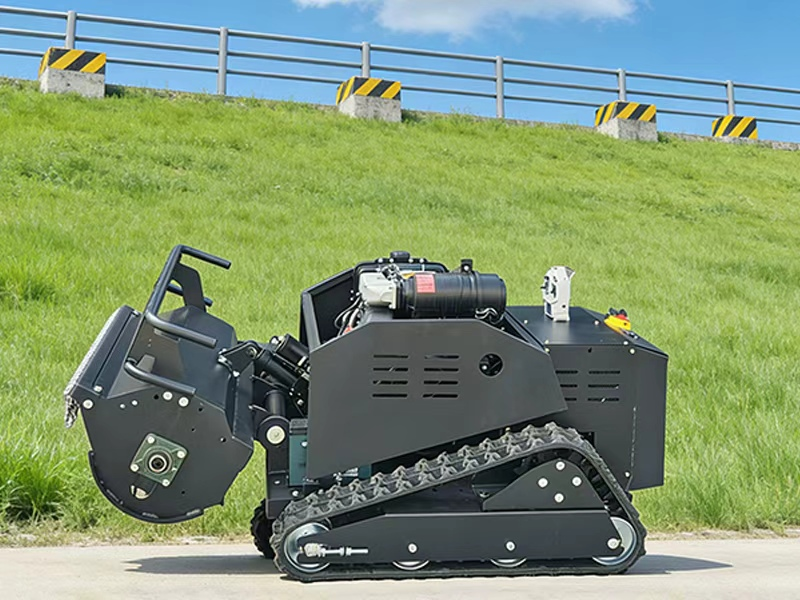
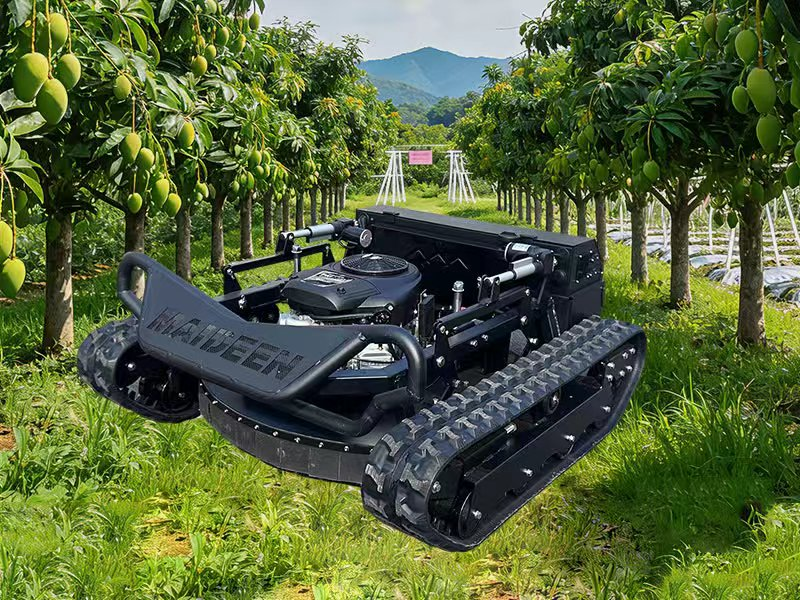
Mechanical control has boundaries. A tool that reaches too close to trunks can damage bark or surface roots; repeated disturbance can also affect soil structure in some conditions. Before buying or operating equipment, confirm the working width, sensing or shielding approach, clearance requirements, turning space, and service support. Do not assume that a brand engine crawler remote control lawn mower is automatically an orchard weeder: crawler traction, remote operation, and mowing can be useful features in selected conditions, but under-tree weed control requires the right attachment, clearance, and operating method.
That distinction matters especially on slopes and in blocks with young trees. Remote operation may help create distance from certain terrain hazards, but it does not remove the need for site assessment, exclusion zones, speed control, and trained supervision. Before a machine enters or leaves the work area, inspect access, stopping space, and stable parking conditions.
Choosing an Orchard Weeder for Your Block
- Tree age and trunk protection: Young trees generally need more conservative clearance and careful operator control.
- Row and canopy geometry: Measure row width, trunk spacing, irrigation placement, low limbs, and headland room before comparing working widths.
- Soil and slope: Match traction, ground-following behavior, and disturbance level to soil moisture, erosion risk, and terrain.
- Weed profile: Identify annuals, perennials, woody volunteers, and dense patches. One implement may not be the right response to every weed stage.
- Maintenance plan: Confirm access to wearing parts, shields, adjustment points, and service information before relying on frequent passes.
Measure the Right Results, Not Just a Cleaner Row
To judge whether regular use is helping, track more than appearance. Compare weed regrowth timing, irrigation access, tree vigor observations, damage incidents, pass hours, and fruit-yield records over comparable blocks and seasons. Keep the comparison honest: weather, thinning, pruning, nutrition, and pest pressure can all change the crop. The value of an orchard weeder is most credible when it contributes to a documented system that reduces avoidable competition without creating new soil or tree-health problems.
Weekly Orchard Weeder Decision Checklist
Before dispatching an orchard weeder, confirm soil moisture, travel lanes, and the location of irrigation hardware. During the first metres, watch whether the orchard weeder throws soil toward trunks or leaves weeds untouched. If it does, stop and reset the orchard weeder rather than increasing speed.
After the pass, ask three practical questions: Did the orchard weeder remove small competing weeds? Did the orchard weeder preserve the intended cover in the row middle? Did the orchard weeder leave trees, emitters, and guards unharmed? A short record after each orchard weeder operation makes the next adjustment more precise.
Over several weeks, compare weed regrowth and tree-row conditions. If an orchard weeder repeatedly struggles in one patch, identify the weed species, compaction, moisture, or terrain cause before changing the whole program. The right orchard weeder schedule is the one that fits the block’s conditions. Routine inspection also keeps the orchard weeder from becoming a source of avoidable crop stress.
Conclusion
Regular mechanical weed management can support fruit yield because it helps trees face less competition for key resources and keeps the orchard floor easier to inspect and manage. The strongest result comes from timely passes, conservative settings, careful protection of trunks and roots, and a plan that retains appropriate cover where erosion is a concern. Treat the orchard weeder as part of an integrated orchard routine, then use field records to refine the schedule for your trees, soil, and production goals.