EN
Why Remote control track mower Avoid Slipping On Wet Slopes
A wet slope changes faster than most mowing plans do. A rc lawn mower can remove the operator from the immediate line of travel, but it does not turn saturated soil, flattened grass, hidden ruts, or a poorly chosen route into safe ground. The useful question is not whether a tracked machine can work in the rain. It is whether the particular rc lawn mower, the ground condition, and the operating plan remain within the limits stated in the machine manual.
From an operator’s point of view, traction, stability, visibility, and a clear stop-work decision belong in the same conversation. A remote control track mower may spread its load over a larger contact area than a wheeled layout, yet that advantage is conditional. When the surface layer shears, the tracks pack with mud, or the machine meets a side slope and an obstacle at once, a rc lawn mower can still slide, pivot unexpectedly, or lose its intended line.
Tracks help traction, but they do not cancel wet-slope risk
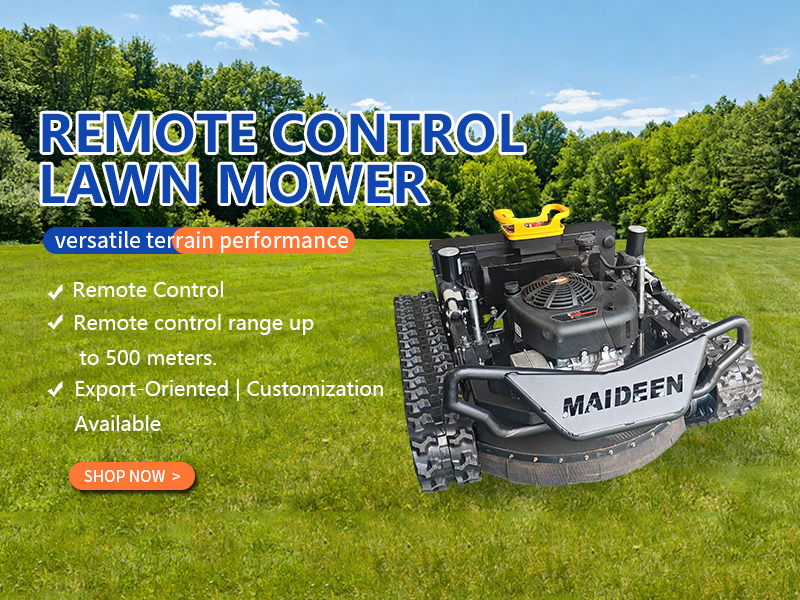
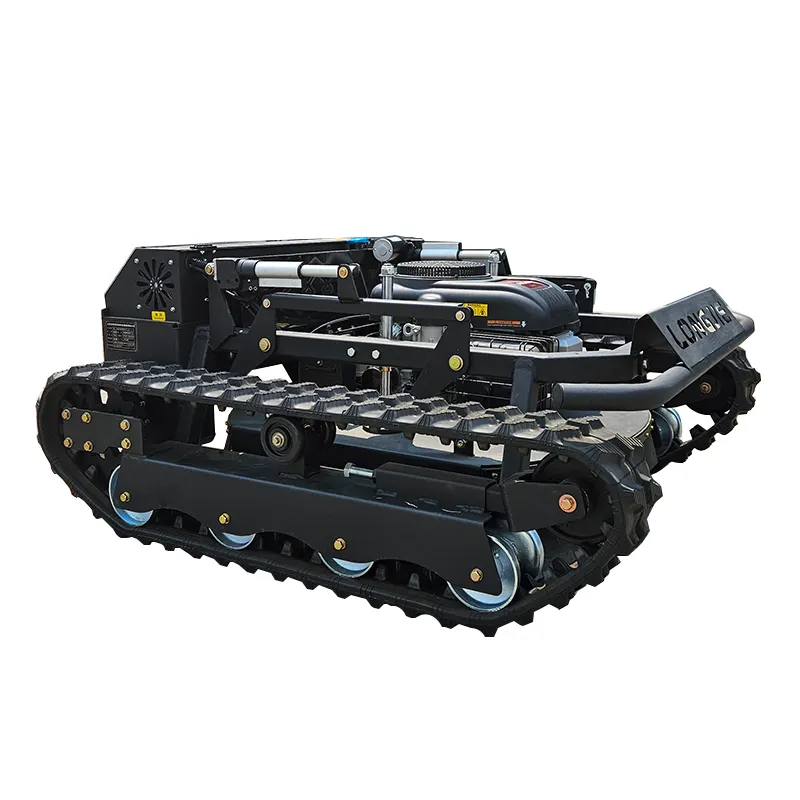
Tracks work by creating contact with the ground and transmitting drive force across that contact. On firmer turf, their larger footprint can reduce localized pressure and give a rc lawn mower more continuous grip. The track pattern also has edges that can bite into grass and soil. That is why a tracked configuration is often considered when an ordinary walk-behind mower would make an operator work too close to a difficult slope.
However, “more contact area” is not the same as unlimited traction. Water can form a lubricating layer between turf and soil. Loose cuttings can behave like rollers. Clay may become slick; sandy soil may collapse under the track; and a shallow rut can steer one side of an rc lawn mower differently from the other. The machine’s slope rating, center of gravity, track condition, cutting attachment, payload, and operating direction all matter. Treat a stated slope capability as a boundary to verify under the manufacturer’s specified conditions, not as a promise for every wet hillside.
What makes a wet slope harder for an rc lawn mower?
Ground strength can change within a few meters
A slope may look consistent from the gate, then soften near drainage paths, shade, tree roots, or recently disturbed edges. Before work begins, walk the area where it is safe to do so and look for standing water, wheel ruts, exposed roots, loose stones, holes, and grass pressed flat by runoff. An rc lawn mower needs predictable ground beneath both tracks; a route that crosses a wet channel can be riskier than a visibly steeper section on firm turf.
Side loading is different from climbing or descending
Working across a slope creates a sideways component of force. If the upper and lower tracks encounter different moisture or vegetation, the rc lawn mower may drift downhill even when both tracks are turning. Where the manual permits slope work, choose the travel direction and pass pattern recommended for that machine. Avoid making abrupt turns, especially downhill or on a cross slope. A gradual route with room to correct is safer than trying to carve a tight contour around an obstacle.
Vegetation can hide the problem
Long wet grass may conceal holes, rocks, stumps, wire, and abrupt changes in grade. It can also build up around the deck or running gear. For a remote control track mower, inspect whether cut material is collecting where it could affect discharge, visibility, or track movement. If the site is too overgrown to read the ground, reduce the task into smaller stages or postpone it until the terrain can be assessed.
A practical pre-start checklist
Before moving an rc lawn mower onto a wet slope, turn the inspection into a deliberate sequence rather than a quick glance:
- Read the applicable operating manual for slope, weather, control-distance, and maintenance limits.
- Check tracks for damage, excessive wear, embedded debris, and mud that could reduce consistent contact.
- Confirm guards, emergency-stop function, steering response, and remote-control communication before approaching the slope.
- Remove visible debris and establish a bystander-free work zone with an escape path for the machine and a safe place for the operator.
- Identify wet drainage lines, drop-offs, soft edges, and obstacles; mark areas that the rc lawn mower should not enter.
- Make a short test pass on a safe, representative section and stop if steering, braking, or track behavior feels inconsistent.
It is tempting to start with the steepest strip, but the better approach is to test a controlled area first. Put conditions before specifications: the most useful capability of an rc lawn mower is the capability it can repeatably demonstrate on the current surface, not the maximum figure mentioned in a sales conversation.
How to operate without asking too much of the machine
Use smooth inputs. Sudden acceleration can spin or scrub the tracks; sudden deceleration can shift weight and unsettle the machine. Keep the rc lawn mower within the visibility and control range specified by its instructions. Remote operation creates distance, but the operator still needs a clear view of the route, the discharge area, and the path below the machine.
Plan passes so that turning occurs on the firmest, flattest available ground. Do not reverse blindly toward a drop-off, fence, ditch, or wet edge. When a rc lawn mower begins to wander, avoid the instinct to apply stronger correction immediately. Pause, assess whether the surface is failing, and choose the manual’s recommended recovery action. If recovery would require personnel to enter an unstable area, stop the operation and secure the site according to the equipment instructions.
Also separate mowing efficiency from safety. A wider cutting pass, faster travel speed, or a longer session may sound productive, but wet grass can reduce cut quality and increase buildup. A rc lawn mower used at a conservative pace can be easier to monitor and less likely to encounter an avoidable loss of traction.
When should you postpone the job?
Postponement is a professional decision, not a failure of the machine. Stop or delay work if water is pooling, tracks repeatedly pack with mud, the turf visibly tears, the machine drifts from its intended line, visibility is poor, or the surface cannot support a stable test pass. The same applies when the required route would place the rc lawn mower near people, traffic, waterways, or an unprotected drop-off.
There is a useful mental shift here: do not ask only, “Can this rc lawn mower climb this slope?” Ask, “Can it start, travel, turn, cut, stop, and recover on this slope today without exceeding the documented limits?” Breaking the job into preparation, operation, and review makes the answer clearer.
Questions to confirm before selecting a remote control track mower
If wet-slope work is routine, ask the supplier for the operating manual, documented slope guidance, track-maintenance instructions, emergency-stop procedure, recommended cutting conditions, service support, and a demonstration that reflects your ground type. Describe the maximum grade, grass height, soil type, drainage, obstacle pattern, and expected work frequency. This gives a supplier enough context to discuss whether an rc lawn mower is suitable without turning unverified features into promises.
Shandong Maide En’s site presents remote control lawnmowers as part of a broader landscaping and agricultural machinery range. For any rc lawn mower inquiry, request configuration and operating information that can be checked against the actual site. A tracked design can be a useful part of a wet-slope plan, but safe results still come from condition checks, conservative operation, and the willingness to stop when the ground says no.