EN
How Does Remote grass cutter Trim Overgrown Bushy Grass
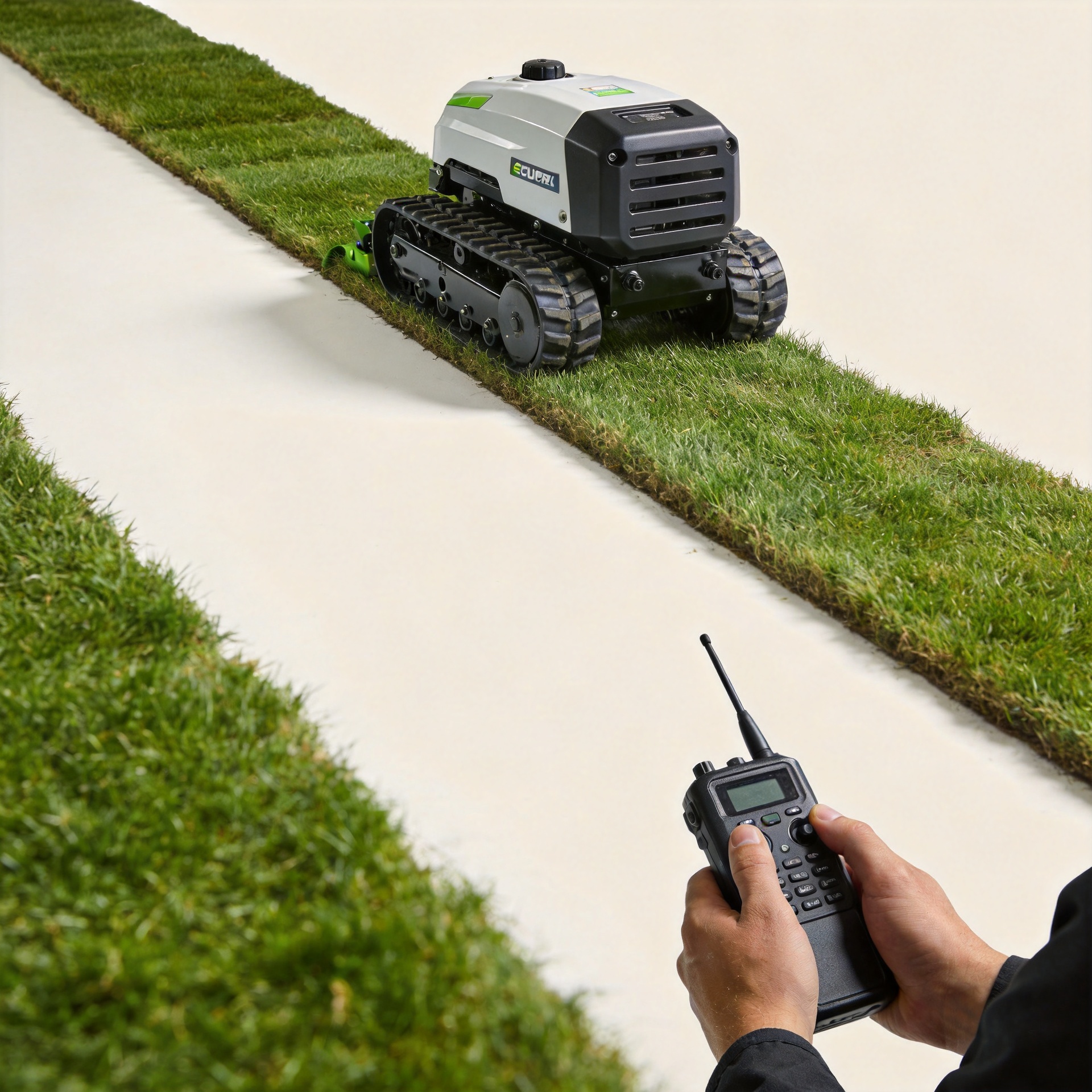
Overgrown grass rarely behaves like an ordinary lawn. It can hide wire, stones, holes, saplings, wet patches, and woody stems beneath a dense top layer. A remote grass cutter helps an operator work from a better position while keeping the cutting task visible, but it does not turn a neglected site into a one-pass job. The reliable approach is to inspect the area, divide it into manageable zones, make controlled passes, and review the cut before moving on.
From an operator’s point of view, the key question is not simply whether a remote grass cutter can reach tall vegetation. It is whether the machine, cutting attachment, terrain, visibility, and operating instructions all fit the job. That distinction matters most where bushy grass has grown around slopes, fence lines, trees, drainage edges, or obstacles.
What makes bushy grass harder to trim?
Dense grass and brushy growth create resistance in several ways. Long stems can fold over instead of being cut cleanly, clumps can obscure the ground, and a first pass may reveal material that was invisible from the edge. Wet vegetation can also gather around a cutting area more readily than dry, short grass. These are site conditions, not promises about any particular model.
It is tempting to judge the task by grass height alone. More accurately, look at the whole work zone: stem thickness, moisture, hidden debris, changes in ground level, slope direction, turning room, and the distance at which the operator can maintain a clear line of sight. A remote grass cutter is most useful when its use is planned around those conditions rather than treated as an automatic solution.
Start with a site walk, not the controls
Before starting a remote grass cutter, walk the intended route where it is safe to do so. Mark or remove loose wire, stones, branches, discarded materials, and other objects that could be struck or wrapped. Note ditches, exposed roots, soft ground, drop-offs, and places where grass hides a sudden change in level. If the site includes a slope, identify a route that preserves visibility and allows room to stop or turn according to the machine’s operating guidance.
- Set a clear work boundary and keep people, animals, and vehicles outside it.
- Check that controls, stopping functions, guards, and the cutting system are in the condition specified by the manufacturer.
- Choose a position with an unobstructed view; do not rely on remote operation when vegetation blocks sight of the cutting area.
- Break a large plot into strips or zones so that the operator can inspect each section after it is cut.
Efficiency matters, but the inspection step should not be skipped. Remote operation may increase separation from the cutting zone; it does not remove the need for training, suitable protective practices, or compliance with the equipment manual and local work rules.
How a remote grass cutter makes the first pass
The first pass is usually a clearing pass, not a finish cut. Begin at the outer edge of the zone and use a route that lets the operator see both the machine and the ground immediately ahead. In tall, bushy grass, a narrower working swath is often easier to observe than trying to take the widest possible bite. The goal is to expose the surface progressively, not to force every stem down at once.
Use steady, deliberate movement. Rapid turns or abrupt direction changes can leave uncut islands, pull vegetation toward the cutting area, or make it harder to notice an obstacle. Where growth is especially thick, make overlapping passes so the second pass meets already-reduced material rather than full-height grass. If cut material accumulates, stop following the documented procedure and clear or inspect the area only when it is safe to do so.
A remote grass cutter should also be kept within a visibility range that supports accurate judgment. If the operator cannot clearly see the front edge of the cutting path, the terrain under the machine, and nearby hazards, it is time to reposition rather than continue.
Use staged trimming for heavy vegetation
For overgrown bushy grass, staged work is more dependable than assuming one cut will produce an even surface. A practical sequence is:
- Define the route. Work from a known edge toward the interior, leaving an exit route and avoiding blind approaches to dense clumps.
- Reduce the top layer. Make an initial pass that opens visibility and reduces the standing mass without chasing a final appearance.
- Inspect the exposed ground. Pause to identify debris, holes, roots, wet areas, or woody material that the grass had concealed.
- Make a controlled second pass. Recut missed strips and reduce remaining clumps at a pace appropriate to the visible conditions.
- Finish boundaries carefully. Treat fences, tree bases, drainage edges, and steep transitions as separate tasks if visibility or access changes.
This task-based sequence is useful because it separates preparation, cutting, and review. Rather than asking a remote grass cutter to solve every condition in a single movement, the operator can make decisions as the true ground condition becomes visible.
Match the cutting plan to terrain and vegetation
Slopes and uneven ground
On slopes, follow the equipment documentation for permitted gradients, direction of travel, traction requirements, and safe stopping procedures. Do not assume that a machine suitable for rough ground is suitable for every incline. Ground moisture, loose soil, hidden holes, and the direction of the slope can change the risk. Maintain a safe observation point and stop the work if line of sight, stability, or traction is uncertain.
Thick clumps and brushy edges
Clumps near hedges, saplings, or fence lines need more than extra speed. First identify what lies behind the vegetation and whether the cutting setup is intended for the stem type present. Work from the open side toward the boundary, keeping enough space to observe the cut. A remote grass cutter may reduce operator exposure in difficult areas, but it should not be used to reach into a zone that cannot be seen or assessed.
Wet or tangled growth
Wet grass and tangled stems can change how material lays down and collects. Slow the work plan, reduce the amount taken in each pass, and inspect more frequently. If the cutting area begins to clog or the machine’s behavior changes, stop and follow the manufacturer’s shutdown and inspection instructions. Avoid treating a change in vegetation condition as a reason to bypass safeguards.
What should you check after trimming?
Post-work review is part of a good result. Walk the cleared zone when safe, looking for uncut patches, exposed debris, damage to boundaries, and areas where the ground needs a different maintenance method. Remove accumulated vegetation only under the relevant shutdown procedure. Then check the cutting system, guards, controls, and other service points as specified in the manual.
For recurring sites, record the conditions that changed the job: unusually dense grass, wet ground, new obstacles, poor visibility points, or a section that required extra passes. This makes the next remote grass cutter session easier to plan and helps turn one difficult clearing job into a repeatable maintenance routine.
Remote grass cutter questions for overgrown grass
Can tall grass be cut in one pass?
That depends on the growth, terrain, cutting setup, and approved operating conditions. Thick or tangled growth is often easier to manage with an initial clearing pass and a controlled follow-up pass.
Why is clear line of sight important?
The operator needs to see the cutting edge, obstacles, and route changes. Clear visibility supports timely stopping before hidden debris, uneven ground, or a boundary is reached.
What should be removed first?
Remove or mark loose wire, stones, branches, waste, and other visible hazards. A site walk also reveals roots, holes, wet areas, and edges that can alter the work plan.
A practical rule for better results
A remote grass cutter can trim overgrown bushy grass more consistently when it is used as part of a controlled process: inspect first, cut in visible stages, pause when conditions change, and verify the result afterward. Do not judge the job only by how much vegetation disappears on the first pass. A safer, more consistent outcome comes from matching the route and cutting pace to the actual terrain, vegetation, and approved operating limits of the machine in use.
If you are evaluating equipment for a particular property, prepare a simple site brief before speaking with a supplier: grass and stem condition, slope and ground features, work area size, obstacles, expected maintenance frequency, and the operating support you need. That information leads to a more useful discussion than a generic request for the most powerful remote grass cutter.