EN
What Safety Protection Does Remote controlled lawnmower Equip
A remote control lawn mower can move the operator away from noise, thrown material, heat, and uneven ground, but distance alone is not a safety system. The useful question is not simply whether a remote controlled lawnmower has “safety features.” It is which protections are fitted, what conditions activate them, and what the operator must still check before work begins.
For a contractor, estate manager, orchard operator, or equipment buyer, safety should be reviewed as a chain: the machine, the remote-control link, the mowing area, and the person managing the work. A protection that is appropriate on a clear, dry slope may not control the same risks near bystanders, loose debris, hidden holes, or wet vegetation. Use the instructions and limits for the exact model being considered.
Start with the protections that stop the machine
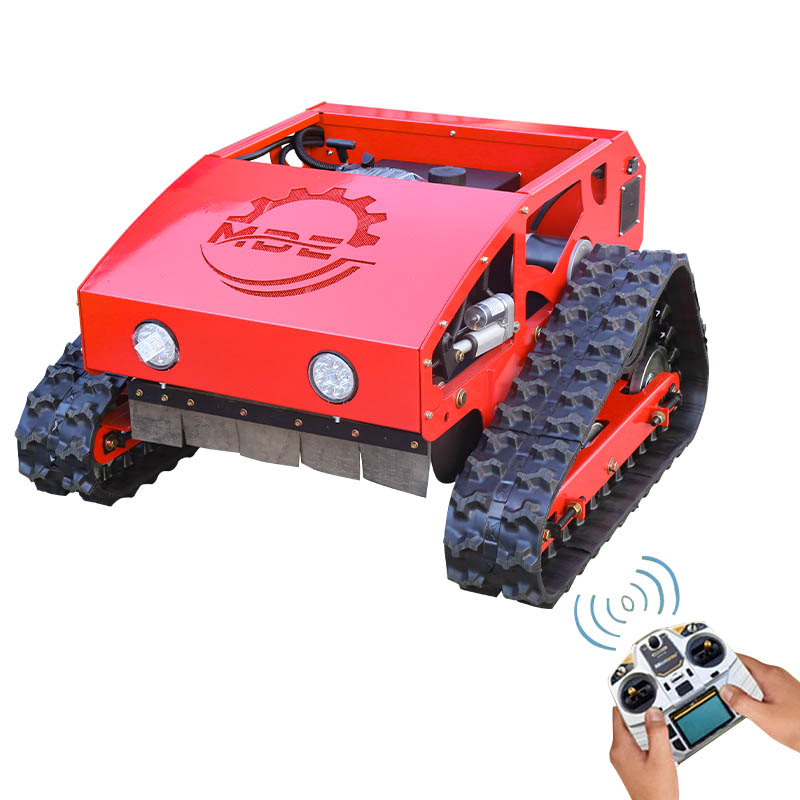
An emergency stop is one of the first items to confirm on a remote control lawn mower. Depending on the design, there may be an emergency-stop control on the handheld transmitter, on the machine itself, or both. Its job is to command a rapid stop when an unsafe condition is seen. Before each shift, the operator should verify that the stop control works from the intended operating position and understand whether it stops blade drive, travel drive, engine power, or a combination of these functions.
Remote-operation systems may also include a signal-loss or out-of-range response. In a suitable design, the mower moves to a safe state when the link is interrupted rather than continuing uncontrolled. The actual response is model-specific, so buyers should ask for the operating manual and a live demonstration. Do not assume that every remote controlled lawnmower has the same fail-safe logic, response time, or restart procedure.
A practical rule is simple: test the stopping function in a clear area before approaching difficult vegetation or slopes. If a stop command, warning indicator, or remote link behaves unexpectedly, take the mower out of service until the cause is understood.
Guards, shields, and blade-area containment
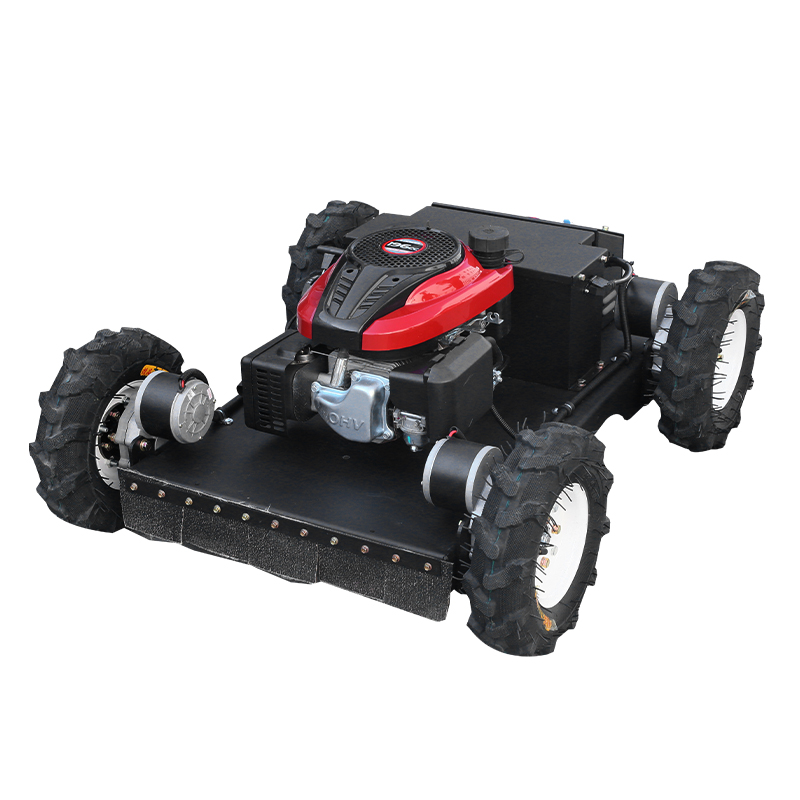
A mower’s physical guards remain essential even when it is operated remotely. Deck skirts, discharge shields, belt covers, and guards around rotating or hot components are intended to limit contact with moving parts and reduce the path of debris. They are not optional accessories. A missing, bent, loose, or heavily worn guard changes the risk of the whole task.
Before starting a remote control lawn mower, inspect the cutting deck and underbody from a safe, powered-down condition. Look for cracked shields, loose fasteners, accumulated grass, damaged blade hardware, and objects that could be thrown when the blades begin turning. Keep people, animals, vehicles, glass, and unprotected property outside the manufacturer-defined exclusion area. The remote control does not make a discharge zone harmless.
Protection also depends on preparation. Stones, wire, branches, irrigation parts, and discarded materials should be removed where possible. Tall grass can conceal hazards, so a first pass may require a slower, more cautious route than routine mowing.
Stability protection is not a universal slope rating
Many buyers look for track width, low center of gravity, traction, or crawler drive when evaluating a remote control lawn mower for slopes. Those design choices can support stability, but they do not create a universal safe angle. Ground moisture, soil type, ruts, side slopes, turning direction, vegetation load, attachments, and the machine’s actual configuration all affect the result.
General mower-safety guidance often treats steep slopes cautiously; OSHA guidance for riding mowers, for example, advises avoiding slopes above 15 degrees when no other information is available. That is not a rating for a remote controlled lawnmower. It is a reminder to obtain the precise slope limit and operating method from the relevant manufacturer documentation.
Before work, walk or otherwise assess the area without exposing anyone to the mower. Identify drop-offs, drainage channels, soft edges, obstacles, and places where a turn would be unsafe. Plan a route that avoids abrupt changes in direction. If the terrain or surface is outside the documented operating conditions, choose another method rather than treating remote operation as a workaround.
Operator protections still matter at a distance
Remote control reduces some direct exposure, yet the operator still needs a deliberate position with sight of the mower, its travel path, and the people nearby. Do not stand downhill from a moving machine, in front of its route, within a possible discharge path, or where a loss of footing would remove your ability to respond. Keep the handheld controller secure and avoid distractions that compromise line of sight.
Appropriate personal protective equipment remains part of the system. Eye protection, sturdy footwear, hearing protection where required, and close-fitting work clothing can help address residual hazards. Follow site rules and the equipment manual for the task. Remote operation is a different way to control a mower, not a reason to remove normal work-site controls.
Interlocks, alarms, and visibility aids need verification
Some remote control lawn mower configurations may provide interlocks, audible alarms, warning lights, obstacle sensing, camera views, or tilt-related alerts. These can improve awareness, but their presence and behavior vary by model. Ask what each device detects, whether it stops travel or merely warns, how it is tested, and what environmental conditions may reduce its usefulness. Dust, rain, glare, tall grass, and blocked sensors can change real-world performance.
In other words, do not select a remote controlled lawnmower based on a feature name alone. Put the feature back into the work scenario. For example, a camera can help with visibility, but it does not replace a clear exclusion zone; an alarm can signal attention, but it does not replace a trained operator; and an interlock only protects the condition it is designed to monitor.
A pre-operation safety checklist
- Read the current operator manual and confirm the approved terrain, weather, and operating limits for the exact machine.
- Inspect the mower with power isolated: guards, deck, blade area, tracks or wheels, fasteners, wiring, fluids, and visible damage.
- Check the remote battery, machine power, emergency-stop controls, and the specified signal-loss response in a clear area.
- Clear the mowing zone and establish a bystander and property exclusion area.
- Assess slopes, surface traction, hidden obstacles, drop-offs, and the safest travel and turning route.
- Choose an operator position with stable footing, clear visibility, and an escape path; wear task-appropriate PPE.
- Stop work if conditions change, a guard is damaged, a warning occurs, or the machine response is uncertain.
What to request before buying or deploying a mower
For a remote control lawn mower purchase, request the relevant manual, safety-function description, maintenance requirements, and a demonstration using conditions comparable to the intended site. Confirm the emergency-stop arrangement, radio-link behavior, guard layout, recommended operator distance, approved slope and surface limits, start-up interlocks, warning indicators, and service procedure. A supplier discussion should turn these points into a documented configuration check, not an assumption based on photos.
Shandong Maide En Intelligent Technology Co., Ltd. presents remote-control lawnmowers within its agricultural and landscaping equipment focus. For any specific configuration, confirm the applicable product documentation and site conditions before use. The strongest protection package is the one that combines verified machine safeguards with an informed operator, a controlled work area, and a plan for stopping safely when conditions are no longer suitable.