EN
How Does Robot Remote Control Lawn Mower Reduce Manual Labor?
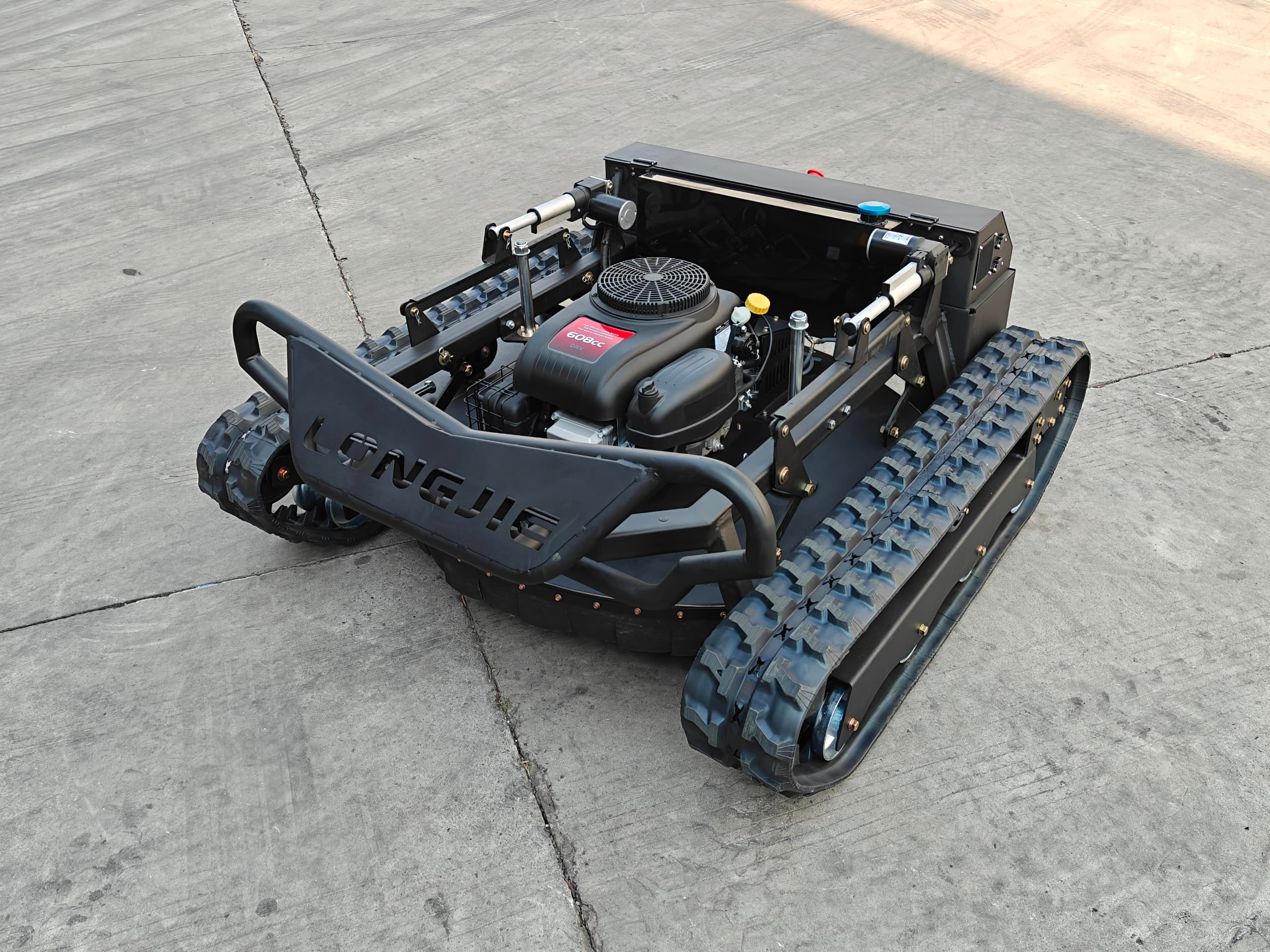
For a grounds crew, mowing is rarely just a cutting task. Someone may have to walk behind a machine, ride across uneven turf, return to missed edges, and keep checking a bank or boundary that is difficult to reach. A robot lawnmower can reduce part of that workload by changing who is exposed to the cutting area and how the job is supervised. It does not make a site maintenance-free. Instead, it can move repetitive travel and cutting work from the operator to the machine while the operator plans, observes, and manages the work.
That distinction matters. A robot remote control lawn mower is particularly relevant when grassland has slopes, rough access, vegetation around obstacles, or a route that would otherwise require long periods of walking. From an operator’s perspective, the useful question is not whether a robot lawnmower removes every labor task. It is which manual steps it can reduce safely on a particular site.
Where the Manual Labor Usually Comes From
Conventional mowing often combines several types of effort: moving the mower into position, staying with it across the work area, steering around obstacles, covering the same ground again, and stopping to assess changing conditions. On a broad, open lawn, these tasks may be straightforward. On a bank, orchard row, roadside edge, or irregular parcel, they can consume much more attention and physical effort.
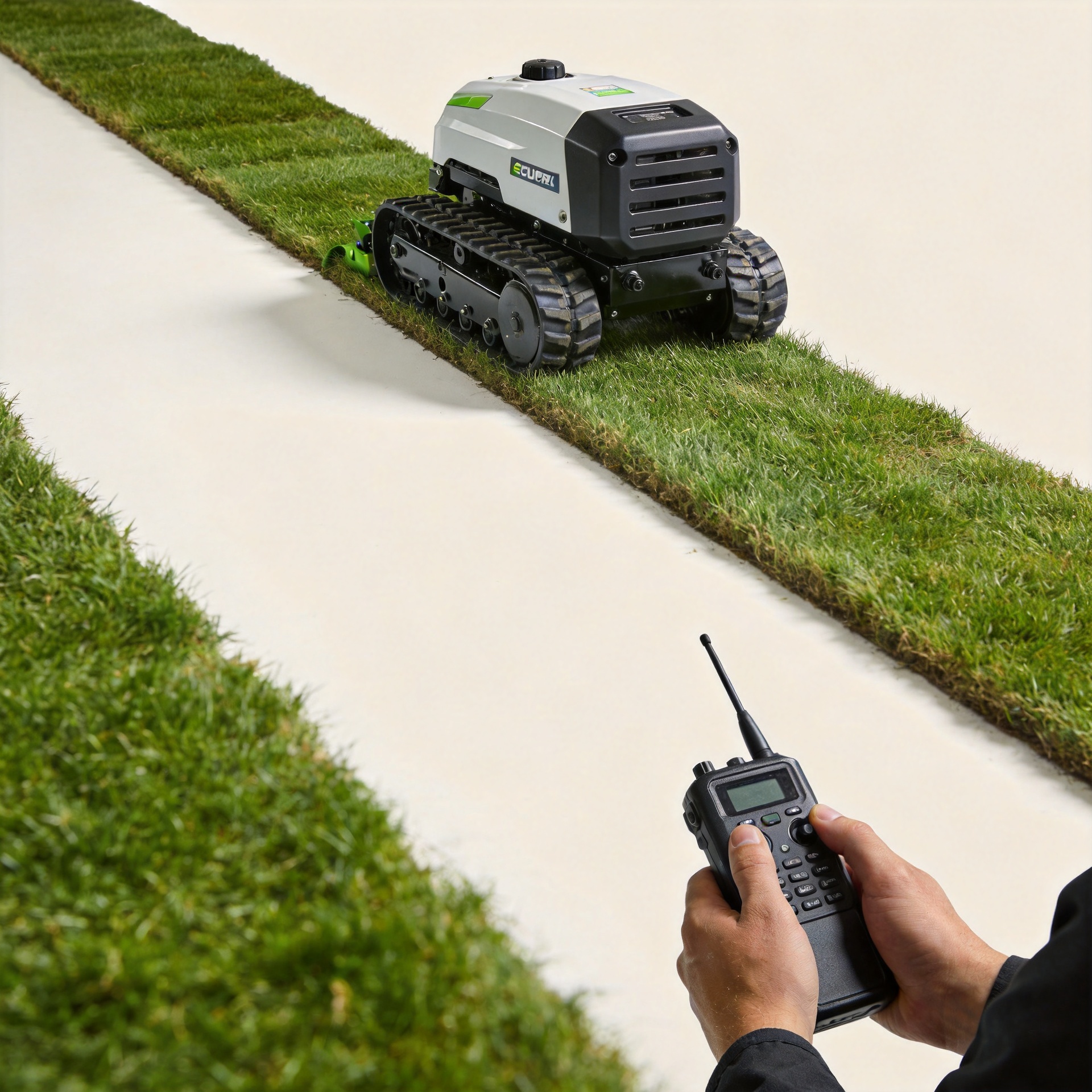
A robot lawnmower changes the division of work. Rather than physically following the cutting path, an operator can direct or monitor the machine from a suitable location when the equipment instructions, terrain, visibility, and local safety rules allow it. The labor benefit is therefore often a reduction in walking, riding, and repeated positioning—not a reason to leave the operation unattended.
1. Less Walking Behind or Alongside the Mower
The most visible benefit of a robot lawnmower is reduced walking during the cutting pass. A crew member who normally walks behind a mower may spend much of the day covering the same route as the machine. With a remote-controlled setup, the operator can often stand at a safer observation point and make directional inputs without matching every meter of travel on foot.
This is especially useful where the mowing route includes long strips, repeated passes, or areas that are tiring to traverse. A robot remote control lawn mower may also reduce the need to climb and descend a suitable slope repeatedly. The actual result depends on the mower’s approved operating limits, ground grip, grass condition, and the operator’s ability to maintain a clear view. Before treating distance as a benefit, confirm the manufacturer’s control range and the site’s safe observation positions.
2. Fewer Repetitive Positioning Tasks
Manual labor is not only walking. It also includes turning, backing out, lining up for another pass, and moving between small work zones. A robot lawnmower can reduce these repetitive actions when its control layout and route suit the area. The operator still directs the job, but may spend less time physically repositioning their body and the machine for each section.
Start by breaking the task into preparation, operation, and review. Preparation includes checking access, obstacles, people, animals, wet ground, and the intended route. During operation, the robot lawnmower handles the cutting movement while the operator watches its path and responds to changing conditions. Review includes checking cut quality, clearing debris only after the machine is stopped and secured, and noting areas that need a different approach next time.
3. Better Separation From Some Hazardous Areas
Remote control can create useful distance between the operator and the immediate cutting zone. This may help when mowing a suitable embankment, rough edge, or area near dense vegetation. It should not be treated as a blanket safety promise. A robot lawnmower still has moving parts, may encounter unseen obstacles, and must be used only within its documented limits.
General mower safety guidance emphasizes checking the surroundings and avoiding assumptions that a machine may be left unattended, particularly on a slope. For a robot remote control lawn mower, the practical takeaway is simple: keep the operator engaged, maintain visibility, establish an exclusion area, and stop work when people, animals, debris, poor traction, or uncertain ground conditions change the risk. The safer distance is valuable only when supervision remains active.
4. More Consistent Coverage of Routine Areas
Routine mowing can produce fatigue and skipped sections when the operator must concentrate on steering for long periods. A robot lawnmower can make repeated passes more consistent by allowing the operator to focus on route control, overlap, and boundary checks rather than on continuous physical propulsion. For teams responsible for recurring grounds maintenance, that can make daily labor easier to schedule.
Still, a robot lawnmower is not designed to solve every vegetation problem. Search results and practical mower guidance commonly distinguish regular maintenance cutting from attempting to remove excessive growth in one pass. Tall, tangled, wet, or hidden-obstacle areas may require preparation, a different machine, or a revised work plan. Matching the equipment to the task protects both cut quality and labor planning.
5. How to Turn the Technology Into a Real Labor Saving
A robot lawnmower can deliver a meaningful labor benefit when the work process is organized around it. Before purchase or deployment, document the area size, slope changes, grass height, surface condition, narrow passages, turning zones, and obstacles. Then ask which tasks the operator currently repeats most often. Is it walking long strips? Guiding a mower near a bank? Returning to missed areas? Moving between separated zones?
- Define the route: Mark access points, boundaries, hazards, and safe observation locations before using a robot lawnmower.
- Confirm operating limits: Check the manual for slope, surface, vegetation, control-distance, and maintenance requirements.
- Assign active supervision: A trained operator should stay responsible for the robot lawnmower throughout the work cycle.
- Plan maintenance: Blade inspection, cleaning, fuel or charging arrangements, and storage remain labor tasks that need a clear owner.
- Review each site: A route suitable last week may be unsuitable after rain, growth, ground damage, or new obstacles.
What Labor Reduction Does—and Does Not—Mean
In the right conditions, a robot lawnmower can reduce manual labor by shifting repeated cutting movement away from the operator, reducing walking and repositioning, and allowing more deliberate supervision of difficult sections. It may help a small crew cover recurring mowing work with less physical strain. But the machine does not replace site inspection, training, safe-distance decisions, maintenance, or a responsible operator.
For that reason, evaluate a robot remote control lawn mower as part of a work system rather than as a stand-alone shortcut. If terrain, vegetation, route design, and safety procedures are compatible, a robot lawnmower can make the routine portion of mowing more manageable while helping the operator concentrate on the conditions that still need human judgment.