EN
How To Customize Custom Spec Crawler Remote Control Lawn Mower For Special Projects
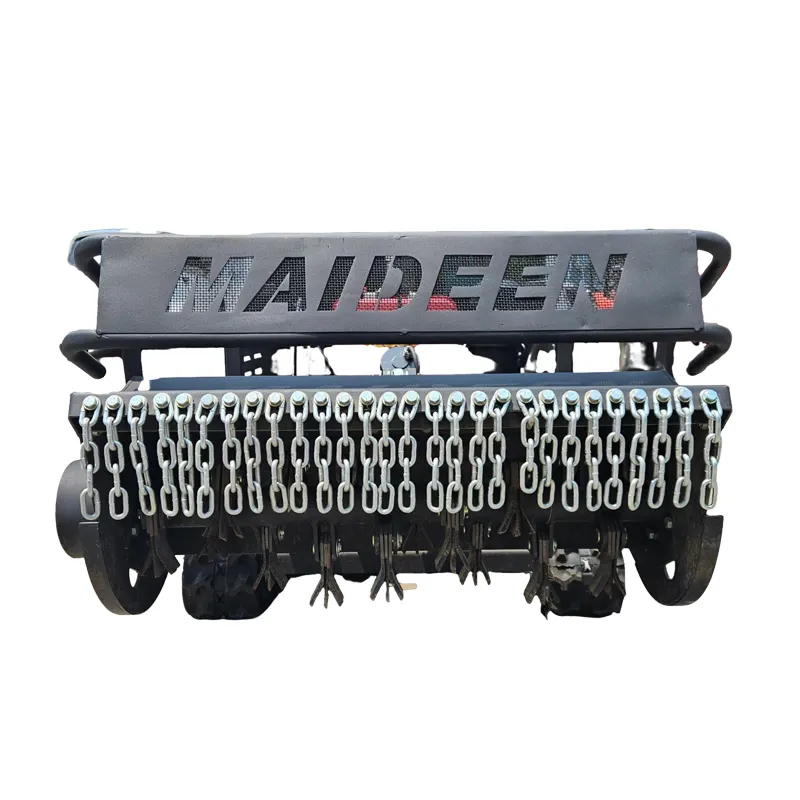
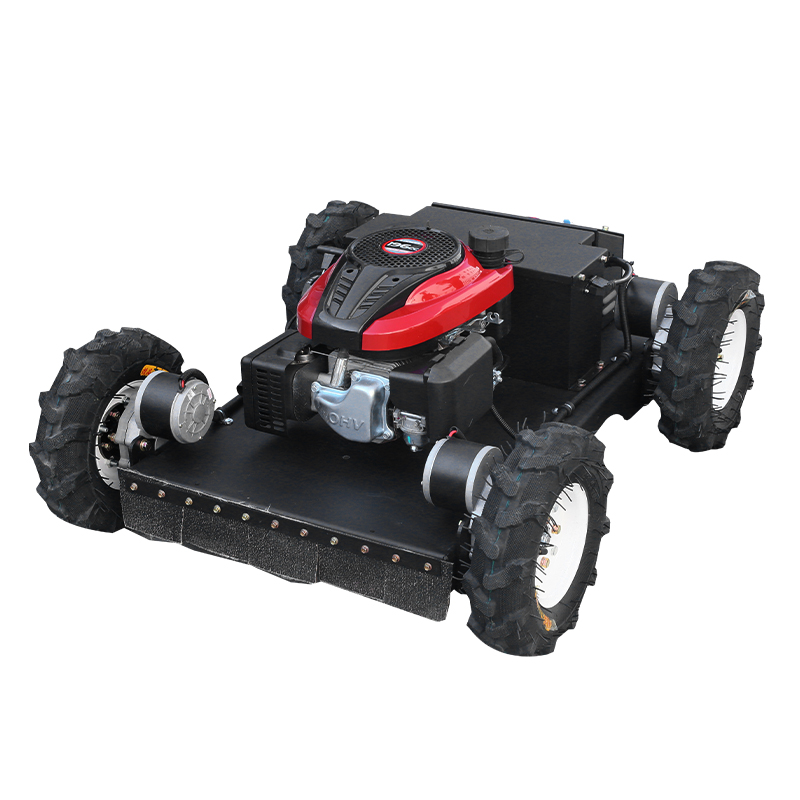
Custom equipment work becomes clearer when the discussion starts with the job, not a catalog page. A crawler remote control lawn mower can be configured around terrain, vegetation, access, operator workflow, and project documentation, but each request should be converted into a requirement that can be checked. For special projects, the useful question is not “Which option fits the documented conditions?” It is “Which version of a crawler remote control lawn mower can be specified, built, inspected, and used within this site’s limits?”
From an OEM/ODM project-communication perspective, the first pass should separate confirmed site facts from preferences. A crawler remote control lawn mower is not automatically suitable for every steep, wet, rough, or restricted site. Remote operation does not remove the need to inspect slopes, boundaries, obstacles, access routes, and operating procedures. Treat customization as a documented matching process rather than a promise based on a few photographs.
Start With a Project Requirement Sheet
A practical crawler remote control lawn mower brief begins with the work area. Record the terrain profile, ground firmness, likely wet conditions, vegetation type and height, hidden-obstacle risk, turning areas, transport route, storage conditions, and planned mowing frequency. If the project involves several zones, describe them separately. One crawler remote control lawn mower configuration may work well in an open section yet be unsuitable for a narrow approach or a drainage edge.
Next, define the operating outcome in plain language: routine grass cutting, seasonal clearing, high-growth maintenance, orchard rows, embankment work, or a mixed landscape task. This avoids treating a single nominal specification as an answer to every condition. Ask the site team for photos, video, approximate slope information, and a marked route. If the terrain is changing, say so. That detail affects how a supplier should evaluate a crawler remote control lawn mower request.
- Terrain: slope profile, surface firmness, ruts, drains, and transitions.
- Vegetation: grass condition, density, regrowth cycle, and possible debris.
- Access: gates, bridges, loading space, transport vehicle, and storage area.
- Workflow: operating hours, crew roles, maintenance windows, and supervision plan.
- Documentation: destination-market requirements, operator materials, and acceptance criteria.
Translate the Job Into Configuration Decisions
Once the project sheet is complete, break the crawler remote control lawn mower into decision groups. This makes it easier to distinguish an essential requirement from a cosmetic preference. A supplier can then state which items are standard, which are optional, which need engineering review, and which cannot be confirmed until a sample or drawing is approved.
| Decision group | Questions to define | How to validate |
|---|---|---|
| Travel system | What ground conditions, route width, and maneuvering constraints apply? | Review dimensions, ground-contact assumptions, and a representative site route. |
| Cutting task | What vegetation and finish are required, and how often will cutting occur? | Agree on a test area and conditions before using performance language. |
| Remote workflow | Where will the operator stand, and what boundaries must remain visible? | Document the operating zone, stop procedure, and supervision method. |
| Project integration | Are labeling, language, packaging, branding, or service parts needed? | Approve drawings, artwork, packing details, and a parts list. |
For example, a crawler remote control lawn mower intended for an embankment should not be specified from an open-field requirement alone. Likewise, an OEM branding request should not be allowed to obscure practical questions about loading, maintenance access, or emergency stop procedures. Configuration is strongest when every item has a reason and a review method.
Make Safety and Compliance Questions Early, Not Late
Special projects often have tighter operating boundaries than ordinary grounds maintenance. Discuss the crawler remote control lawn mower with the project’s safety lead before finalizing options. The operator position, bystander separation, obstacle controls, transportation, guarding, maintenance isolation, and local rules all deserve attention. A remote control is an operating interface, not a substitute for a site risk assessment.
Where a market requires specific documentation or conformity work, request the applicable evidence from the supplier and verify it with the responsible local adviser. ISO 5395-1 is an example of a lawnmower safety standard that covers terminology and common safety-verification test methods; it does not by itself establish that a particular crawler remote control lawn mower is compliant. Confirm the exact machine variant, destination, options, and documentation instead of relying on a broad claim.
Before purchase approval, request the current operator manual, maintenance instructions, safety labels, parts information, and the scope of any supplied training. This is especially important when the crawler remote control lawn mower will be operated by a contractor or passed between teams. Clear documentation supports a safer handover and avoids treating customization as only a mechanical discussion.
Use a Written OEM/ODM Change-Control Process
For a custom-spec crawler remote control lawn mower, a written change log is more valuable than an informal list of messages. Give every request a revision number and identify the requester, reason, technical effect, commercial effect, approval owner, and evidence needed. A request for a different color may be simple; a request that changes the operating workflow, travel arrangement, control layout, or protective component may require a feasibility review.
- Issue a site and use-case brief with photos, dimensions, and intended workflow.
- Ask the supplier to return a configuration matrix showing standard, optional, pending-review, and unavailable items.
- Review drawings, labels, packaging, and any proposed operational limits with the project stakeholders.
- Freeze the approved revision before production and retain the final specification with the order record.
- Test the delivered crawler remote control lawn mower against the agreed acceptance checklist before full deployment.
This process also protects the buyer from accidental scope drift. If the project changes after the first review, update the crawler remote control lawn mower brief and ask for a revised confirmation rather than assuming that a previous answer still applies.
Plan Acceptance Testing Around the Actual Site
A factory review can confirm the build against the approved configuration, while a site review shows whether the crawler remote control lawn mower fits the working environment. Both are useful, and neither should be described as a blanket guarantee. Define the test conditions in advance: site surface, vegetation condition, route boundaries, operator location, observation method, start/stop behavior, transport process, and records to retain.
Keep the acceptance record practical. Note the approved crawler remote control lawn mower revision, serial or identification information where available, installed options, documentation received, visual checks, and open items. If a condition cannot be tested safely at the time of delivery, record it as a follow-up item. This is more useful than claiming a custom machine has been validated for conditions that were not represented during review.
Questions to Send Before Requesting a Quotation
Send a structured inquiry so a supplier can assess the crawler remote control lawn mower project without guessing. Include: What is the site profile? What material will be cut? What access and transport restrictions exist? Which aspects are essential versus preferred? What branding or documentation changes are needed? Which market will receive the equipment? Who owns operating and safety approval? What proof is required before release?
Shandong Maide En Intelligent Technology Co., Ltd. presents remote control lawnmowers and OEM/ODM services as part of its agricultural-machinery offering. For a special project, share the requirement sheet first and request confirmation against the actual configuration discussion. That approach allows the crawler remote control lawn mower conversation to stay evidence-led, especially where a feature, document, or feasibility point still needs verification.
Final Takeaway
The most dependable custom crawler remote control lawn mower project begins with site facts, turns those facts into reviewable configuration decisions, and ends with documented acceptance criteria. Keep safety, documentation, and change control in the same discussion as the mechanical options. When a requested crawler remote control lawn mower feature is not yet confirmed, label it as pending rather than treating it as included. That habit gives buyers, operators, and suppliers a clearer route from special-project requirements to a usable specification.